
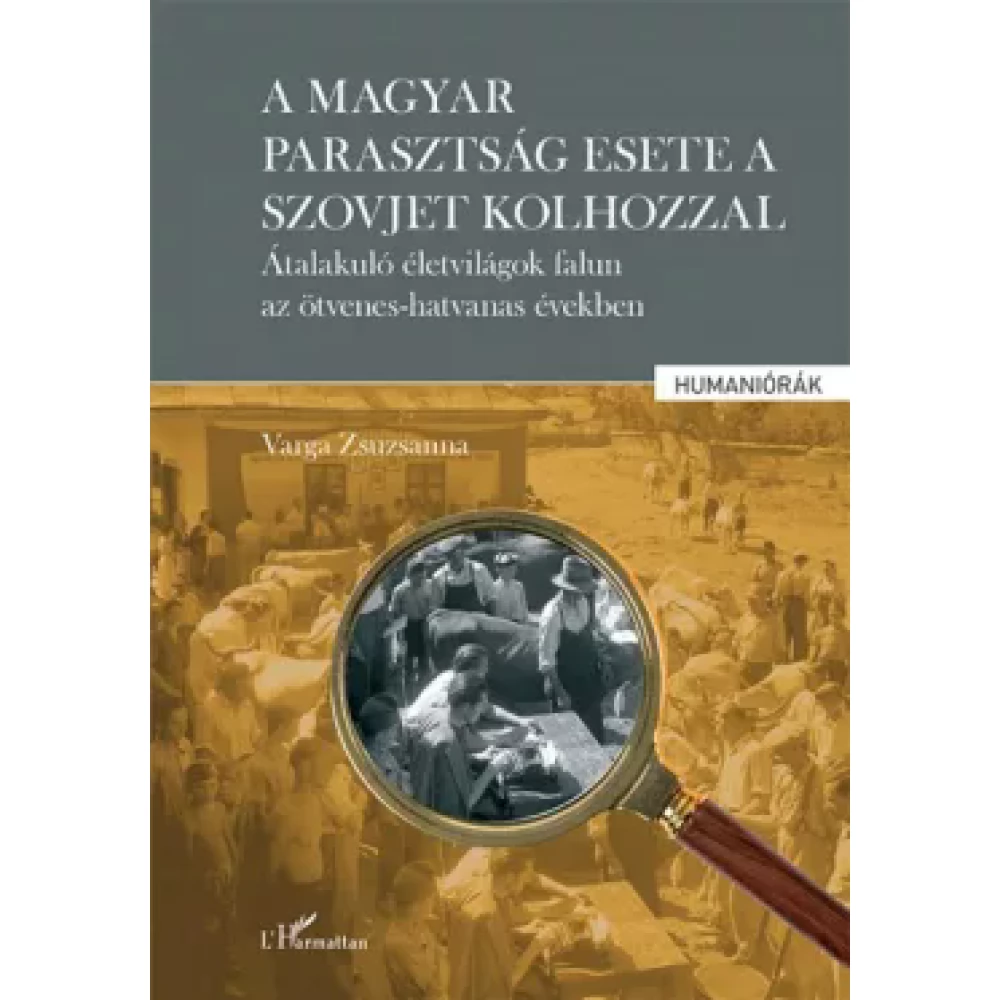
Varga Zsuzsanna - A magyar parasztság esete a szovjet kolhozzal
Product description
The novelty of Zsuzsanna Varga's volume lies in the fact that, during her historical analysis of collectivization in Hungary (1949-1961), she focuses on the interactions between repeated violent power interventions and the social responses they provoke. It reviews all three kolkhozization campaigns, examining them in terms of their impact on each other, continuity and discontinuity. In this way, it is possible to understand why and how the means of applying state violence changed, and how the survival and adaptation mechanisms of the various layers of the peasant society were formed in response to this.
The author does not conclude his analysis in 1961. According to his argument, the struggle for asserting interests between the peasantry and the government continued within the teapots. It reconstructs the various patterns of coping strategies of individuals, families and small communities on a wide scale between sacrifice and action, thereby providing a key to understanding the diversity of the transforming village life worlds.
By compiling Zsuzsanna Varga's book, she did not just try to summarize her research results. It also has an important goal of encouraging dialogue between generations. He emphasizes that the conflict management and problem solving strategies accumulated in the 20th century, and the lessons that can be learned from them, have a valid message in the 21st century as well!
NOTEBOOK SEARCH

OPINIONS
0.0
