
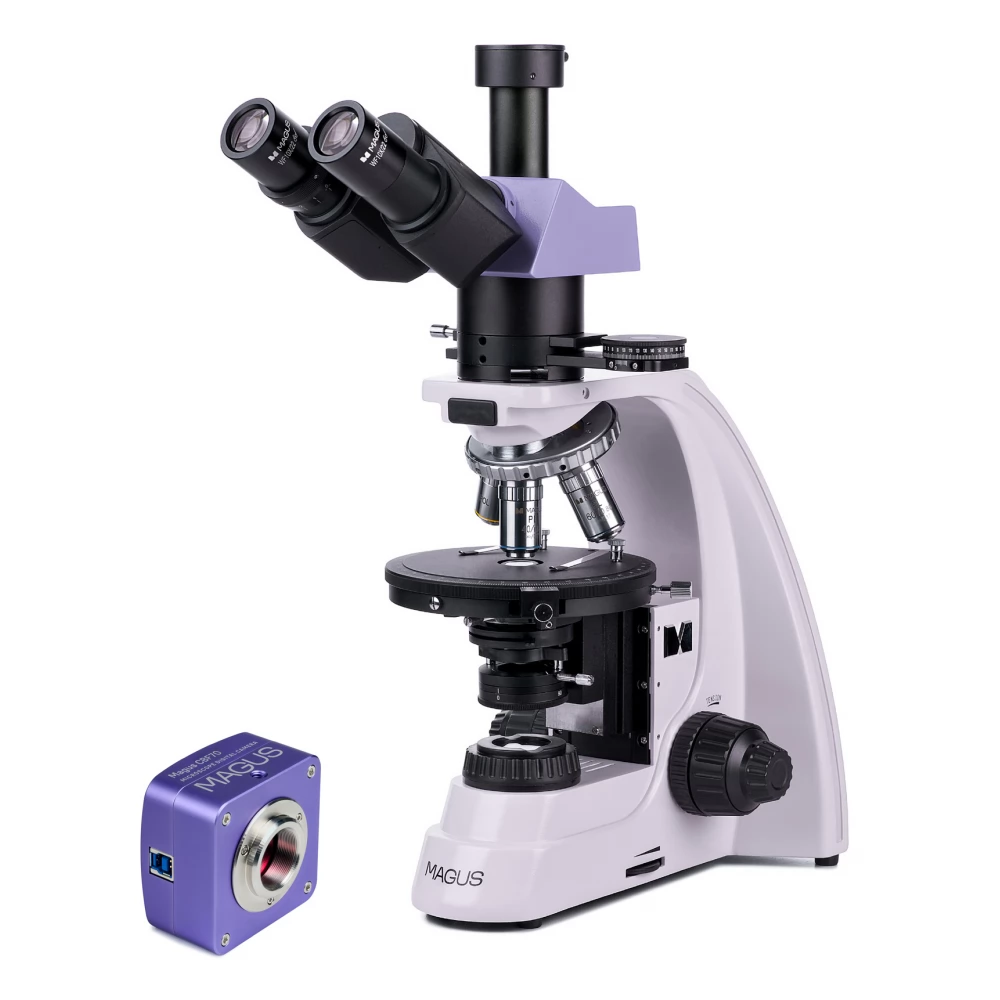
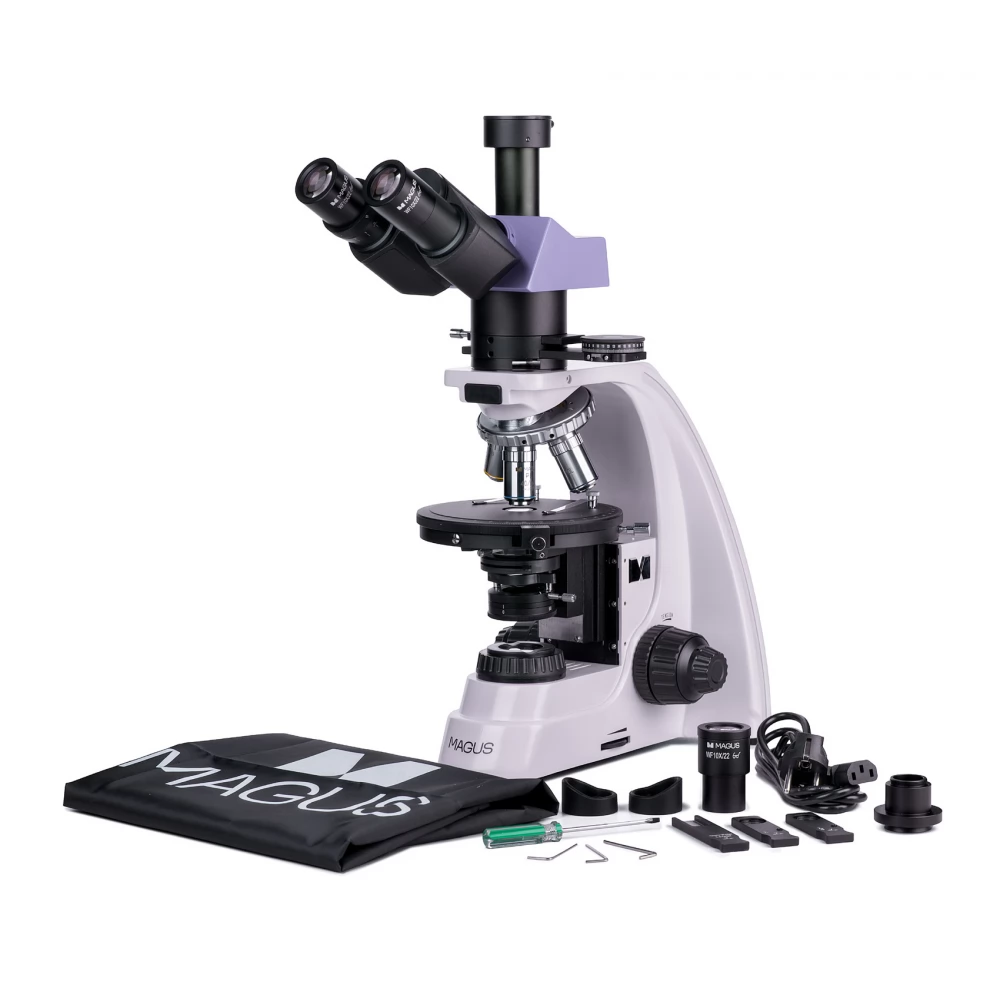
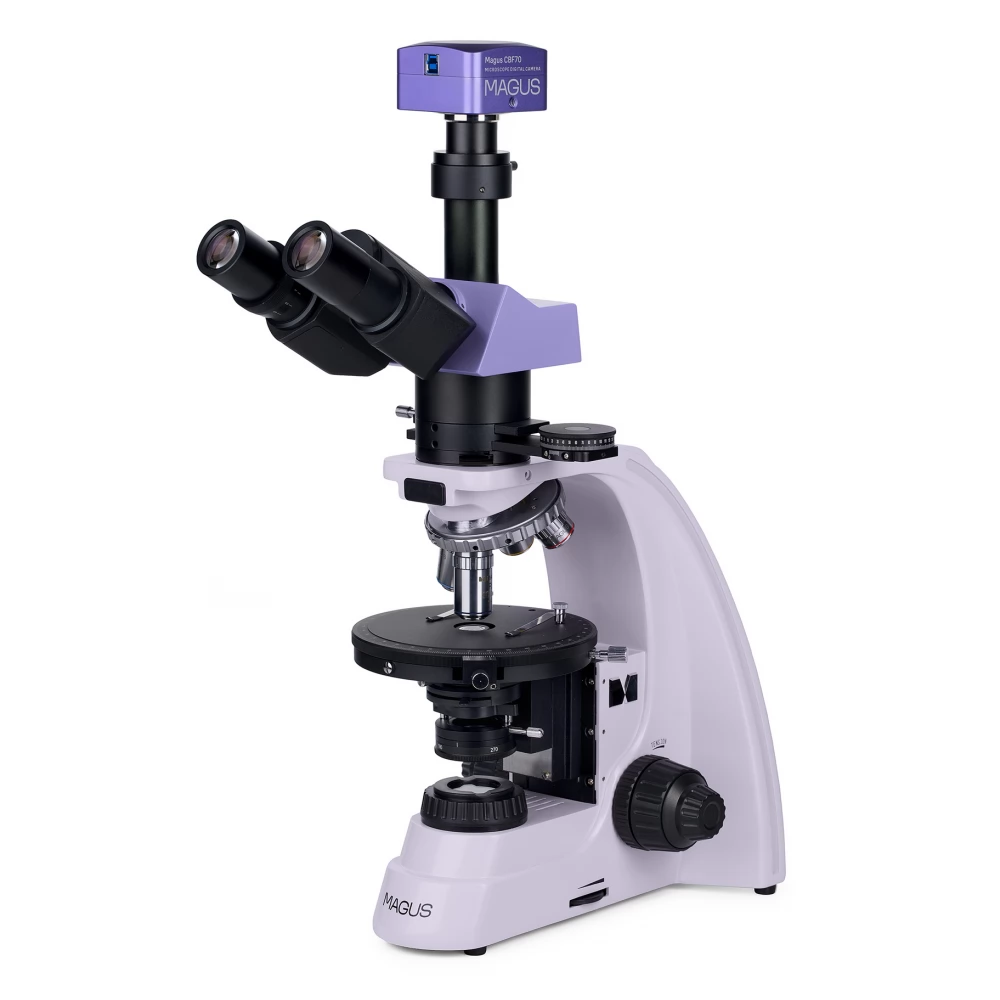
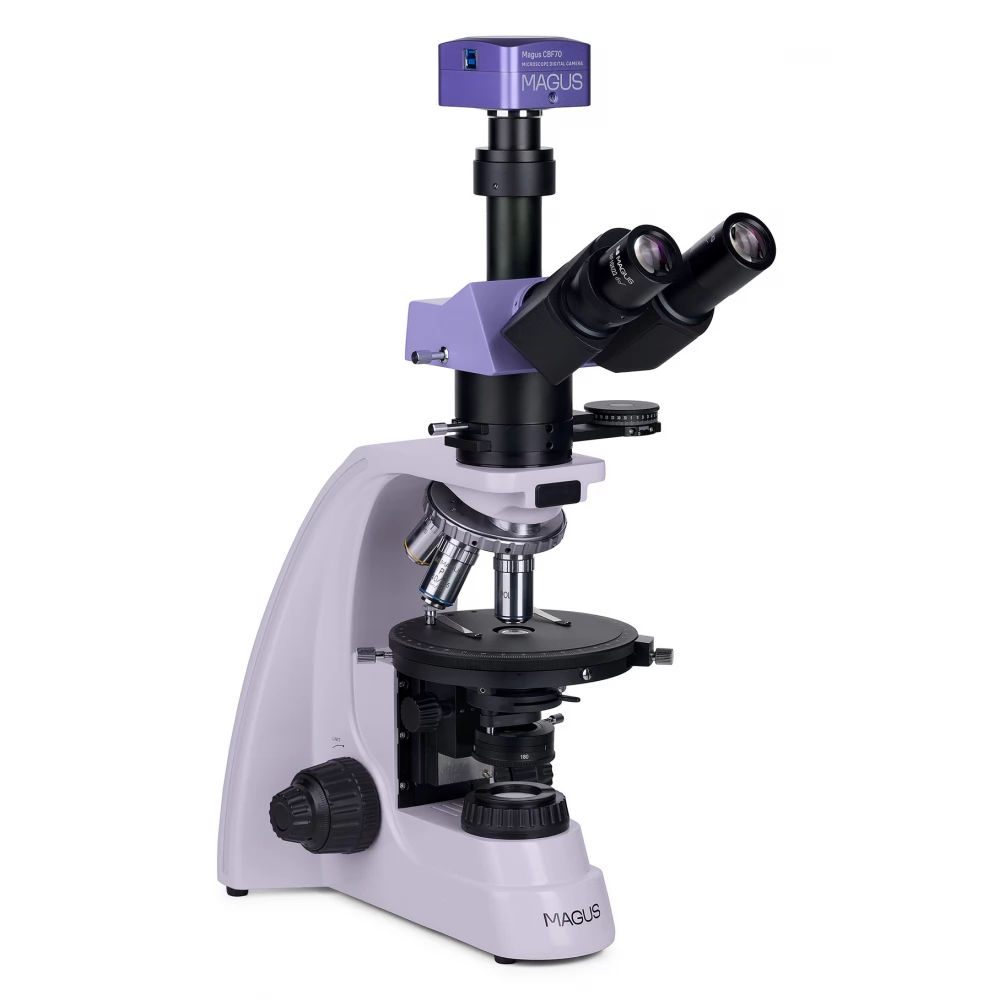
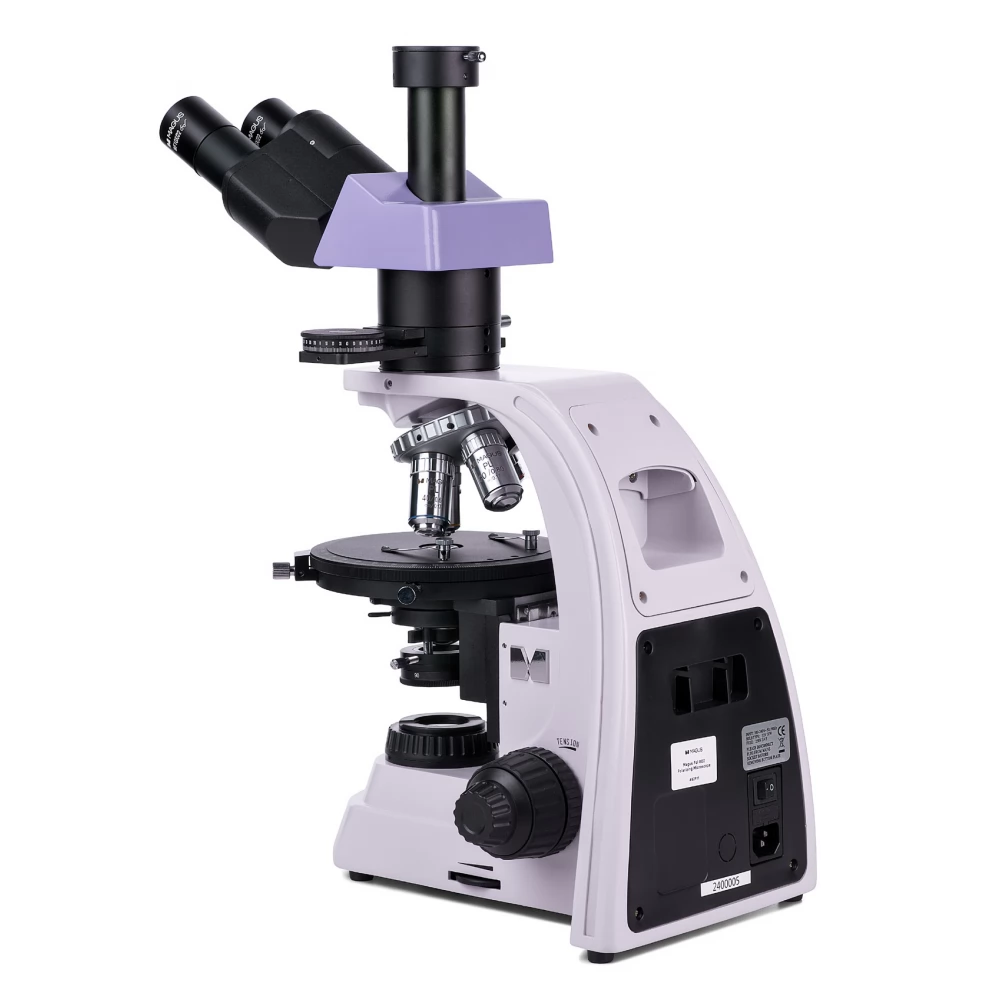
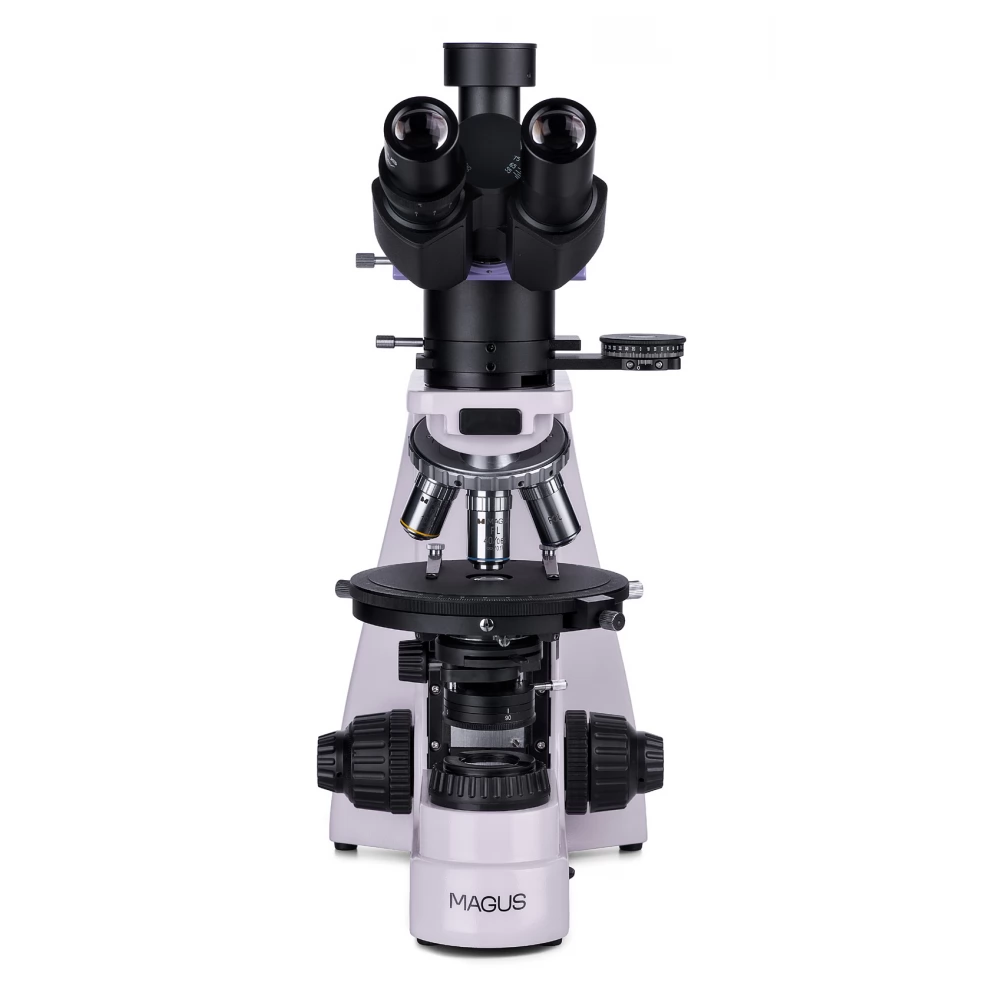
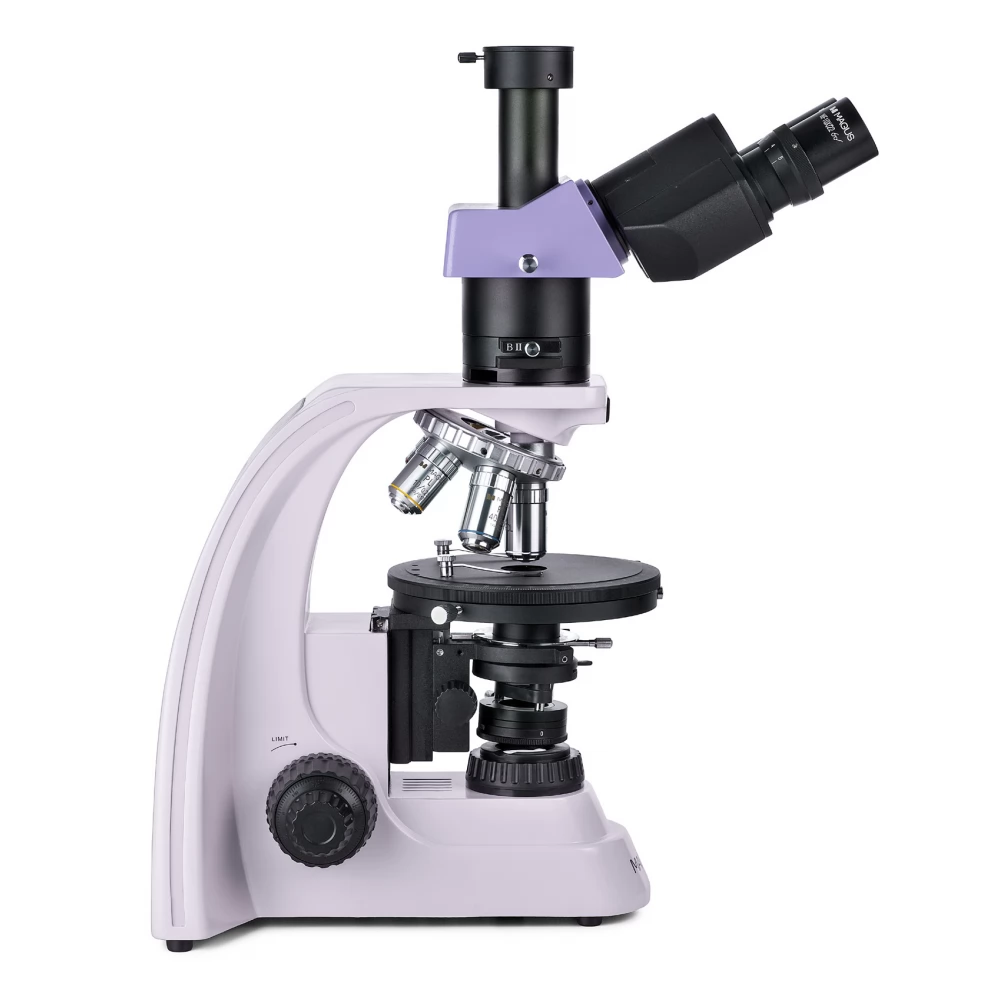
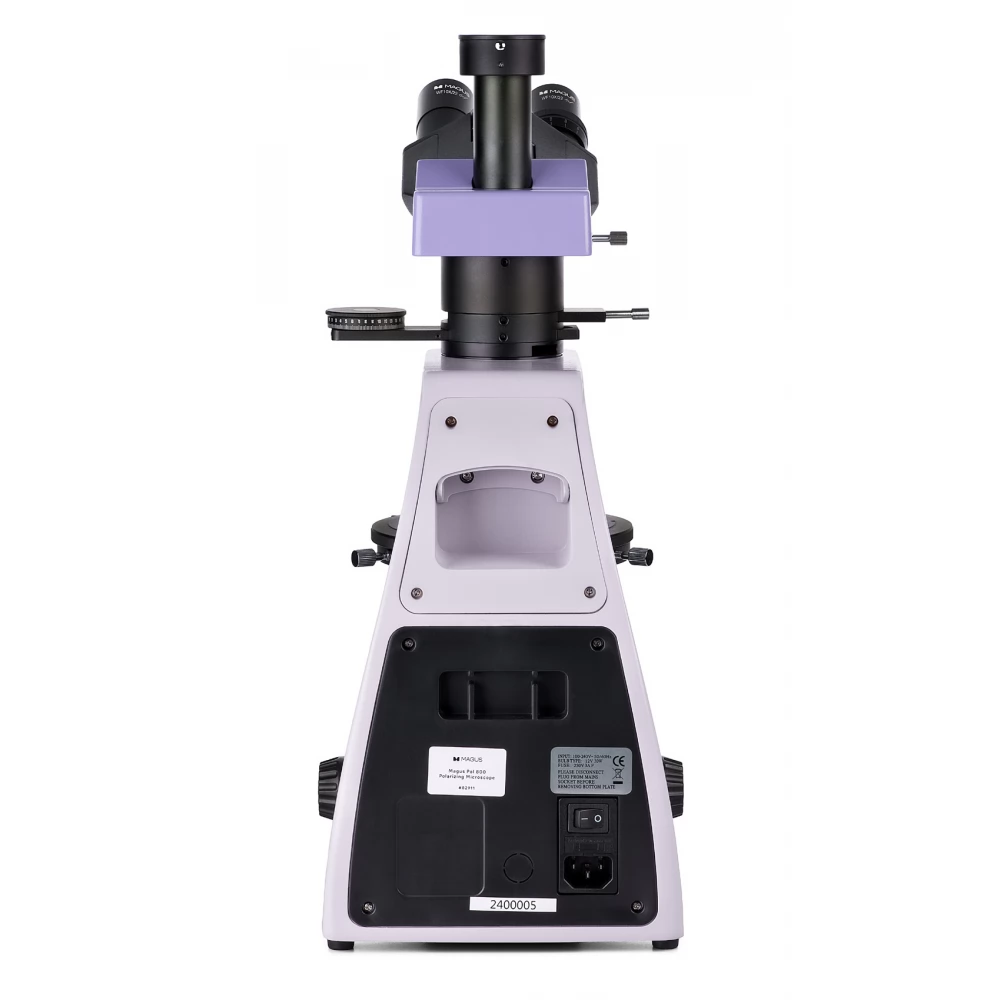
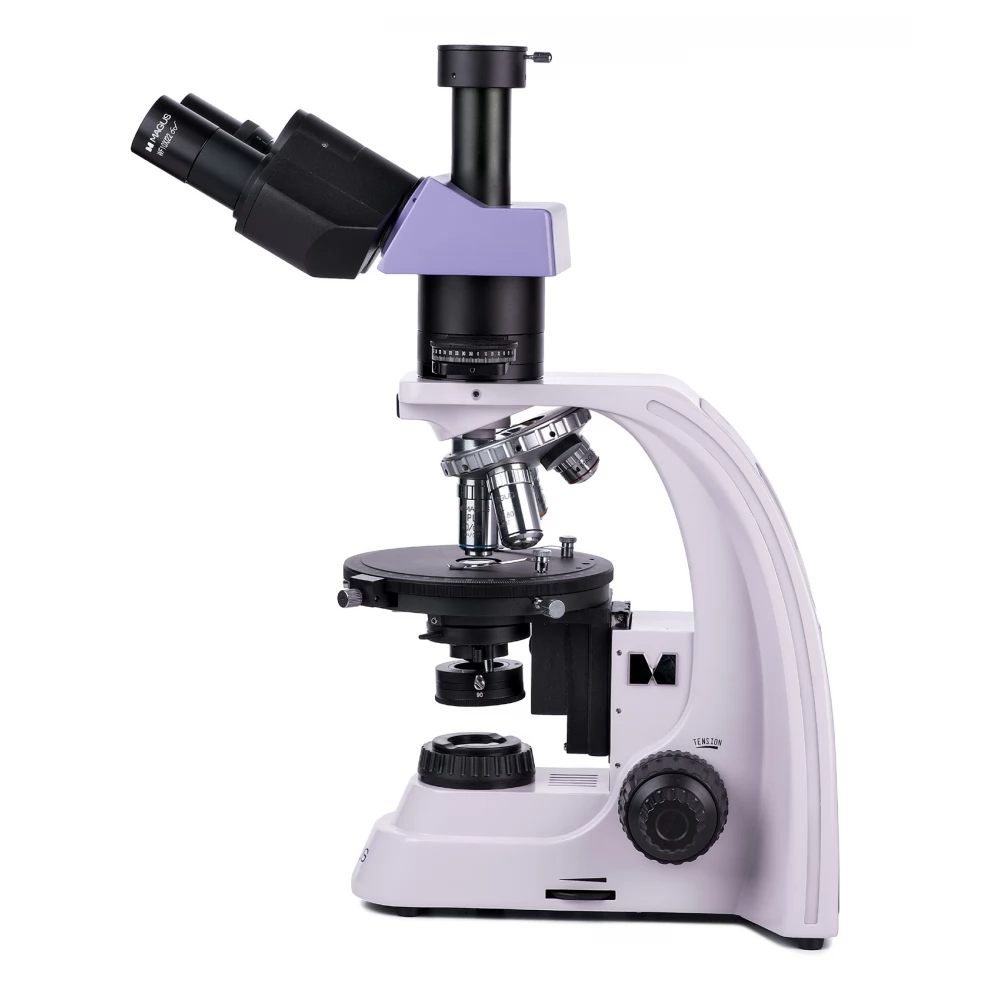
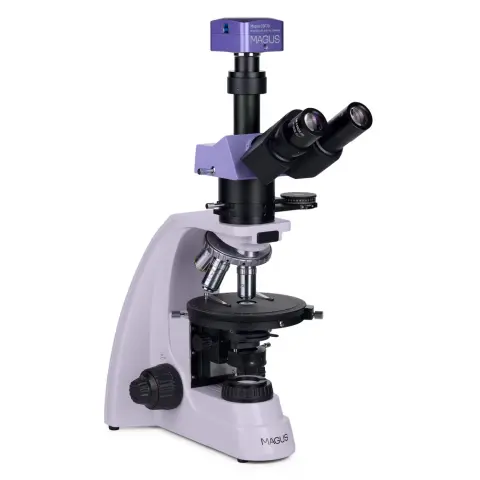
MAGUS Pol D800 digital polarizing microscope
1 699 989 Ft
Product description
The MAGUS Pol 800 polarizing microscope is used to study anisotropic objects in polarized and ordinary transmitted light. The objects to be studied can be of biological and geological origin, or polymers. The optical elements of the microscope are voltage-free, i.e. they do not create disturbing light refractions. They create a clear, contrasting, authentic image. The functions of the microscope can be used in many fields of science: medicine, forensics, mineralogy, rock and crystal science, etc.
Digital camera
The MAGUS CBF70 professional scientific camera is designed for use with microscopes and 4x, 10x, 20x and 40x objectives. The device allows you to take photos and videos, organize presentations, display images on an external screen, and perform angular and linear measurements of the examined objects (for this function to work properly, the software must be calibrated). The camera is recommended for working with the clear field of view method.
The MAGUS CBF70 camera has five image resolution and frame rate modes, so you can easily find the one that best suits your needs: 5280x3954 pixels (17 frames/s), 3952x3952 pixels (17 frames/s), 2640x1976 pixels (56 frames/s), 1760x1316 pixels (67 fps) and 584x438 pixels (192 fps).
High resolution modes are ideal for photography, as they allow you to capture clear, vivid and highly detailed images. Modes with an increased frame rate help to record smooth and informative videos without jumps and delays, to record the smallest movements of the object, and to make the features of people and landmarks involved in fast-moving processes more recognizable.
For the best image quality without distortion, it is recommended to use a 1x magnification adapter.
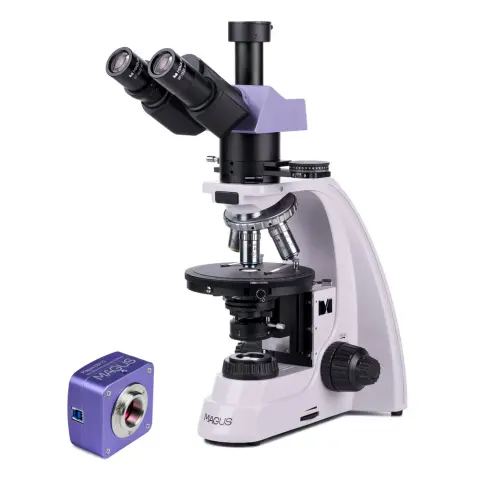
The camera has a 4/3" color backlit SONY Exmor CMOS sensor. The image will be clear even in low light conditions. Thanks to the larger physical size of the sensor, the displayed colors are deeper and the image is clearer.
Optical elements
There is a three-eye tube on the three-eye lens head for mounting a digital camera. Using the switch on the frame of the device, the light can be directed entirely to the eyepiece tube or the digital camera. Due to the 30° inclination angle of the eyepiece tubes, long-term observation is also more comfortable, the neck muscles do not get tired. On the microscope, the optics of the diopter adjustment ring of the left tube (on which the tube rotates) can be adjusted to the unique vision of the user.
The turret head was designed in such a way that five different lenses can be inserted into it at the same time. There are four of them in the package. Additional lenses can be purchased separately from the MAGUS accessory selection. The lenses can be used with a cover plate with a thickness of 0.17 mm. Thanks to the "away from the observer" turret, the lens inserted in the optical path is clearly visible during work, so the researcher can work more comfortably. The grooves of the revolver head are located in the middle.
Illumination
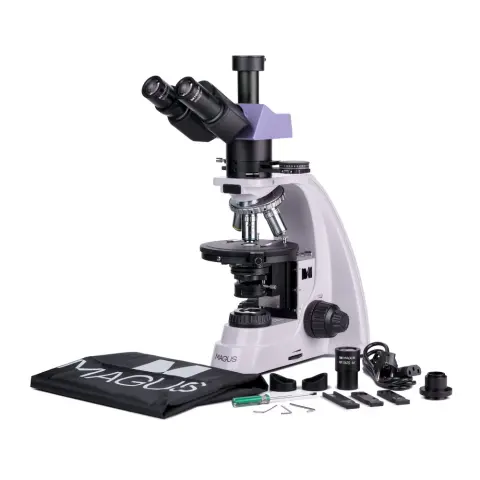
The light source is located under the object table, which means that the observation can be carried out in transmitted light. The 30 W halogen bulb provides strong, but eye-friendly illumination that can be used with all lenses. The illumination adjusted using the Köhler method results in stronger contrast and better image quality.
The microscope is equipped with a polarizer and the analyzer. To work in polarized light, the analyzer is located in the optical path. The polarization angle can be changed by rotating the polarizer and the analyzer relative to each other. On the microscope, the Bertrand lenses are held by a central assembly, and this assembly also has the grooves for the compensators. Compensators improve the contrast of low birefringence samples. Bertrand lenses can be used for conoscopic examinations.
Stage and focusing mechanism
The stage of the microscope rotates, and this allows rapid changes in the refraction of the specimen when working in polarized light. The stage is located in the middle of the optical axis of the microscope, the rotation angle can be adjusted gradually, and the tilt angle can be determined with an accuracy of 0.1° using the scale.
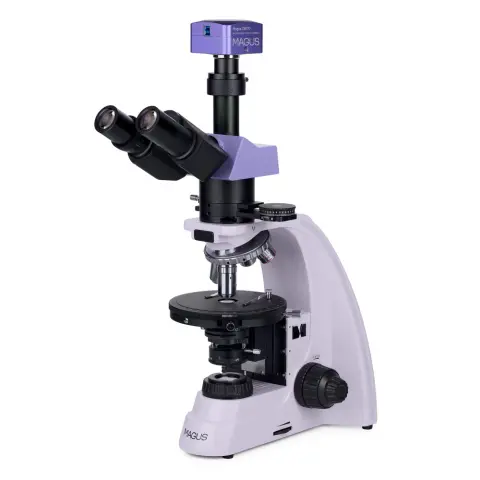
There is a coarse and a fine focus adjustment element on the focusing mechanism. The coarse focus adjustment latch can be used to adjust the coarse focus, and the coarse tension can also be adjusted for comfortable observation.
Accessories
Additional eyepieces, objectives, digital cameras and calibration slides can be purchased for the microscope. With these accessories, the functions of the microscope applicable in research areas can be expanded.
- Observations in transmitted light, in a clear field of view, and with the polarization method
- Lighting is provided by a 30 W halogen bulb with a "warm" light, which is pleasant to the eyes
- Polarization is provided by a rotatable analyzer and polarizer. The middle assembly holds the Bertrand lenses,
PRICE NOTIFICATION
NOTEBOOK SEARCH

OPINIONS
0.0
