
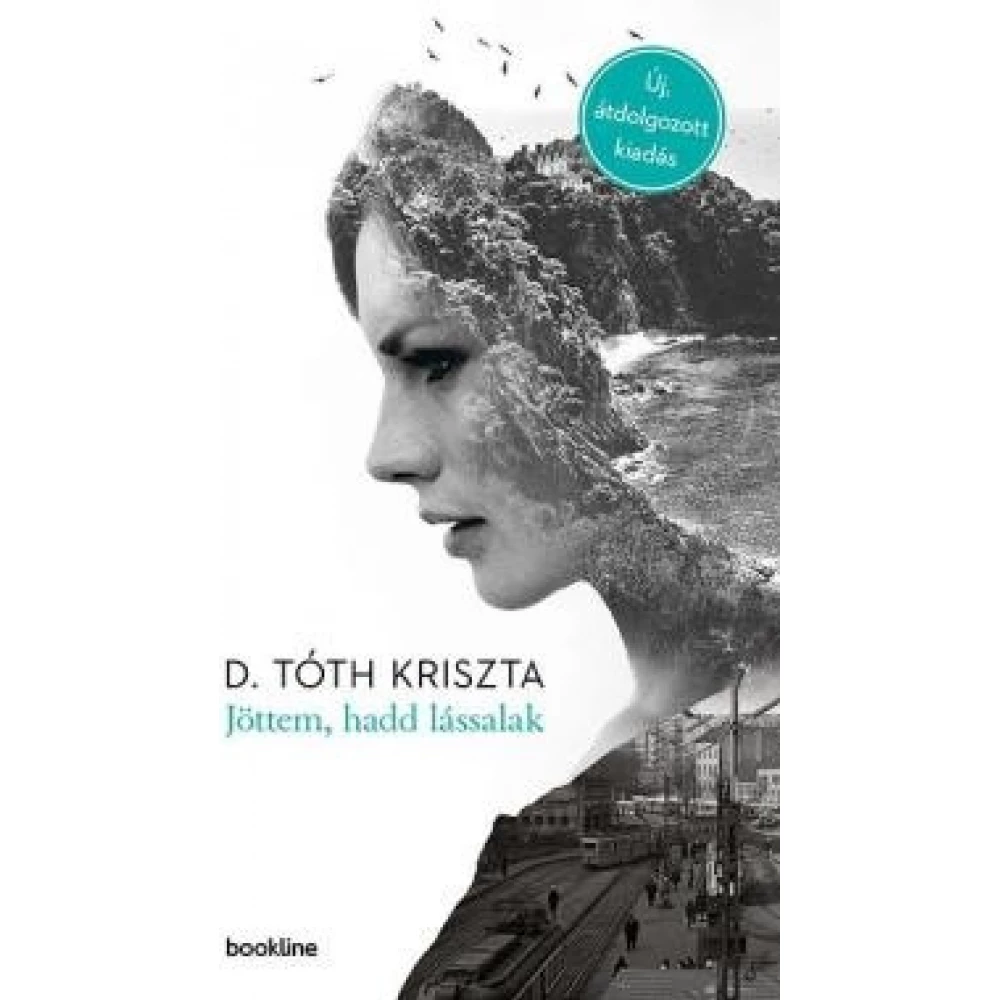
D. Tóth Kriszta - Jöttem hadd lássalak (2019)
not available
Product description
Life is a series of decisions, and everyone decides for himself whether to choose his dreams or predictable security. Bora, the main character of Kriszta D. Tóth's novel, also makes her own decisions, which fundamentally determine not only her fate, but also the lives of her loved ones. But can Bora realize in time if he made a bad decision, and can the mistakes be corrected?
In the pages of Jöttem, let me see you, not only an era comes to life in its entirety, but also collective and relatable human feelings: love, pain, care. The volume is a novel of one man's fate. That's where the miracle comes in, that through it we can all know our own destiny.
The story of Jöttem hadd sáláslak was inspired by the life of the author's mother, and is therefore an incredibly personal confession and farewell at the same time. The volume immediately became a bestseller when it was first printed in 2013, and now it is published in a new, revised edition, complete with the author's foreword.
"A Nők Lapja was busy, but when we could sit down for coffee, Kriszta always told us about her plan with sparkling eyes. How she will try, what she is planning: she will roll with a free hand, she will drive into the distant past, into the painful and beautiful childhood. She will count , he searches for his mother on his own. Maybe there will be a lesson, maybe not. I encouraged him to dig down boldly. I would not have thought that he would bring up a find from so deep."
Krisztián Grecsó
Writer, presenter, editor-in-chief Kriszta D. Tóth, according to Forbes magazine, is one of the most influential women in the Hungarian media. At the end of the nineties, he appeared on the RTL Klub screen, then worked as an editor and Brussels correspondent for Magyar Televízíó. He was one of the most popular authors of Nők Lapja and hosted his own TV show. After two decades, he broke with television, wrote two novels (I came, let me see you, Twenty Nights), and in 2015 he created the online magazine WMN.hu and its YouTube channel. She is a UNICEF Goodwill Ambassador in Hungary and, last but not least, a mother.
In the afternoon, I asked Borcsá to shave. She widened her eyes at me and let out a "what are you up to mommy?" joke. We even laughed. To the death, my daughter, to the death. But there is no such god (even if there is no god, but if in the end it turns out that there is, then especially there is no such god) so that I start tomorrow with hairy feet. "Tomorrow will be a big day", I write the answer to the joke in the notebook. And I wink. Bring in the sink with lukewarm, soapy water in it. He dips the razor into it. He gently takes one of my ankles in his hand and places my foot on his knee. He does it intelligently and very delicately, as if he were cleaning expensive porcelain. It's nice to see him care about me. We don't say a word, he concentrates on not cutting me, the blade is new. And I drink the moment. What am I drinking, I'm foaming! I take in the sight and feeling of my daughter cleaning in big gulps. I direct all my receptors to the skin of my leg, I want to receive the signals a hundredfold as his hand touches me. My skin is dry, no matter how many soaps I use, the razor stings. Borcsa works skillfully and quickly, I wish he would slow down a bit. I would stop time right here and now. But I would at least beg for an extension, even if it hurts.
PRICE NOTIFICATION
Recommended for you
Similar products
NOTEBOOK SEARCH
OPINIONS
OPINIONS
