
Dear Visitor! We are carrying out maintenance this weekend, so our website may be slow or briefly unavailable at times. Thank you for your patience!
Vígh Éva - Állatszimbolika a közép- and újkori Itália irodalmában
2 821 Ft
Product description
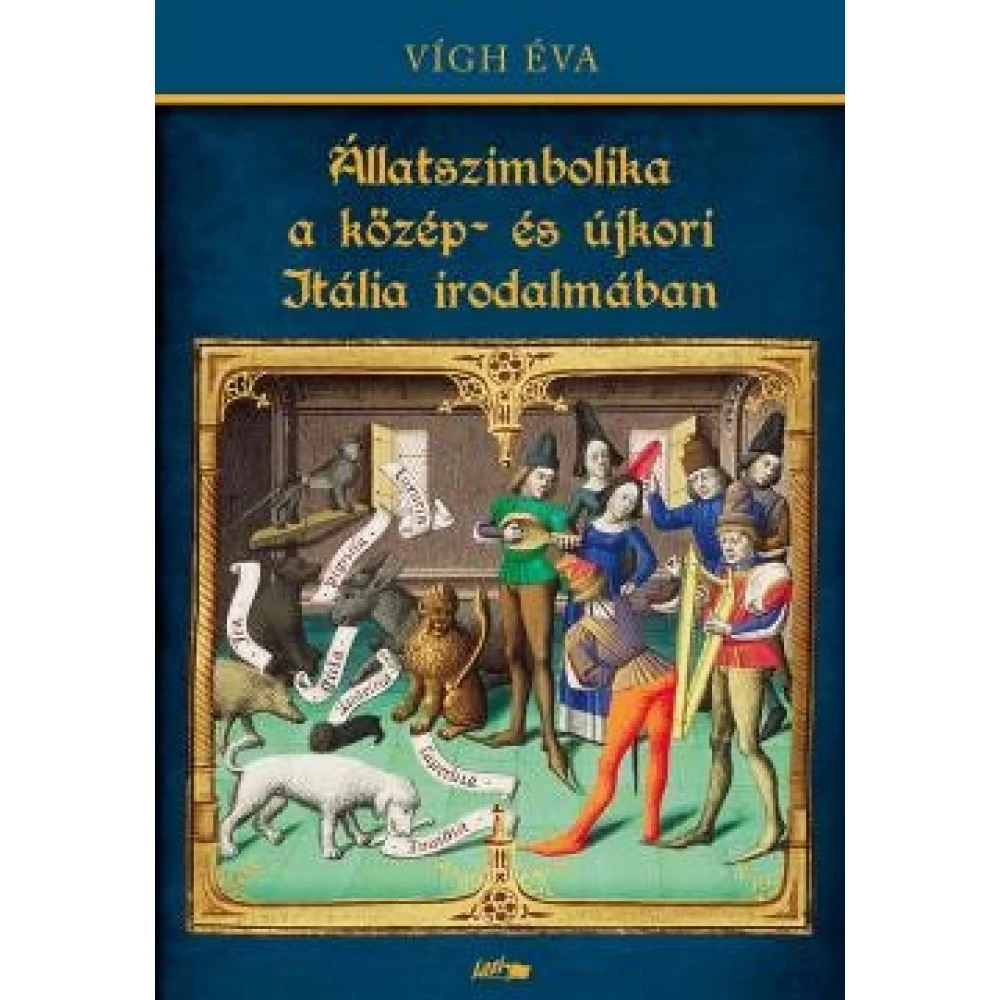
Éva Vígh's latest volume is the XIII-XVII. undertook to present the history of Italian culture and literature from a special perspective in twenty chapters. He focused on the symbolic meaning of animals and the role of zoomorphic interpretation in the case of the most important authors and genres of the Middle Ages, the Renaissance and the Baroque. In addition to Dante's griffin, Petrarch's phoenix, Boccaccio's cats, Ariosto's hippogriff or Machiavelli's donkey, we can familiarize ourselves with medieval and Renaissance bestiaries. Leonardo da Vinci's book of animals, of which we can also read a complete translation, uses iconological explanations to anticipate the animal symbolism characteristic of Cesare Ripa's or Giulio Cesare Capaccio's book of emblems.
The interpretation of the animal figures populating Tasso's poetic world, the Renaissance animal fable continuing the Aesopian tradition, and Della Porta's physiognomic-zoomorphic world view lead the reader into the Baroque era. The politics of the courts of this era is illustrated in the volume through the political aphorisms of Tesauro's collection of animal tales. The academic speech of the greatest Baroque poet Giambattista Marino in defense of animals (also in full translation) conveys a message for today's readers to consider.
The approximately 150 black-and-white and color animal illustrations belonging to each chapter convey the moral interoperability between humanitas and animalitas.
PRICE NOTIFICATION
NOTEBOOK SEARCH

OPINIONS
0.0
