
Dear Visitor! We are carrying out maintenance this weekend, so our website may be slow or briefly unavailable at times. Thank you for your patience!
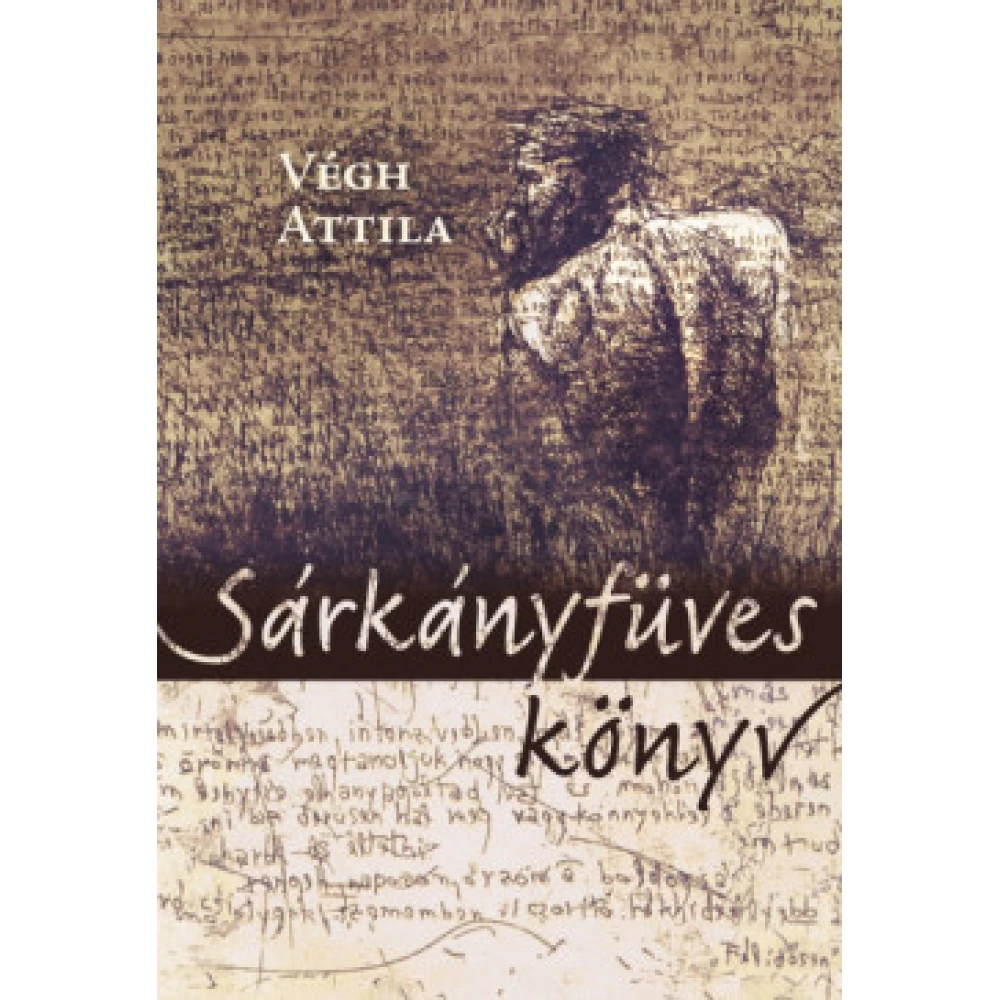
Végh Attila - Sárkányfüves book
2 821 Ft
Product description
Dragonweed book? What is the need for such a book? What does it add to the image created by grass books, to Márai, to anything? And what is dragon grass? Following in the footsteps of the sages who dispense life advice, what does the author want with this mythical creature and the plant named after him, which has no place at all in Süsü's tale?
The authors of herbal books want to light up their readers, illuminating the simplest questions of life, because they know that these are the most difficult to answer. The most obvious things are the most obscured because they have never been touched by real inquiry.
The dragon is an earth spirit, lord of the dark foundations of life. The author of the dragon grass book wants to be a soul guide who, even when looking for a clearing in the forest of life, remains uninterested in the abundance. Attila Végh agrees with Johann Georg Hamann: brightness is nothing but the right ratio of light and shadow. As you grope your way towards the light, it doesn't hurt to inhale a little earthy smell.
When a migraine comes, nature manifests its power, and it turns out that no matter how high-ranking a spiritual being you are, a small anomaly in your nerves or blood vessels makes you a nobody, who not only has no desire to write, read, think, but maybe even live. Memento mori, says the migraine. Headache is our middle age.
Biography - rear inner ear:
Attila Végh (1962, Budapest) József Attila Prize-winning poet, writer, philosopher, lecturer at the Élörtolt Helyőrség Writing Academy.
His volumes of essays and studies published so far:
The Metaphysics of Descent (essays, Kairosz, 2001)
The Bored Angel (essays, Ration, 2006)
Approximations (photos, essays, Napkút, 2009)
The gaze of the torso (essays, studies, Climate, 2010)
Parmenides: Fragments (translation, study, Attractor, 2010)
Time to Shine (essays, Helikon, 2012)
Essay Dictionary of Greek Drama (Essays, L'Harmattan, 2017)
PRICE NOTIFICATION
NOTEBOOK SEARCH

OPINIONS
0.0
