
Dear Visitor! We are carrying out maintenance this weekend, so our website may be slow or briefly unavailable at times. Thank you for your patience!
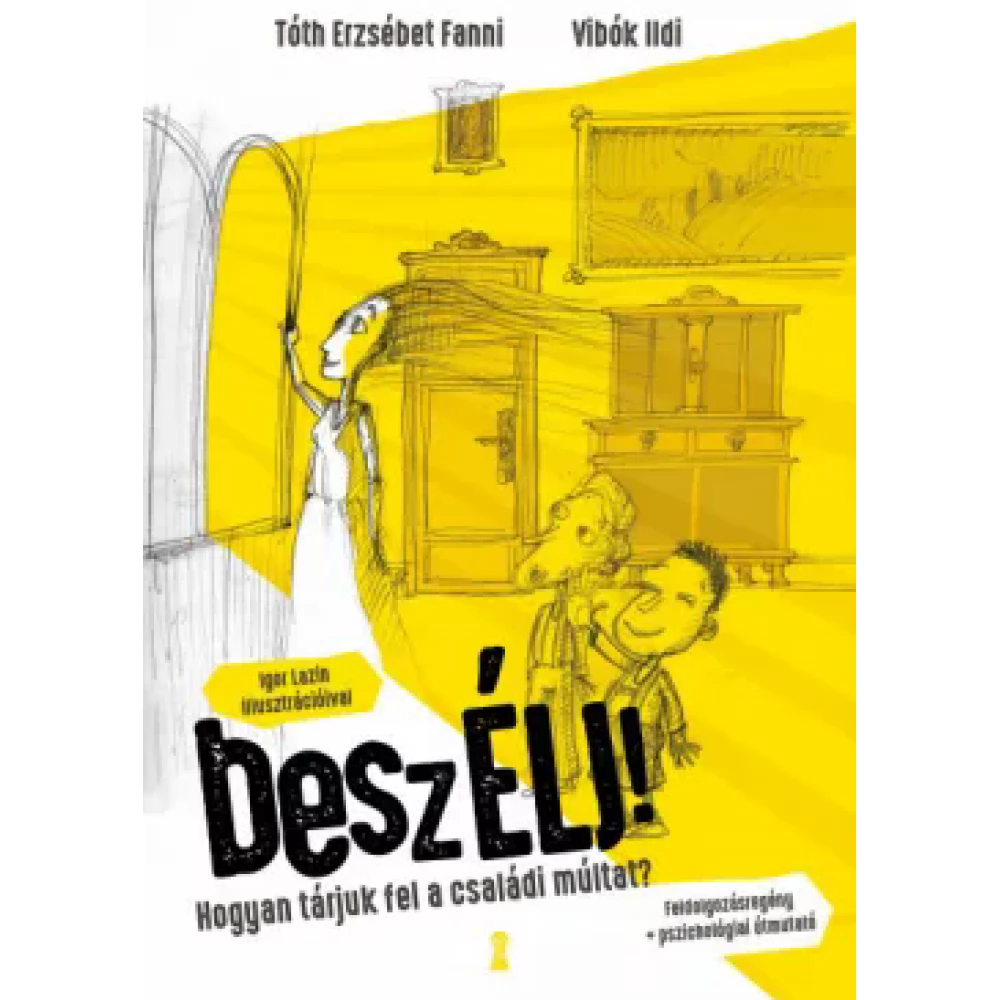
Tóth Erzsébet Fanni - Vibók Ildi - beszÉLJ!
3 130 Ft
Product description
We all have a family history. We usually know the names of the protagonists at least as far back as our great-grandparents, but only a few of us see the context of where and how the fate of our ancestors appears in our everyday decisions. What patterns have we inherited, and what do we pass on?
When we take the courage to delve into our own family history, we can easily find ourselves on untraveled paths. The history described in the textbooks and the often-repeated youthful adventure of our grandparents are usually not related to each other. And it is difficult for us to recognize how the past that lives with us and in us affects our 21st century life.
The joint book of psychologist and trauma researcher Erzsébet Fanni Tóth and writer Ildi Vibók adds this important link to the process - it tells the story of a Hungarian family in Czechoslovakia in the most stormy years of the twentieth century from the perspective of a child. And it does more than that: with questions and playful tasks, it helps us to get to know our own family history more deeply, giving us the vocabulary and tools to start mapping deep-rooted secrets, expectations, failures, prejudices, regrets and new beginnings.
Just as the grandmother's tale in the book smoothes the trials into an adventure, by going through the specialist's series of questions, we too can tame our demons that have been living with us as a family secret for decades.
The book, intended for both (at least minor) children and adults, is based on scientific research and suitable for multifaceted self-improvement - and its undisclosed purpose is to bring the generations closer to each other based on the historical past that lives within them. Therefore, it is best if the family discusses the questions following each chapter together. Because if we SPEAK, we can redeem ourselves: even difficult, traumatic stories will hurt less. In this way, we can learn much more than we think, not only about our shared past, but also about each other.
PRICE NOTIFICATION
NOTEBOOK SEARCH

OPINIONS
0.0
