
Dear Visitor! We are carrying out maintenance this weekend, so our website may be slow or briefly unavailable at times. Thank you for your patience!
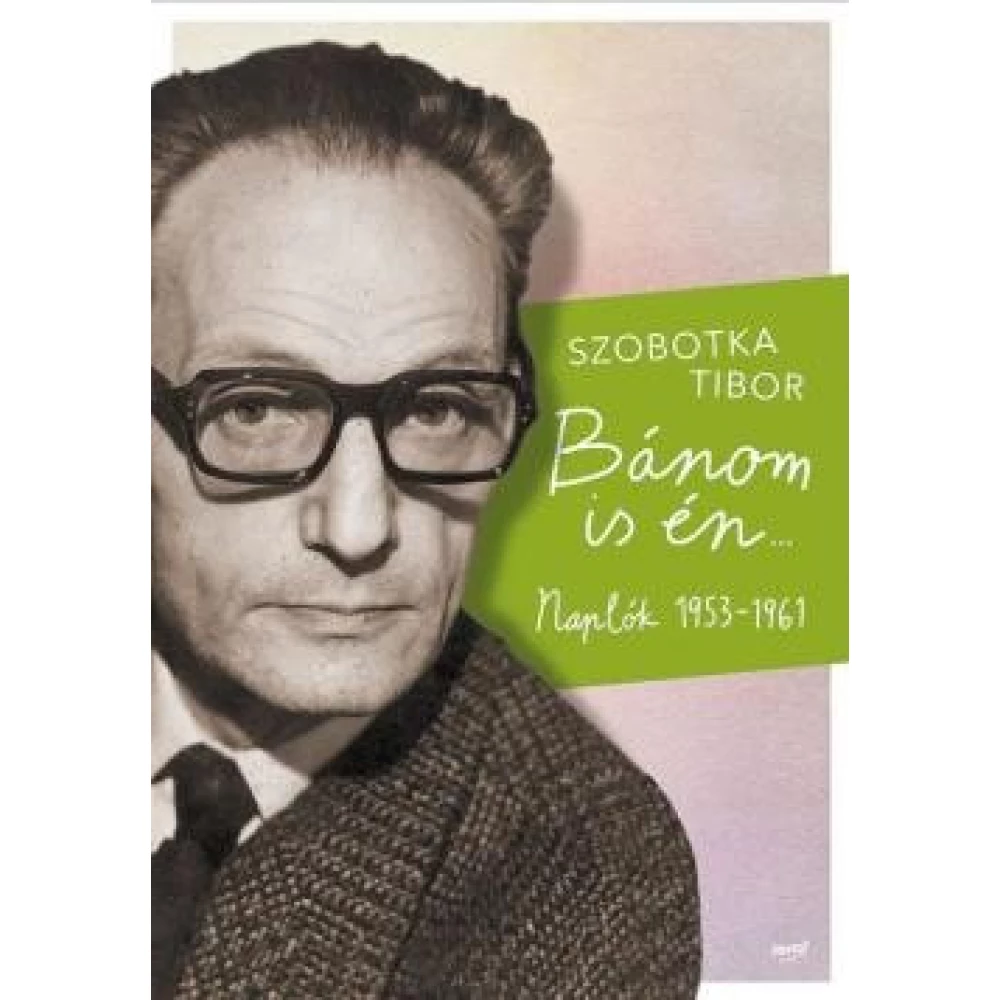
Szobotka Tibor - Bánom is I - Naplók 1953-1961
3 130 Ft
Product description
Three yellowed notebooks and a few torn pages, filled with right-leaning letters so characteristic of Tibor Szobotka. In this form, the writer's diaries covering the years 1953-1961 were recently found in his estate, which we can now get our hands on for the first time in the volume Bánom is én.
But can the past be questioned? And what happens if several people want to talk at the same time?
Turning Tibor Szobotka's diaries, one can easily feel that reading his notes is actually a dialogue. A dialogue in which the writer, the reader and the writer's wife talk to each other.
Szobotka also corrected his own texts afterwards, carefully erasing or satirizing some parts. But after her husband's death, Magda Szabó also added marginal notes to the diaries. "You erased this in vain, this is what I remember," the writer writes in one place. Such comments and the questions written at the top of each page really make the text come alive.
In the beginning, the writer strove to factually record daily events, and through his notes we can get to know him as a teacher, university lecturer, literary translator and literary historian. However, with the passage of time, as a result of the difficult and troubled living conditions, the comments and reflections on the events become more and more frequent, from which one can trace the emotional roller coaster that started in the wake of the injustices he suffered, which accompanied him throughout his life.
Of course, his wife Magda Szabó is also constantly present as a character in the notes. One of the most important periods of his work, the process of becoming a prose writer, is revealed to us, as well as the network of relationships, the spiritual and cultural milieu to which the married couple belonged. The actors of the artistic life of the time appear, and we can get a sensitive picture of how the writer couple's weekdays and holidays were spent in the 1950s.
Tibor Szobotka's diaries are therefore both personal and contemporary documents that take us back in time. Thus, this volume will be an invitation to the past, sent to us by Tibor Szobotka.
PRICE NOTIFICATION
NOTEBOOK SEARCH

OPINIONS
0.0
