
Dear Visitor! We are carrying out maintenance this weekend, so our website may be slow or briefly unavailable at times. Thank you for your patience!
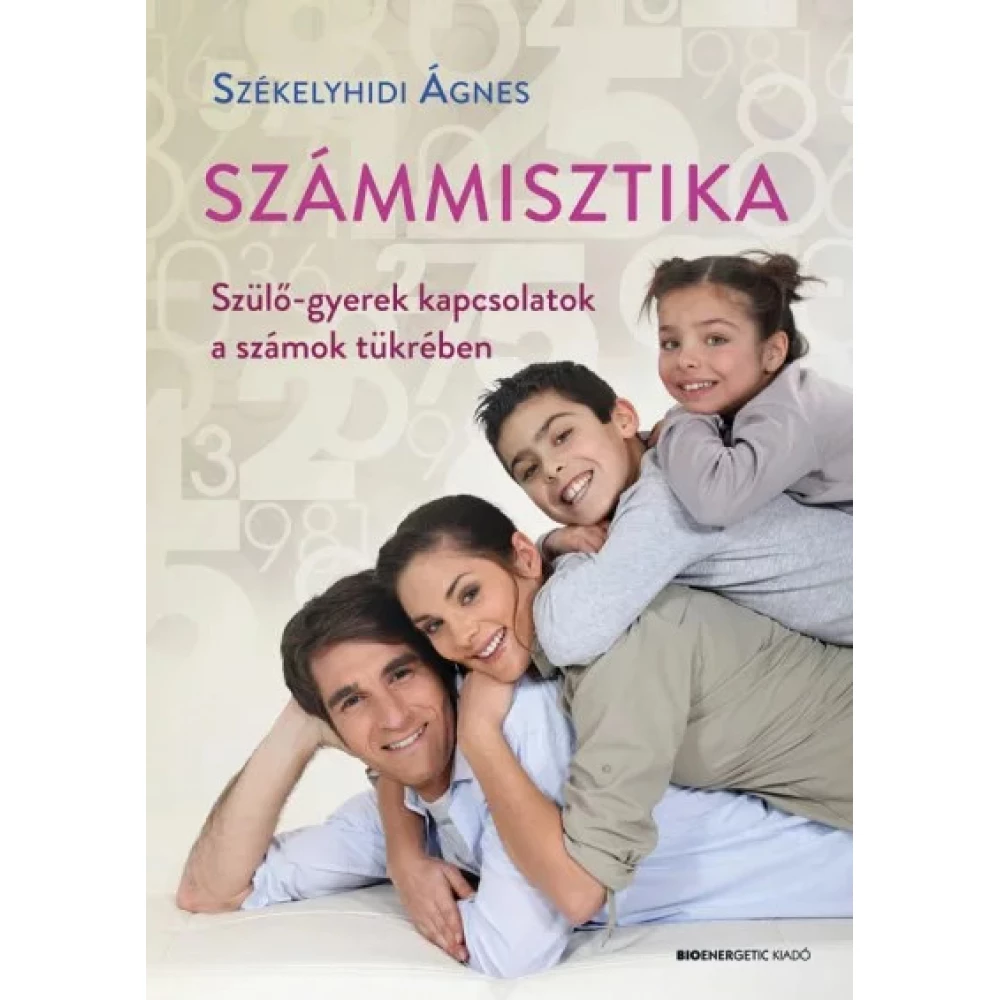
Székelyhidi Ágnes - Számmisztika (2020)
2 738 Ft
Product description
"Children must be treated with respect,
You have to be raised in love,
And it must be dismissed in freedom." R.Steiner
Parents and children - perhaps the closest human relationship that accompanies us throughout our lives. In order to create harmony, it is important to understand that the solution to our personal conflicts is not to change, but to understand our relatives and, last but not least, ourselves.
The renowned expert in numerology, Ágnes Székelyhidi, provides excellent help for this. In his latest book, we distinguish 11 types of children (including 3 age groups and a boy-girl division), and then 11 types of parents (separate father and mother). The reason we are talking about 11 types is because in the date of birth we only take into account the number of the day, because this shows the essence of the personality.
The concept of sibling numbers indicating sympathy and opposite poles expressing opposites is new. Deciphering the character of the child is helped by the fairy tale character of the given number and the description of the love language characteristic of the given character. The latter is particularly important, since if we express our love emphatically in the way that best suits him, then our child will feel emotionally safe.
In the first part of the book, he examines the parent-child relationship from the point of view of the children, and in the second part from the perspective of the parents, so by turning to the appropriate number, we can learn about his analysis of both of our "roles".
When we read about our child, we get a kind of instruction manual for how we can help him, what he needs the most support for and where the critical points of his upbringing are. It is also worth looking at the section about our parents, and our own number as a child. It can be instructive to become aware of sources of conflict retrospectively, and it can even be a chance to manage tensions, since as Erich Kästner said, "It's never too late for a happy childhood!"
PRICE NOTIFICATION
NOTEBOOK SEARCH

OPINIONS
0.0
