
Dear Visitor! We are carrying out maintenance this weekend, so our website may be slow or briefly unavailable at times. Thank you for your patience!
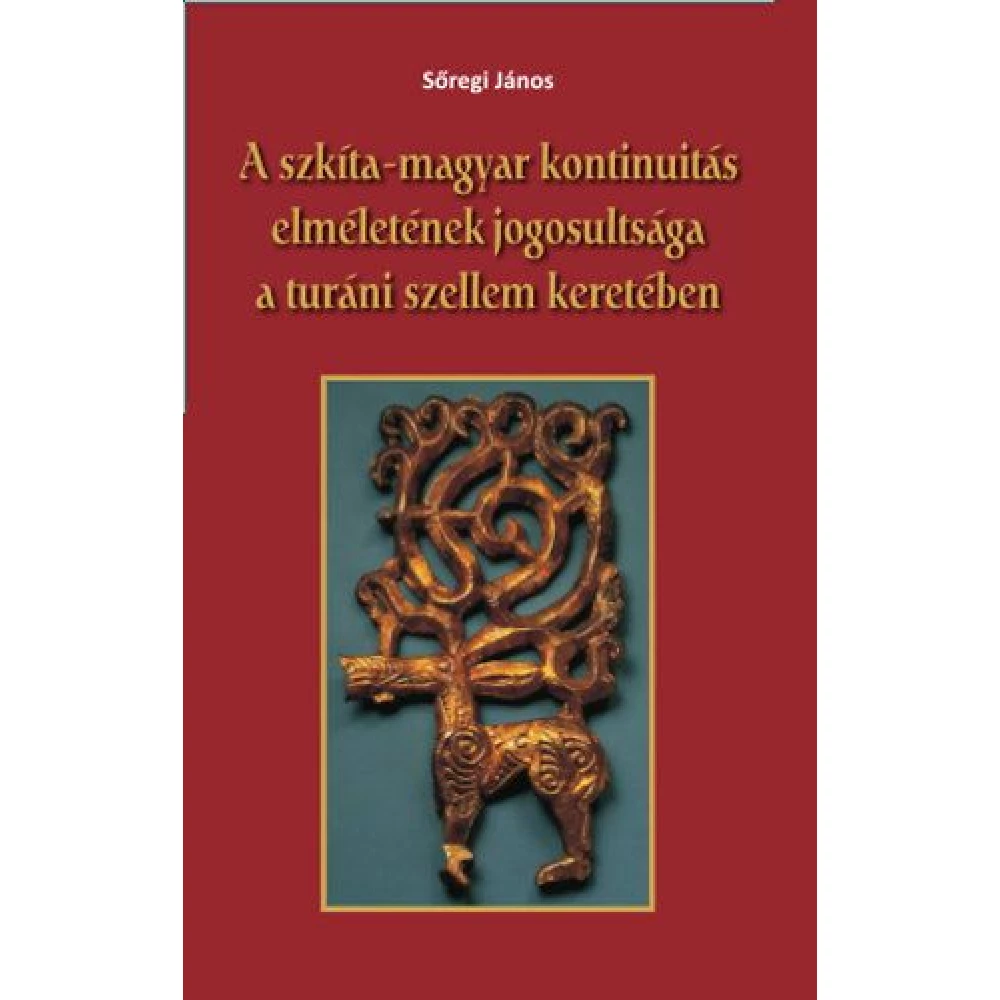
Sőregi János - A szkíta-magyar kontinuitás elméletének jogosultsága a turáni spirit keretében
Product description
The Scythian peoples of Hungary were killed in the B.C. ARC. century, the Celtic peoples advancing from the west pushed them back to the east, together with the Agathirsz, who, according to contemporary data, lived along the Maros. The Thracian tribes advancing from the south probably contributed to this as well, which phenomena are connected with the spread of iron in our country; otherwise, this question is not yet clarified. We do not know how long the Scythians were able to farm on the eastern mountain ranges of the Carpathians from here after the advance of the Celtic peoples. Based on the archaeological findings, it is certain that they entered through Transylvania, but we do not know their retreat route. B.C. ARC. From the 18th century until the first appearance of the Sarmatian people, the Hungarian lowland, especially the eastern half, was shrouded in almost complete uncertainty. Sometimes a thin ray of light is shed on this period only from the data of ancient writers. We can build almost nothing on the data of both Herodotus and Thucydides. Justinus (2nd or 3rd century AD), who made an extract from the work of Pompeius Trogus Historia Philippicae, who lived in the age of Augustus, II. He mentions the triballus in connection with the campaign of the Macedonian king Philip against the Scythians on the Danube (around 340 BC). – Strabo (63 BC–29 AD) mentions Getae and Dacians in the regions of the Danube and Tisza in his Geographika. Pliny (1st century AD) and Tacitus (55-120 AD) are the first to mention the Jazigs together with the Dacians.
Hermit Publishing House
History books
66 pages
Binding: paperback
ISBN: 9789638940971
Author: János Sőregi
NOTEBOOK SEARCH

OPINIONS
0.0
