
Dear Visitor! We are carrying out maintenance this weekend, so our website may be slow or briefly unavailable at times. Thank you for your patience!
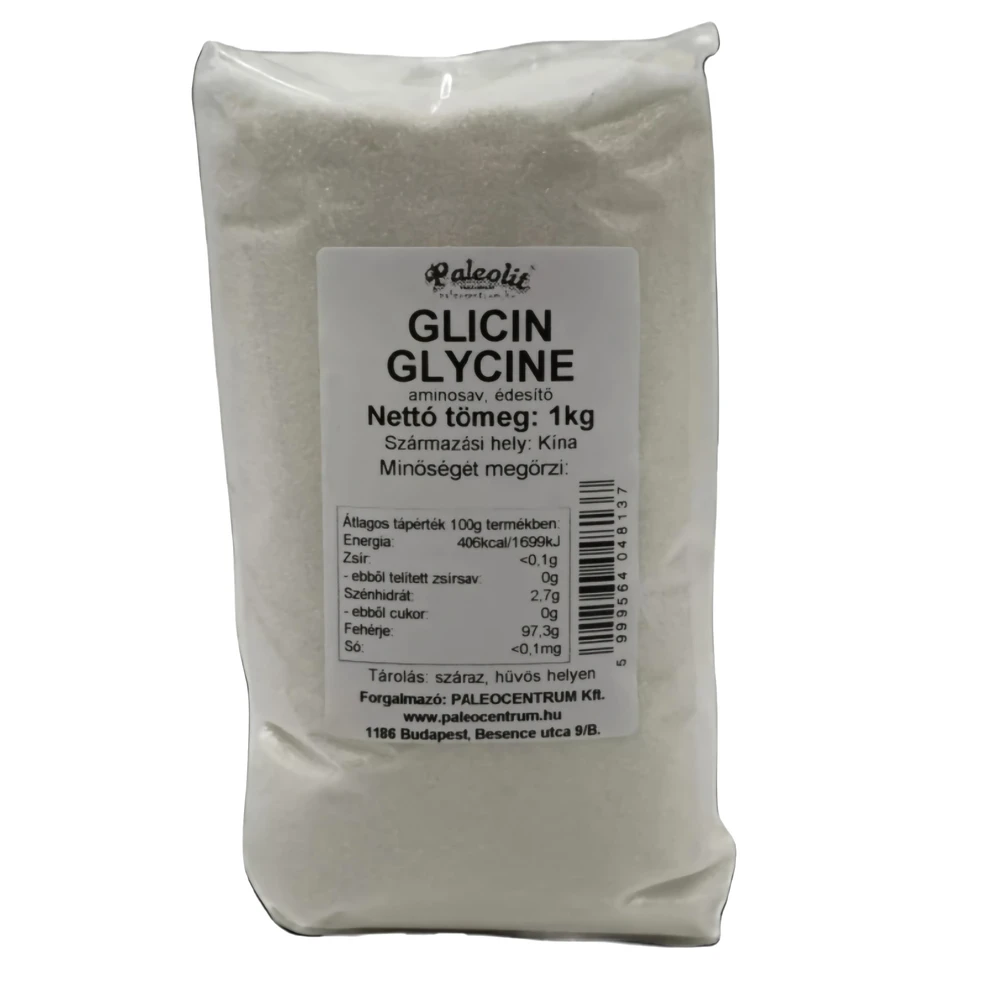
Paleolit glicin aminosav édesítő 1000 g
5 290 Ft
Product description

Glycine reduces the level of inflammation in the body, strengthens muscles and connective tissues, smoothes out wrinkles, promotes restful sleep and regenerates the liver - and all you need to do is drink one cocktail for breakfast! What is glycine?
Glycine is one of the many amino acids that make up proteins, namely the smallest of all, but it plays a very important role in the synthesis of the other amino acids, glutathione, creatine, heme (part of hemoglobin in red blood cells), and RNA/DNA, and helps the absorption of calcium. [1, 2].
Glycine as a nutrient
Glycine is considered by many to be a quasi-essential nutrient, as it is produced by the body itself, but it can also be taken in with food, although often even the combination of the two is not sufficient to supply glycine to all the tissues, bones, muscles and skin that need it.
The human body produces roughly 3 g of glycine per day, and we take in another 1.5-3 grams with food, that is, we get an average of 4.6-6 grams of glycine per day [3].
On the other hand, according to the evidence of twenty years of nutritional research, this is not enough to cover the ideal amount required by the body's metabolic processes, so it would be desirable to replace it from the outside [3].
A study shows that the vast majority of people get significantly less glycine than they need for all metabolic processes - which is approximately 10 grams per day for an adult weighing 70 kg [3].
The beneficial effects of glycine
1) Reduces inflammation
Glycine acts directly on inflammatory cells by inhibiting the activation of certain genes and the production of free radicals and pro-inflammatory cytokines [4].
Glycine reduces TNF-alpha (tumor necrosis factor-alpha) and increases the production of interleukin-10 [5]. The former is an inflammatory molecule, and the latter has an anti-inflammatory effect.
In diabetic patients, glycine can reduce TNF-alpha levels and increase interferon (IFN)-gamma levels [5]. Both processes are anti-inflammatory.
Glycine significantly inhibits the activation of NF-kB (nuclear factor-kappa B) and the production of IL-6 in heart artery cells [6]. Both effects reduce blood vessel inflammation and atherosclerosis.
In the case of liver damage caused by endotoxin (a poison produced in the body, e.g. bacteria), glycine increases the production of the anti-inflammatory IL-10 and thus increases the chance of survival of the affected person [7].
In the case of poisoned mice, glycine significantly increases the mice's chance of survival by reducing the efficiency of the endotoxin receptor and the level of TNF alpha, and by suppressing the also inflammatory NF-kB [7].
Mice fed a diet high in glycine (5%) were 100% prevented from dying after being injected with the E.Coli toxin because the glycine neutralized TNF-alpha. In contrast, 50% of the mice in the control group died within 24 hours [8].
In the same study, rats with liver damage were fed glycine and then also injected with endotoxin. The result was that 83% of the rats survived, while the survival rate for the control group that did not receive glycine was 0% [8].
Glycine plays an important role in reducing the body's oxidative stress level [9].
As a precursor of glutathione, glycine can restore the body's previously too low glutathione level [10, 11]. Glutathione is one of the important antioxidants in the body.
Glycine is especially recommended for older people, as glutathione levels in the body decrease with age [12].
2) It helps sleep and reduces the need for sleep
Glycine taken before going to bed improves the quality and efficiency of sleep, accelerates falling asleep, and increases the time of relaxing, slow-wave sleep (deep sleep) [13].
If we consume glycine before going to bed, we will be less sleepy during the day the next day, and we will perform better in tasks for which a good memory is important [13].
Glycine improves REM sleep and reduces non-REM sleep time [14].
Volunteers who were given 3 g of glycine before going to bed were less tired, "more lively and energetic" the next day. they felt better and "their heads were clearer" [15].
All indications are that glycine reduces daytime fatigue and sleepiness caused by lack of sleep [16].
Glycine also affects certain neuropeptides in the area of the hippocampus that regulates the circadian (daily) rhythm [16]. The circadian rhythm regulates the daily rhythm of bodily processes. From blood pressure to body temperature to various hormone levels, everything changes according to circadian rhythms.
Specifically, glycine increases the level of substances in the brain that play a crucial role in the development of the circadian rhythm.
It exerted on the corresponding cell groups of the hypothalamus
PRICE NOTIFICATION
NOTEBOOK SEARCH

OPINIONS
0.0
