
Dear Visitor! We are carrying out maintenance this weekend, so our website may be slow or briefly unavailable at times. Thank you for your patience!
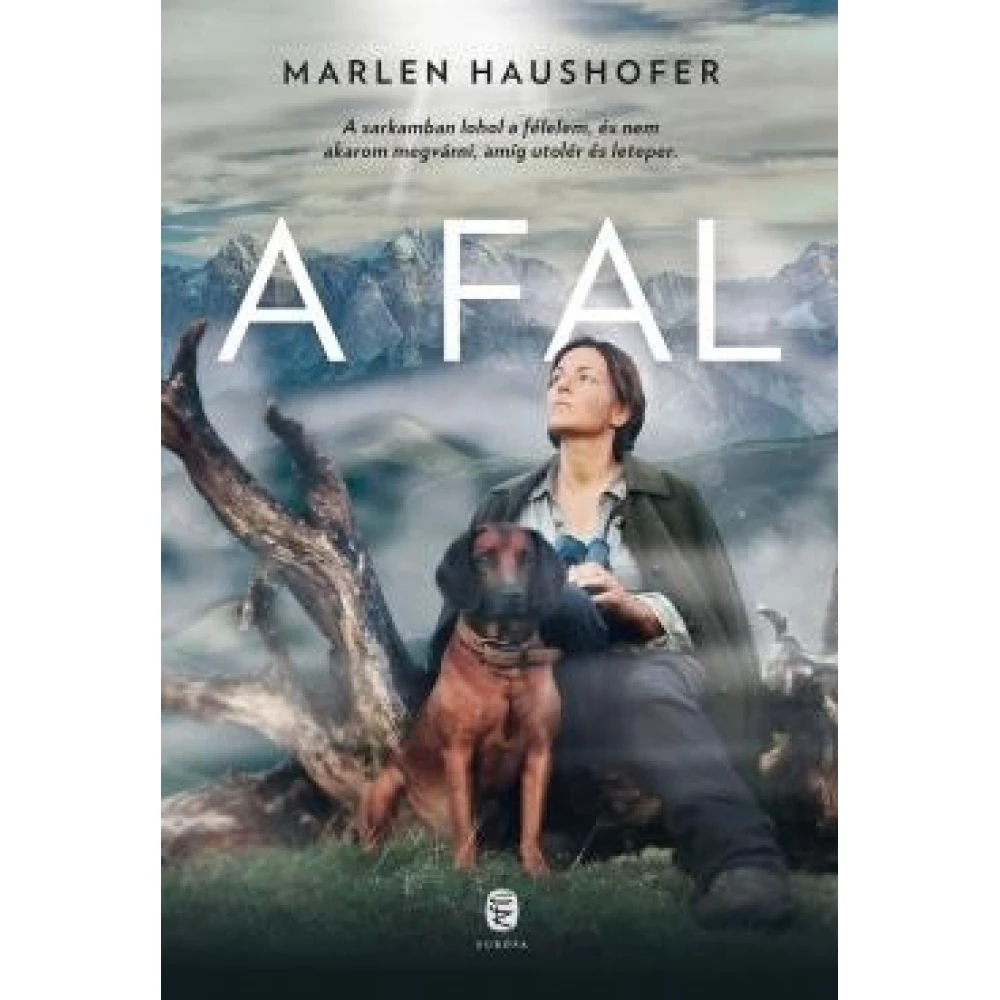
Marlen Haushofer - A fal
2 745 Ft
Product description
A woman in her thirties wakes up in the Alps to be isolated from the outside world by an invisible wall. There is no way out of the area, and no one is looking for it from the outside either, as everything over there has turned to stone. From now on, he has to face the challenges of a new kind of life in the company of a dog, a cow and a cat.
"I wouldn't recognize the woman I once was, before the wall was integrated into my life. But the woman who wrote on the calendar on the tenth of May that it was an inventory day is also a stranger. She did well to make notes so that in my memory I can bring him back to life. I remember, I haven't even written my name down yet. I almost forgot, but it's better that way. There's no one to call me by my name, so why?"
Marlen Haushofer Austrian writer (1920-1970). Already at the age of thirty, he won one of the biggest literary prizes, and then also the Austrian State Grand Prize. His writing style and vision had a great influence on twentieth-century literature. Based on the wall, a film depicting the power of nature and inner loneliness with astonishing power was made a few years ago - also screened in Hungary. Nobel laureate Elfriede Jelinek dedicated one of her works to Haushofer. According to fellow Nobel laureate Doris Lessing, few captivating novels can be said with such certainty that they can only come from the pen of a woman: "The wall is the female version of Robinson Crusoe. It is about the heroic love with which we turn to the trivialities of everyday life when everything around us is about to be destroyed."
Haushofer's best-selling book is hailed by his admirers as a critique of civilization and one of the pinnacle achievements of magical realism and the depiction of inner captivity. His dystopian novel is not about the search for liberation, but about the possibilities of survival. About how much a person can love when he has nothing left, not even a name.
PRICE NOTIFICATION
NOTEBOOK SEARCH

OPINIONS
0.0
