
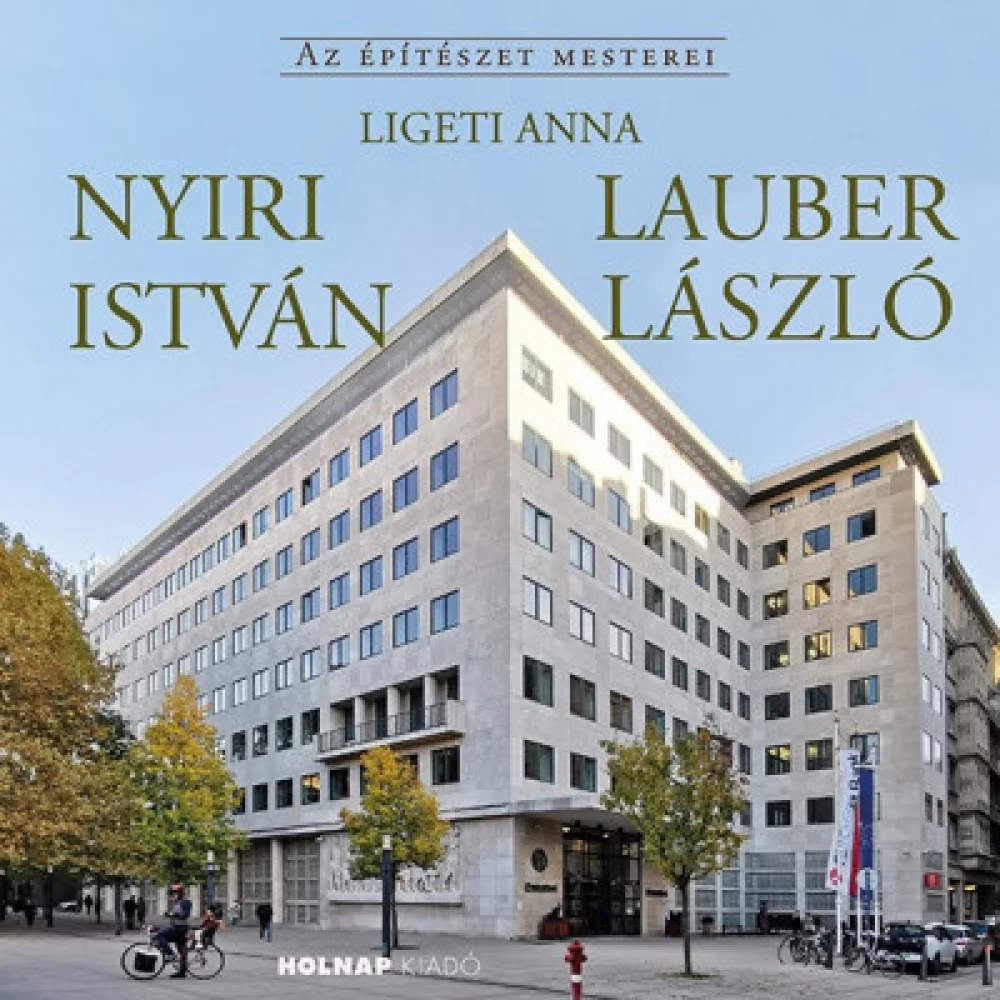
Ligeti Anna - Nyiri István - Lauber László
not available
Product description
István Nyiri (1902-1955) and László Lauber (1902-1953) were the outstanding creative duo of modern Hungarian architecture between the two world wars. They ran an independent office in the capital for more than ten years, and have completed many apartment buildings, rental villas and public buildings to their name.
The paths of the two construction artists crossed each other in the Wälder office, where they spent their practical years after their studies. Although after becoming independent, they completed their work in modern architectural trends, they excellently incorporated the respect for tradition and the ability to compromise learned in the professor's office into their design practice.
Already during his university years, László Lauber achieved international success with his Borpavilon design. Before opening the independent office he founded together with Nyiri, he entered his name among successful architects with a very bold building: the Excelsior car service station with Bauhaus style features.
Their early work can be known mainly from plans for apartment buildings, family houses, and rental villas. Their architectural style is characterized by the fact that although they cannot be classified under any style, the specific combination of elements known from modern architectural topos associated with various movements and groups makes their buildings recognizable and unique. Their first really successful joint project was an apartment building at 10 Kékgolyó utca, which was followed by a series of commissions. The special feature of the building is the roof terrace, which offers a picturesque view of the city, with which the walking roof culture was established, and here the large hole window, which later became their characteristic topos, first appeared here. After Buda was conquered, several apartment buildings were planned on the Pest side as well. They regularly participated in design competitions, several of their public building designs were realized, and it still operates according to its original function.
After the Second World War, their office was liquidated out of necessity, and they continued their architectural activities in separate ways in the state planning offices.
In addition to practicing their profession, their teaching activities are also outstanding. Although not at the same time, they both taught at the University of the Arts, shaping the careers of many young architects in the office and behind the teacher's desk.
Anna Ligeti (1985) is an art historian, graduated from Pázmány Péter Catholic University, her main area of interest is Art Nouveau and modern architecture between the two world wars. He is currently an illustration student at Krea Design School.
PRICE NOTIFICATION
Recommended for you
Similar products
NOTEBOOK SEARCH
OPINIONS
OPINIONS
