
Dear Visitor! We are carrying out maintenance this weekend, so our website may be slow or briefly unavailable at times. Thank you for your patience!
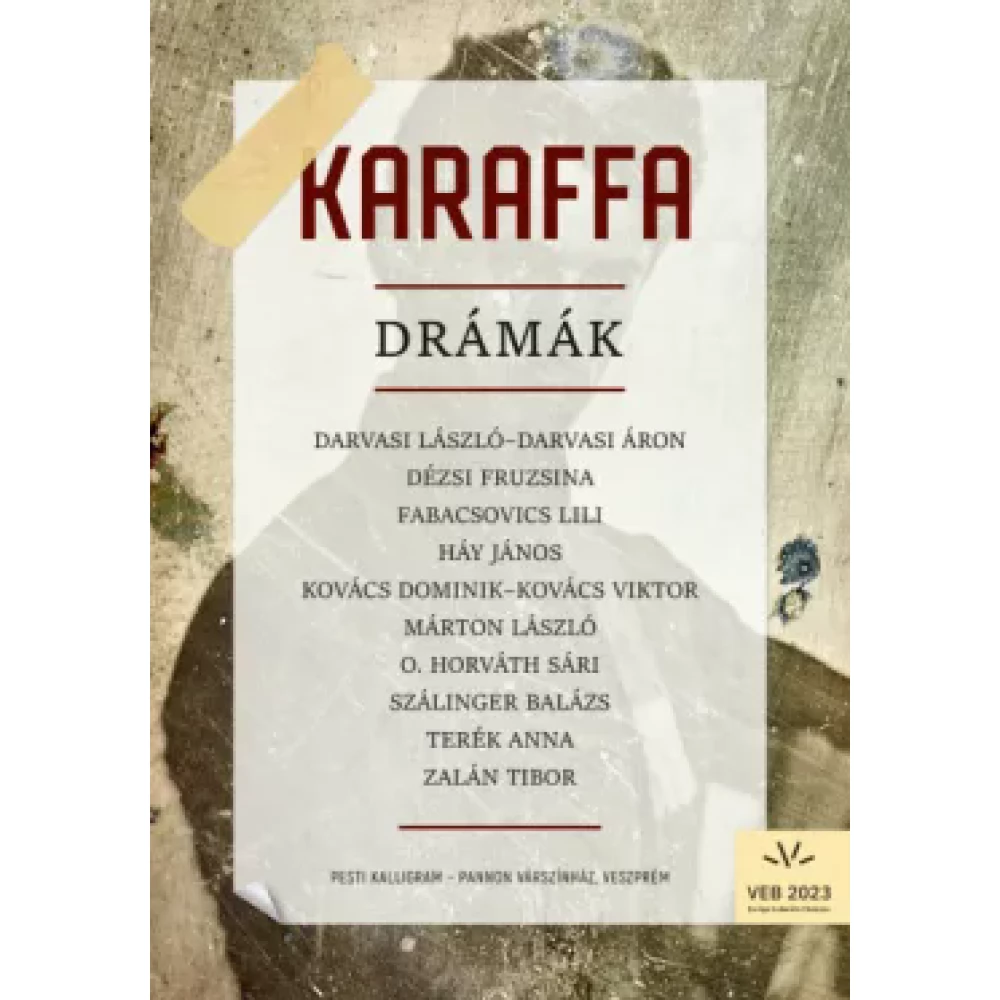
Géczi János - Karaffa - Drámák
4 700 Ft
Product description
Why was Petőfi interested in the historical event of one hundred and sixty years ago? And who was Count Antonio Caraffa? The similarity in the roles played by Antonio Caraffa and Haynau in Hungarian history is obvious, so it seems self-evident what could have excited Petőfi about the Eperjes story, and why he was preoccupied with this topic in the last days of his life. When he arrived from Pest with his family to Mezőberény, to his friend Orlai Petrich Soma, on July 3, 1849, he fled. On the one hand, he was once again disillusioned with politics, and on the other hand, his name was also on the wanted list issued for participation in subversive (read: revolutionary) events, bearing Haynau's signature. He hoped for a temporary calm in Mezőberény, but at the same time he started his drama. In the two completed scenes (the second of which is not even finished), he evokes the near future awaiting Hungarians with almost visionary power. The work is interrupted by the visit of his friend Gábor Egressy, at whose urging and in his company he sets off to Bem's camp, to death, on July 18.
"The ten plays - based on their characteristics - can be classified into three groups. László Márton (Caraffa), Tibor Zalán (Karaffa) and Balázs Szálinger (Karaffa) continue to think about the genre possibilities of historical drama in different ways. They empathetically unfold the basic situation outlined in the drama fragment, they recall the the well-known course of historical events in Eperjes, which are enriched with fictional elements. The authors' approach referring to the present day prevails primarily at the linguistic level, whether they write in verse or prose. [...] László Darvasi and Áron Darvasi (Petőfi 2022), the Kovács twins ( The hyena), Lili Fabacsovics (Karaffa) and Anna Terék (Karaffa) are even less faithful to the text than, for example, Balázsé Szálinger. Anna Terék stuck mostly to the dramatic model offered by Petőfi, the work of Dominik and Viktor Kovács is a fair play, Fabacsovics moved it to the present the story, just like Darvasi's pamphlet-like approach. [...] Mostly János Háy (I am me), Fruzsina Dézsi (An Indian sits on the Körös bank and looks at the floating animals) and Sári O. Horváth (May a happy god live) moved away from the basic work." - István Nánay
PRICE NOTIFICATION
NOTEBOOK SEARCH

OPINIONS
0.0
