
Dear Visitor! We are carrying out maintenance this weekend, so our website may be slow or briefly unavailable at times. Thank you for your patience!
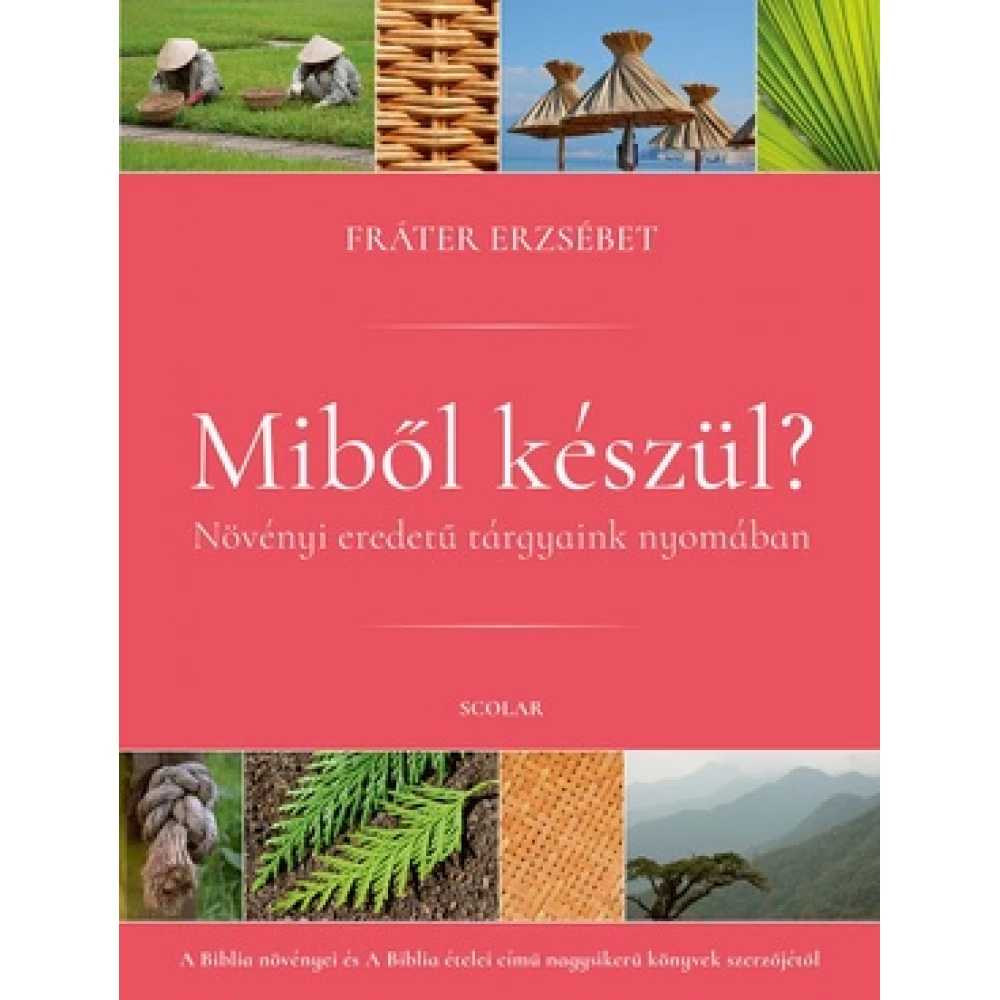
Fráter Erzsébet - Miből készül?
Product description
"It is well known how many plant products are consumed by mankind, but the meeting of plants and people means an unparalleled diversity not only in the field of nutrition. Handicraft products made with different purposes and materials equally show not only the richness of human creativity, but also the incredible diversity of the flora. Once upon a time, and in its remains even today, man used cultivated plants and plants found in nature in an extremely diverse way, when he made his most important objects of use. was an important and necessary part of everyday life.
Using the properties of the natural environment, man created and organized his built environment. One of the important sources of ethnography's knowledge of material culture is the examination of traditional objects of everyday life. Folk construction, farming and nutrition, handicrafts, folk costumes and folk artefacts have been at the center of research interest since the beginning. Due to the differences in climate, geography and vegetation, different raw materials and often different techniques are used to make the objects, but the function and practicality result in many similarities in the case of handicraft products found on different continents.
The science of ethnography examines the role and production technology of the material objects of culture. Our book approaches the presentation of traditional, everyday objects from a new angle. We investigate how, as a result of functional adaptation to the environment, putting expediency first, how diversely man captures the offer of nature around him, how diversely he utilizes its features, the plants found in his living space. In other words, in addition to the well-known, otherwise exotic objects, their raw material, the plants, are equally emphasized, in order to present the aspect of biodiversity that also affects ethnography. In our work, less emphasis is placed on wood materials, objects carved or carved from wood, because there is a very abundant literature on these, written by excellent forestry and wood industry specialists, and discussing the multitude of wood species suitable for processing found on Earth would stretch the scope of our book and result in disproportion, diverting the focus from the about the richness of the variety of raw materials of plant origin. The structure of the book is structured in such a way that the detailed presentation of the plants is placed at the end of each chapter, well separated for the reader. Of course, there is only one detailed description of the plants that occur in several chapters, this is indicated by small arrows in the other chapters, and it can also be easily found using the plant name index. In this case, in addition to the Carpathian Basin and Europe, we are primarily examining the object culture of Asia within the huge scope covering the entire Earth. Some of the photographs were also taken there, but the own collection of objects, as well as the National Botanical Garden's unique collection of living plants in the open field and in the greenhouse, were also an important basis for documenting the objects and plants."
(Excerpt from the book's introduction)
NOTEBOOK SEARCH

OPINIONS
0.0
