
Dear Visitor! We are carrying out maintenance this weekend, so our website may be slow or briefly unavailable at times. Thank you for your patience!
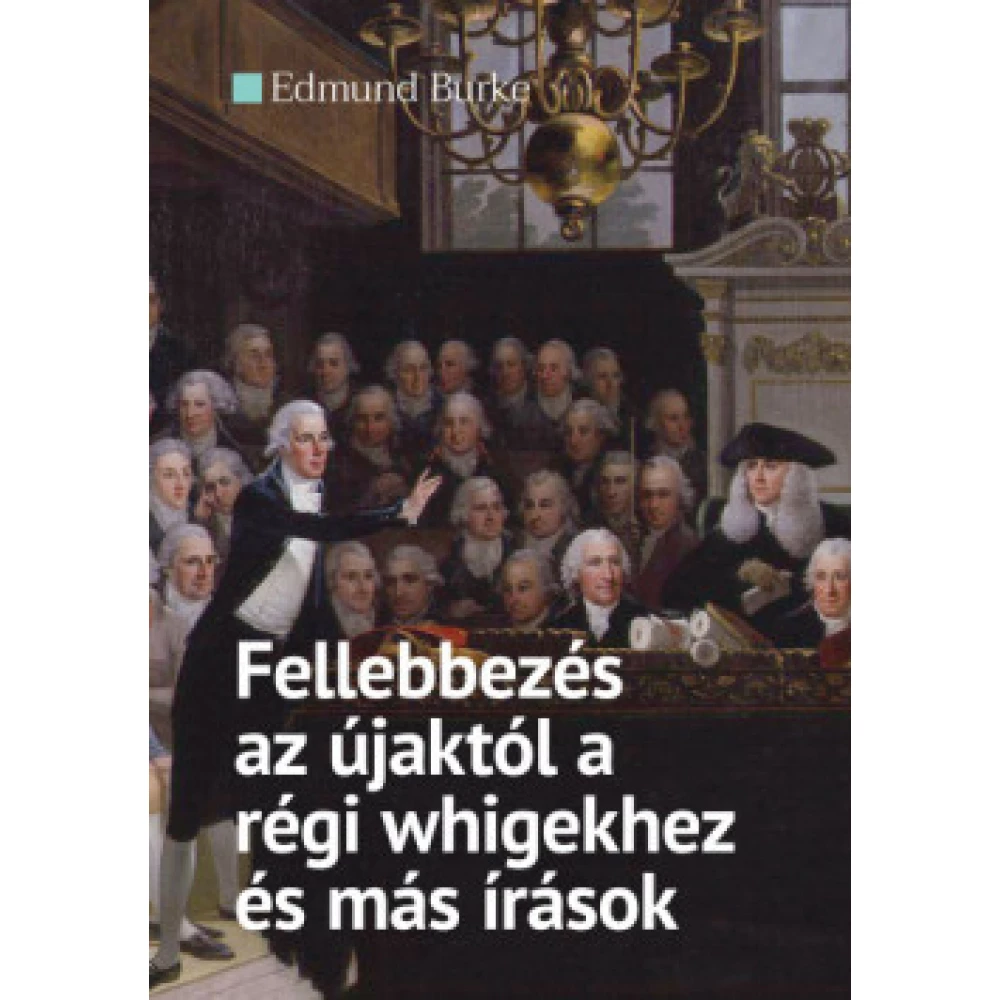
Edmund Burke - Fellebbezés az újaktól a régi whigekhez and más írások
Product description
Edmund Burke (1729-1797) was an Anglo-Irish Whig politician and political thinker. He is primarily known today for his writings in response to the French Revolution, which laid the foundation for Anglo-Saxon conservative political thought. He came from an Irish Catholic-Protestant family and studied at Trinity College in Dublin. Initially, he tried a literary career. Then he became the secretary and speechwriter of the leader of the Whig party, Lord Rockingham. He then became a Member of Parliament for 30 years and one of the leading speakers of his party.
Burke defended the constitution against royal absolutism before 1789, but at that time he already saw the greatest danger in the radicals. Burke was the first among his contemporaries to give a new interpretation to the French Revolution. Contrary to the public opinion of the time, he not only condemned, but drew attention to the significance of the event and its expected consequences.
"This declaration of a new kind of governance, based on new principles (or so it claims), is the real crisis in European politics." He saw the peculiarity of the French Revolution in the fact that "this revolution ... is a revolution of theories and dogmas. Much
it is more similar to those changes that took place on a religious basis, in which the spirit of proselytization played the main role." The effect of such a (doctrinal) revolution is to bring into every country interests other than those arising from local and natural conditions." The revolution transformed the the nature of the political community: "The speakers of each school of thought were much more willing to bond with those who sympathized with their views in a foreign country than with their own compatriots who held a different view. These factions, wherever they arose, if they did not completely eliminate patriotic feelings, weakened cohesion. Political affections have become other motives and other bonds." Whatever our opinion may be
About Burke, he was arguably the first to recognize the significance and basic characteristics of revolution and the characteristics and effects of the ideological politicization that spread thereafter.
NOTEBOOK SEARCH

OPINIONS
0.0
