
Dear Visitor! We are carrying out maintenance this weekend, so our website may be slow or briefly unavailable at times. Thank you for your patience!
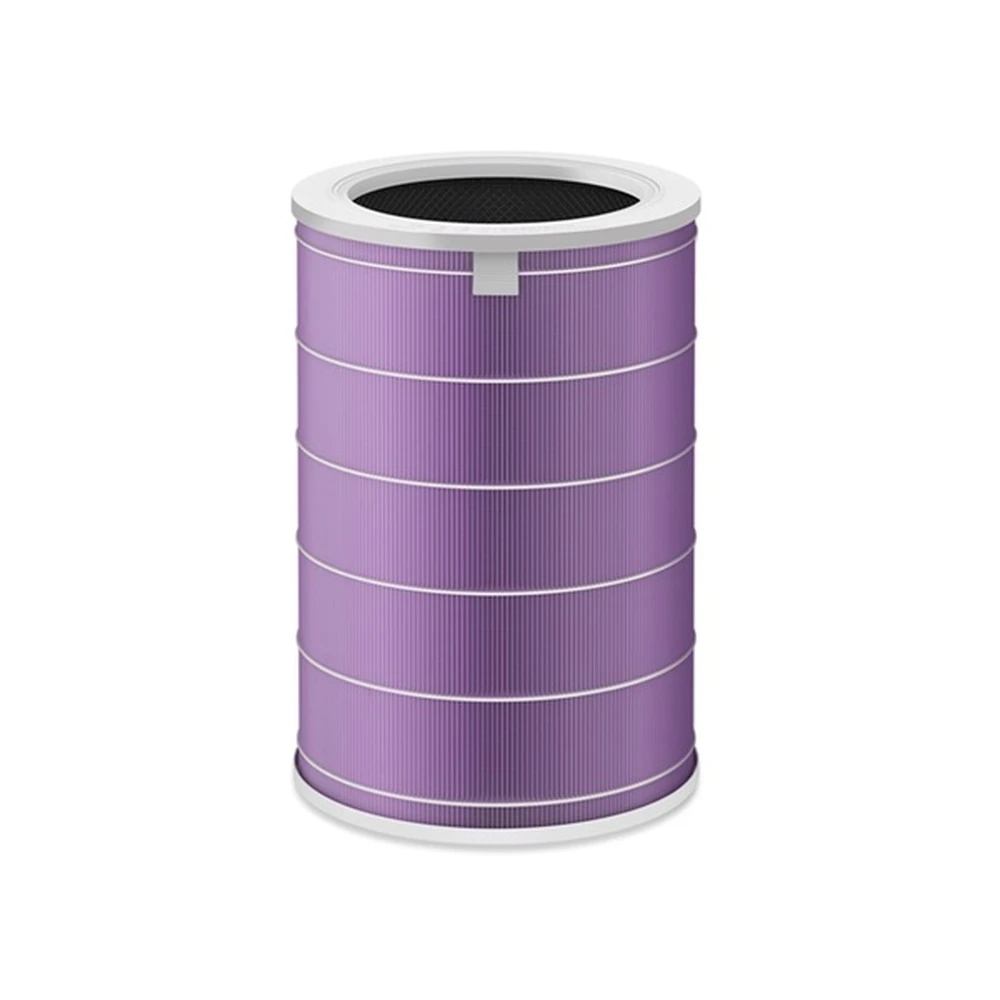
XIAOMI Mi Air Purifier Filter (Antibacterial) air purifier filter lila
Product description
FORMALDEHYDE: Formaldehyde (methanal) is a chemical compound with the formula CH2O. The simplest aldehyde. Colorless, unpleasant, pungent-smelling gas at room temperature. (…) Formaldehyde is an intermediate compound of the oxidation of methane and other organic compounds. It occurs in forest fires, exhaust gas, and cigarette smoke. Formaldehyde present in the Earth's atmosphere is formed from methane and other hydrocarbons in the atmosphere, under the influence of sunlight and oxygen. It is a component of smog. Degradation processes occurring in living organisms produce a small part of atmospheric formaldehyde.
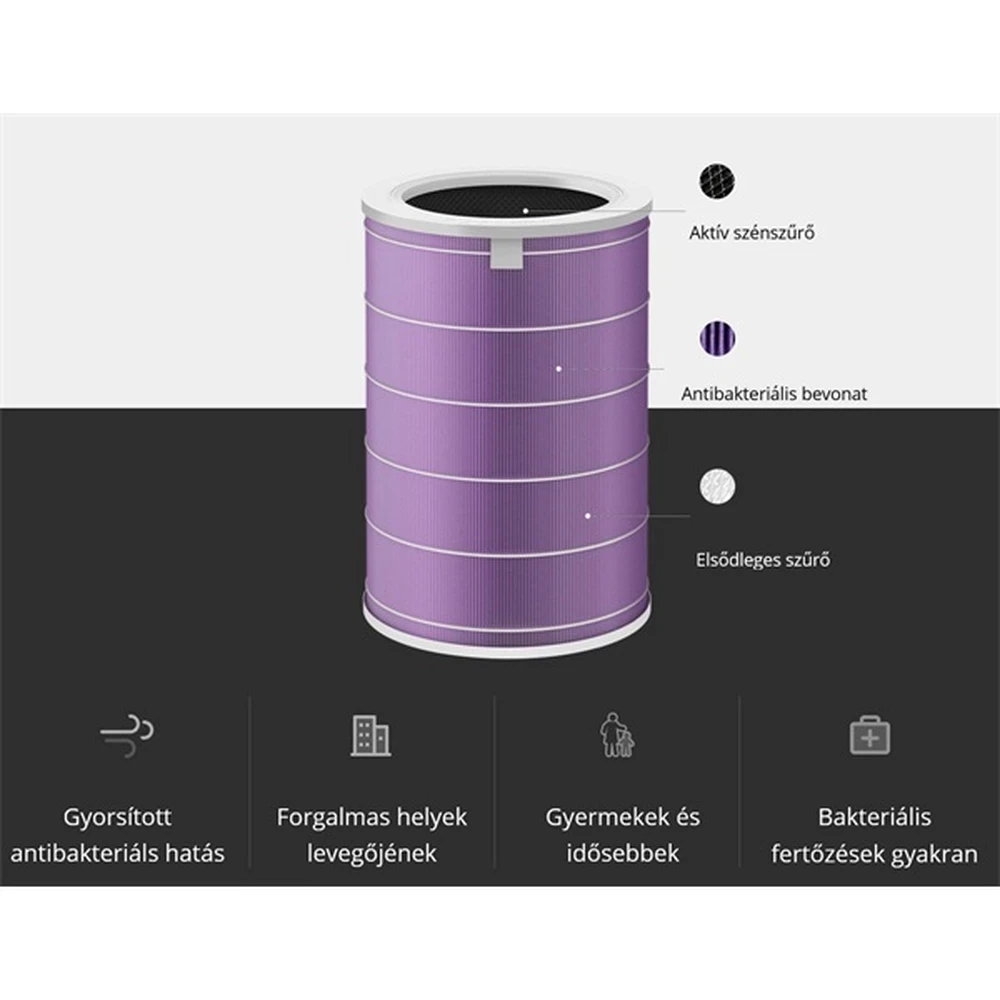
ANTIMICROBIAL COATING: organic metal salts to prevent the spread of bacteria and bacteria are composed of antibacterial agents that can destroy the nutrient transport of bacterial cells
HEPA: (High Efficiency Particulate Filter) is often used in hospitals and laboratories to filter micron-sized particles.
The primary filter is resistant to folding, grease, fats, acids, alkalis and most solvents.
PURITY
The performance of a filter depends on its cleaning ability and aerodynamic design. The filter supplied by US air purifier manufacturer TOP3 features an aerodynamic 360-degree cylindrical design and a powerful triple filter consisting of primary, HEPA and activated carbon layers.
Easy to use and replace, the balance of power and quality is what makes the Mi Air Purifier so effective.
PET primary filter - 360° filtration of large particles
Made of PET (polyethylene terephthalate), the outer layer is 3-5 times harder than similar models.
It has high flexural strength and resists folding, grease, fats, acids, alkalis and most solvents.
The cylindrical shape ensures a 360° filtration of dust, hair and other larger floating particles.
Ultra-dense H11 grade HEPA filter Filters 99.3% of PM0.3
HEPA (high efficiency particulate filter) filters are often used in hospitals and laboratories to filter out micron-sized particles.
The Mi Air Purifier uses an ultra-dense Toray PP and PET HEPA filter to trap PM2.5, PM0.3, pollen and other respirable particles, allowing only clean air to pass through.
When fully extended, it measures 7.7 meters and effectively filters out 99% of PM0.3 particles and 99.99% of PM2.5 particles.
Finely folded 161 times
The ultra-dense HEPA filter has a total length of 7.7 meters.
Although ideal for air purification, this results in high drag.
To this end, we have taken great care to perfect the folding process.
Perfectly folded corners
Sharp, precisely machine-folded corners allow
to allow air to flow smoothly, reducing air resistance.
Carefully calibrated intervals
The distances between each corner are exactly 3.5 mm
is held to maintain even air flow.
Laser-inserted adhesive injection
The step glue with laser positioning
injection ensures consistency and accuracy.
Quality coconut activated carbon filter from Southeast Asia
Activated carbon absorbs harmful gases that HEPA cannot filter.
Mi Air Purifying Coconut activated carbon is the most effective of its kind.
Combined with an anti-formaldehyde formula, it effectively absorbs harmful chemicals,
for example, formaldehyde, benzene, and ammonia, as well as odors and smoke.
It offers a total floor area of 57,000 m2, or the capacity of 8 football fields.
Absorbs odors and harmful substances
Household renovations and other activities emit substances such as formaldehyde, benzene, and TVOC, which can be harmful at high concentrations.
The activated carbon filter of Mi Légtistíró coconut can absorb hundreds of harmful substances in these situations, keeping your home clean and your family healthy.
Changing the filter is very easy
The design of the filter includes three layers for easy replacement.
In separation, each filter layer has its own lifetime and it is difficult to tell
if replacement is required. Secondary contamination can also occur when changing filters.
By incorporating all 3 layers, the cylinder filter of Mi Air Purifier solves these problems
problems and keeps the costs of filtration low.
Real-time usage monitoring
All filters lose their effectiveness over time and must be replaced. Filters that are not replaced on time are unable to block harmful substances or may cause secondary pollution. Contrary to what you hear in many advertisements, cleaning old filters with water or vacuuming does not guarantee that the filter will regain its efficiency. We recommend changing filters at least every six months or more often depending on usage. With the Mi Home application, you can monitor the life of the filter and receive a notification when the filter needs to be replaced.
NOTEBOOK SEARCH

OPINIONS
0.0
