
Dear Visitor! We are carrying out maintenance this weekend, so our website may be slow or briefly unavailable at times. Thank you for your patience!
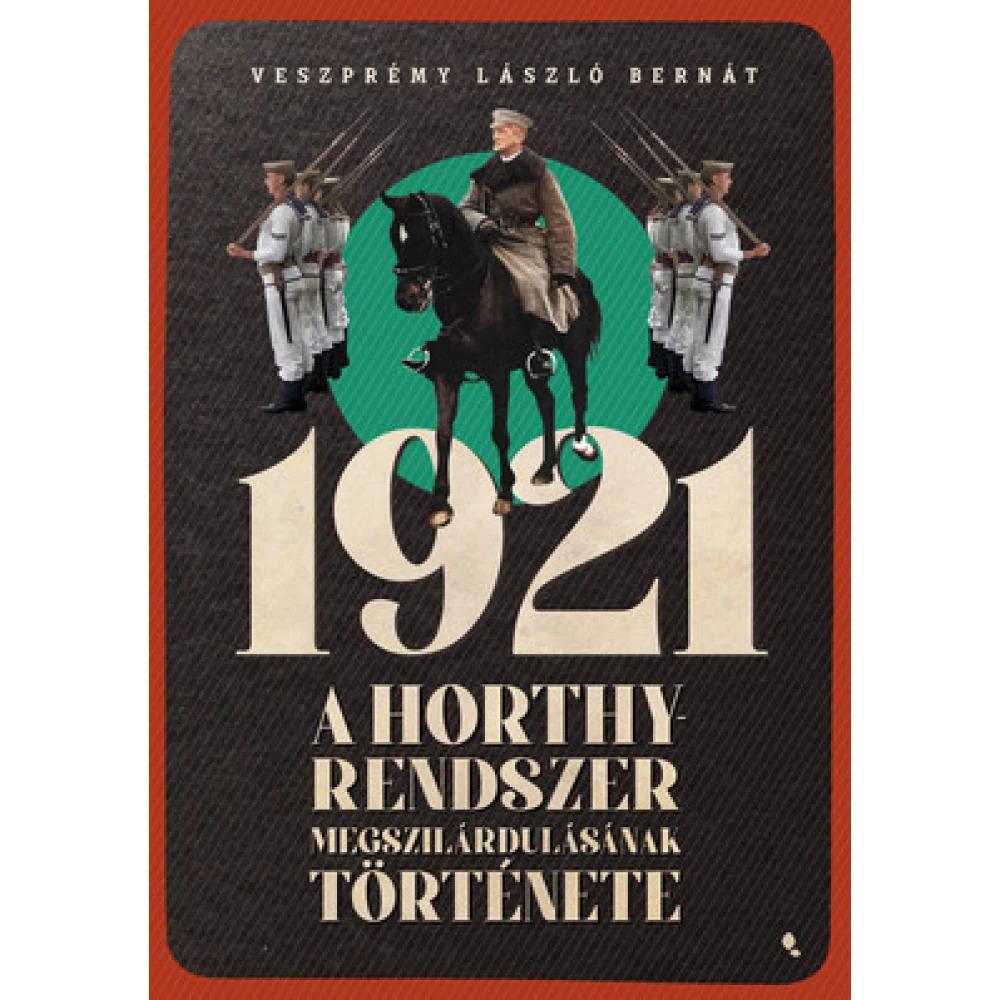
Veszprémy László Bernát - 1921 - A Horthy-rendszer megszilárdulásának history
3 137 Ft
Product description
Almost a hundred years ago, after the traumas of the lost world war, revolutions, occupation, terror and the Trianon peace treaty, the Horthy system feverishly tried to define itself.
The experiment was not only characterized by nationalist-irredentist rhetoric and the flare-up of anti-Semitism, but internal Christian tensions also surfaced, primarily between the two major Protestants and the Roman Catholic Church.
In 1921, Pécs, Baja and the territories between them were returned to the mother country, and an uprising broke out in Western Hungary to regain the territories to be annexed to Austria. The events were concluded by the referendum in Sopron at the end of the year, with which - apart from minor differences - Hungary's current state borders were formed.
Still in the same year, the last Hungarian king, IV. Károly tried to return to the throne twice, posing serious challenges to the governor and the political elite loyal to him. In the end, the dispute and infighting around the king question clearly turned into the sharpest domestic political conflict of the era.
Bernát László Veszprémy's volume presents the year 1921 as a fate-changing period, the significance of which in the Horthy era can only be compared to 1944. But while countless small and large monographs have already been published on the latter, researchers have so far paid much less attention to 1921, even though its events determined the subsequent fate of the entire system.
The book provides a thorough and intriguing summary of the early Horthy system, taking into account aspects of social history, political history and memory history, while raising important questions about Horthy's talent as a governor or the politics of Pál Teleki and István Bethlen.
PRICE NOTIFICATION
NOTEBOOK SEARCH

OPINIONS
0.0
