
Dear Visitor! We are carrying out maintenance this weekend, so our website may be slow or briefly unavailable at times. Thank you for your patience!
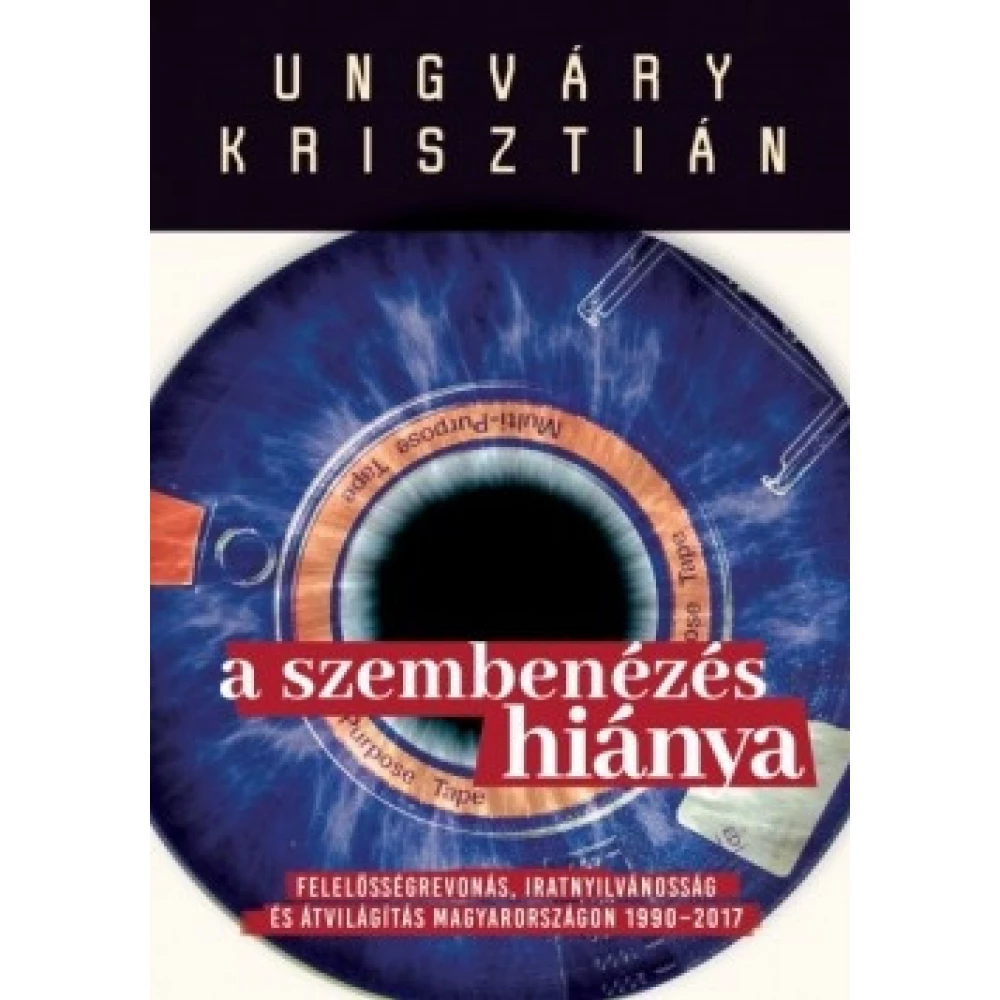
Ungváry Krisztián - A szembenézés hiánya - Felelősségre vonás iratnyilvánosság and átvilágítás Magyarországon 1990-2017
3 137 Ft
Product description
Nearly three decades after the change of regime in Hungary, the exploration of the party-state past is still considered one of the most serious debts of the political elite and society. However, the lack of "social catharsis" can only partly be blamed on the peaceful, consensual nature of the political and economic transition: the power elite of the Third Hungarian Republic would still have been able to face the past, ensure the disclosure of party-state documents, and name those responsible. The problem however, it was regularly captured by changing power interests and petty political games, and thus, instead of the process of social purification, the issue slipped away in the thick of the public scandals that erupted over and over again and the subsequent lawsuits.
KRISZTIÁN UNGVÁRY's new volume attempts to outline the history of ideas between 1989 and 2017 regarding information compensation, vetting and the prosecution of communist crimes, and then, as a kind of illustration, it also tries to convey in some specific case studies the problems that the partiality of public records and it is caused by a lack of vetting in Hungarian public life. The author aims to prove that the deficits of today's Hungarian politics are closely related to the failure to confront the past.
Krisztián Ungváry is a scientific associate of the 1956 Institute. Between 2005 and 2008, he worked as an expert at the Ministry of National Cultural Heritage, where he participated in the German-Hungarian-Polish affairs of the Memorial and Solidarity Foundation. In 2005, he became a member of the scientific council of the German Anti-Eviction Center. He was awarded the title of Doctor of the Hungarian Academy of Sciences with his academic dissertation entitled The balance of the Horthy system. His area of interest is primarily the political and military history of the 20th century, as well as the relationship of people to their own history.
PRICE NOTIFICATION
NOTEBOOK SEARCH

OPINIONS
0.0
