
Dear Visitor! We are carrying out maintenance this weekend, so our website may be slow or briefly unavailable at times. Thank you for your patience!
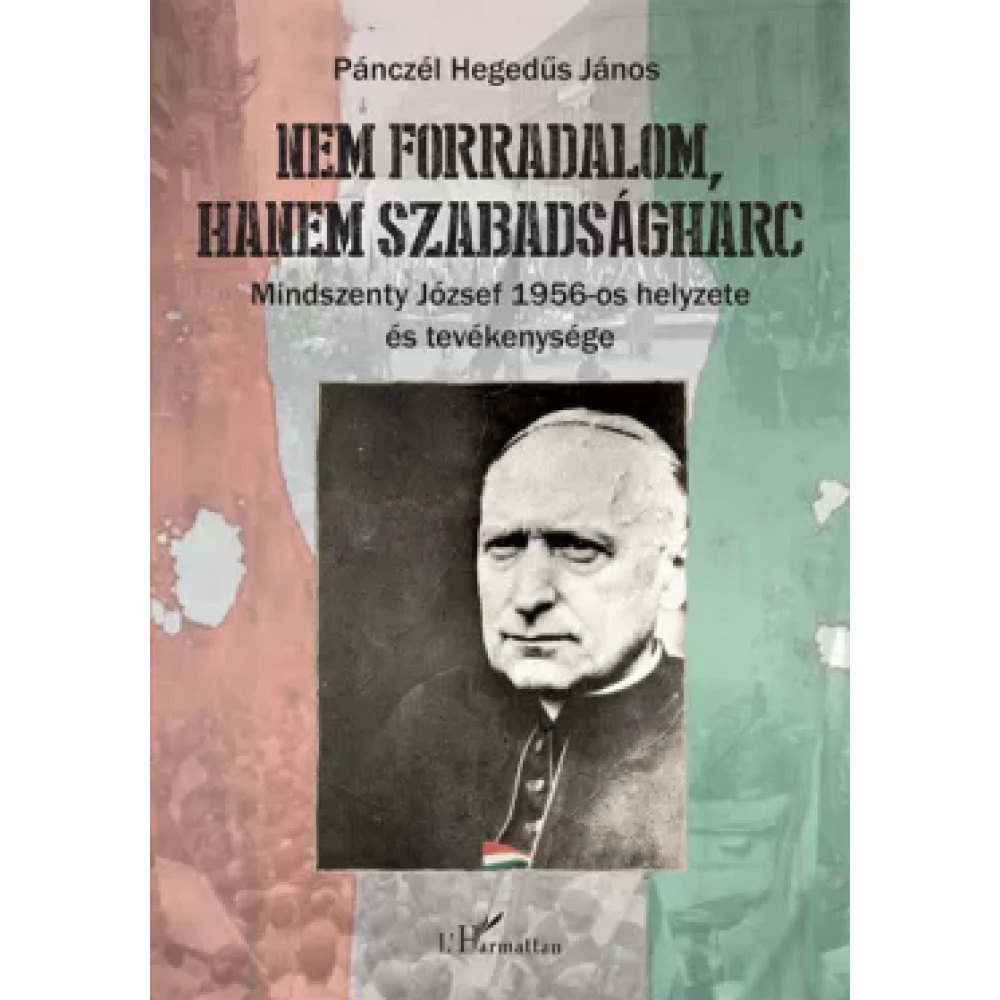
Pánczél Hegedűs János - Nem revolution hanem szabadságharc
3 914 Ft
Product description
József Mindszenty did not consider 1956 a revolution, but only a struggle for freedom, which in retrospect seems like a metahistorical statement. In support of this, this volume provides a detailed description of several decades of literature and sources related to Mindszenty's role in 1956. The author begins with the presentation of Mindszenty's activities in 1956 in prison, then internment, and in private prison, and then goes into detail about the process by which the elderly, but unbroken, Hungarian high priest was freed thanks to the victory of the freedom struggle. After his return, he begins his free work lasting 4-5 days in Buda, in the ruined Primate's Palace. János Pánczél Hegedűs deals with Mindszenty's activities in 1956 and the people related to him in their broader context, discusses his ambivalent relationship with Imre Nagy in a separate chapter, and clarifies the role of certain people (Albert Egon Turchányi, Antal Pálinkás, Prince Löwenstein, Otto Habsburg-Lorraine, etc.) , or illuminates others with smaller biographies in his rich footnotes. He also talks separately about the organizations, persons and parties of the time connected with the Prince-Primate. On one side of the freedom struggle, Mindszenty was counted on as an alternative development opportunity, even as a 'hidden head of state' (Christian and national parties, emigrants, the Hungarian heir to the throne, etc.), and among those who supported the revolution, many saw in Mindszenty a 'counter-revolutionary' and 'reactionary' danger (national communists, social democrats, populists, left-wing democrats, etc.), to which the later Kádár administration also joined and developed it into an official political narrative. The volume covers Mindszenty's church government activities at the time (with special regard to suspensions, truncated episcopal conferences, appointments) and complex events such as the seizure of the State Church Office, and in its appendix it also provides many contemporary sources.
The volume of János Pánczél Hegedűs is the first independent work that undertakes, with a monographic claim, to present József Mindszenty's activities in 1956, his opponents, supporters, struggles, and his life and thoughts as he shared the tragic fate of his nation.
JÁNOS PÁNCZÉL HEGEDÜS is a historian. For many years, he lectured on the topics of history and communication at the Metropolitan University, graduated from the Pázmány Péter Catholic University's Doctoral School of History, where he also held seminars at the Department of Political Science. For a long time, he was a scholarship researcher at the Tamás Molnár Research Center of the National Public Service University, where he already researched the role of József Mindszenty in 1956. Later, he published partial results in larger studies, scientific lectures and a smaller volume (2015). His current work contains the results of more than ten years of research, which he hopes can bring new chapters and approaches to the subject from the historical, political, and ideological perspectives. The significance of the last days of Hungary's last prince-primate in freedom in his homeland goes beyond the heady, yet tragic events of 1956, but also the era of the communist dictatorship that was re-established after that.
PRICE NOTIFICATION
NOTEBOOK SEARCH

OPINIONS
0.0
