
Dear Visitor! We are carrying out maintenance this weekend, so our website may be slow or briefly unavailable at times. Thank you for your patience!
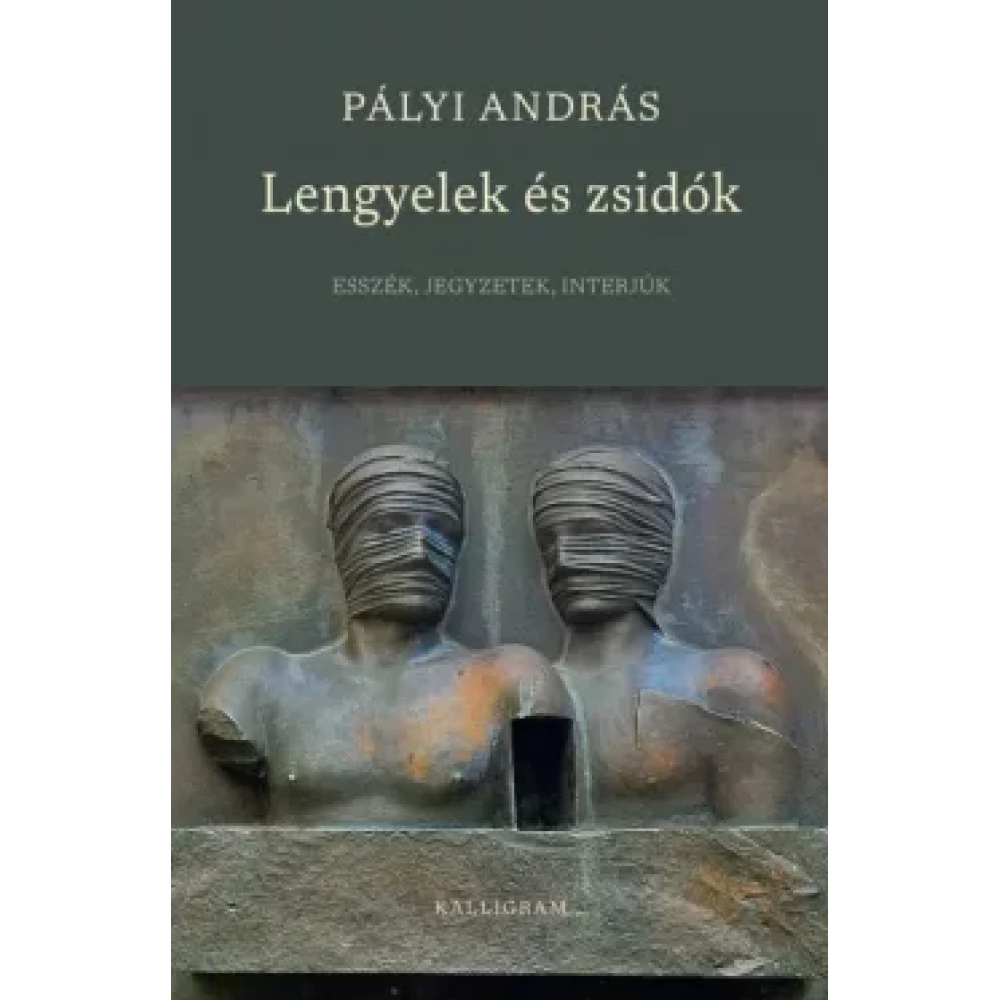
Pályi András - Lengyelek and zsidók
3 130 Ft
Product description
In a sense, this book wrote itself. The author, who has, one might say, professionally promoted Polish culture in Hungary for a lifetime, repeatedly came face to face with the complicated, traumatic, painful or even promising chapters of the Polish-Jewish relationship, sometimes as the background, episode, or main theme of the given work. The present volume, whose oldest and most recent pieces are separated by nearly forty-five years, contains all of his relevant writings, forming a unique historical kaleidoscope. The individual writings therefore do not follow each other in chronological order, but in historical chronology, as if suggesting that after so many serious wounds of the past, it is time to take stock of how and what the specific cross-border cultural heritage of Central European Jewry can be even today. , a living source for all of us, Jews and non-Jews.
The writer András Pályi, who is also a well-known Polonist, analyzes Polish cultural events, but again and again he finds himself faced with the difficult questions of Polish-Jewish coexistence. Reading his occasional writings of varying genres now one after the other, we still feel that he invites us on a real, unprejudiced journey of discovery, investigates the question, and presents an increasingly complex and nuanced picture. The facts speak for themselves. Who would have thought, when there was a debate in the late 1980s about whether the Poles could be blamed if only two percent of them participated in rescuing the Jews, that a decade and a half later the case of Jedwabne, where in the summer of 1941 the Poles of the small town drove her into a barn, would keep the public at a fever pitch their Jewish neighbors and set the building on fire? Who would have guessed that Andrzej Wajda's long-awaited Katyń film about the massacre of Polish officers by Stalin would shed a special light on the director's Holocaust films?
Among other things, the prose of Bruno Schulz, who is related to Kafka, the doctor who accompanied the orphans entrusted to his care to the gas chamber, Janusz Korczak, the surviving leader of the Warsaw Ghetto Uprising, the legendary cardiologist professor Marek Edelman, and many other things are mentioned. Thus, about Jan Karski, who first brought news about the tragedy of the Jews to the Western world during the war at the cost of amazing adventures, or about Adam Michnik, the bastard of the demonic times of the 1968s, who claims that "my father was Jewish and a communist, I am Polish and anti-communist", about Roman Polański , about Tadeusz Kantor, Jerzy Kosiński and not least about the cryptotheologist of Judaism, Agata Bielik-Robson, who wonders "what comes after the death of God".
PRICE NOTIFICATION
NOTEBOOK SEARCH

OPINIONS
0.0
