
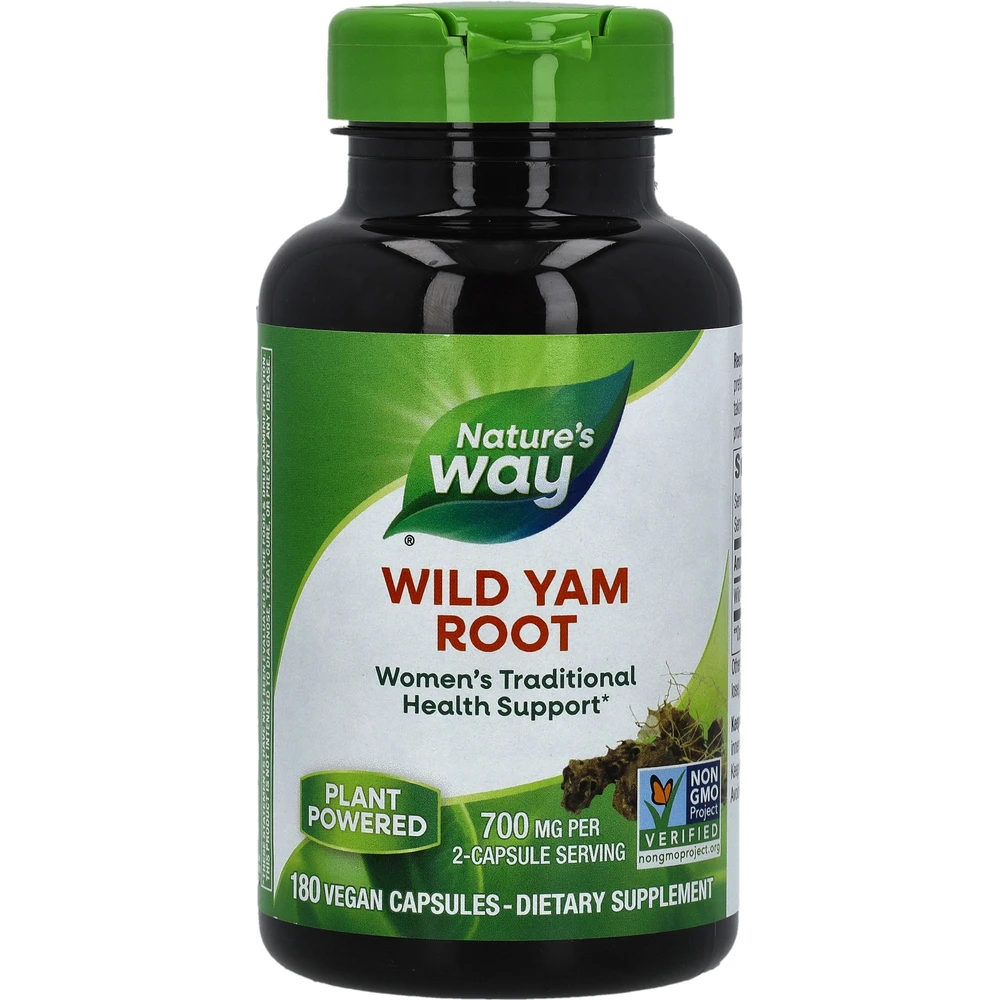
NATURES WAY Wild Yam Root mexikói jamgyökér Capsule 180 pcs
not available
Product description
Nature's way wild yam Mexican yam root for women's balance capsules 180 pcs
Wild yam is a plant native to North America that people have used for centuries in alternative medicine. Possible medicinal uses of wild yam include the treatment of menopausal symptoms, rheumatoid arthritis, diabetes and muscle spasms. Wild yam also has other names such as "colic root", "devil's bones", "rheumatism root" or "Chinese root". There are more than 600 wild species, but only 12 of them are edible.
Potential medicinal uses of wild yam
The plant's roots contain a chemical called diosgenin, which can influence the production of many useful hormones in the human body, such as estrogen or dehydroepiandrosterone (DHEA). Eating wild yam may be a natural way to promote these hormones in the body, which may have some health benefits.
Menopause symptoms
Some experts recommend using wild yam as an alternative to estrogen replacement therapy to treat menstrual symptoms. Wild yam is theorized to increase or stabilize estrogen levels in the body to help relieve symptoms. Research is ongoing to support these claims.
Cramps and muscle pain
Wild yam has antispasmodic properties, which are substances that reduce muscle spasms. This spasmodic property means that wild yam may be useful for reducing cramps and muscle pain associated with premenstrual syndrome (PMS).
Rheumatoid arthritis
Many medical professionals believe that wild yam has anti-inflammatory properties and is used to treat rheumatoid arthritis. Rheumatoid arthritis is a chronic condition that causes inflammation of the joints. This can cause pain and stiffness that limits movement in people with the condition.
Blood sugar control
Wild yam also contains a chemical that helps regulate blood sugar levels.
Improves cholesterol levels
According to one study, diosgenin in wild yam can help lower HDL cholesterol and LDL (the "bad" cholesterol).
Colon diverticulosis
Diverticulosis is the bulging of the large intestine (formation of diverticulums), which often results in inflammation of the given intestinal section, which over time causes constipation and diarrhea, and even fever. Wild yam is known to be a good antispasmodic and anti-inflammatory. It can help reduce pain caused by abdominal cramps around the inflamed area.
Treatment of hyperpigmentation
Studies show that diosgenin in wild yam extract may have a “depigmenting” effect. Hyperpigmentation is harmless and quite common, but it can be annoying as it is a skin condition that causes darker patches of skin
Since the plant is rich in soapy components, called saponins, it has a rather bitter taste, so it is not consumed as food, but rather used for supplemental purposes.
Safety and side effects
Wild yam is a natural substance, but that doesn't mean it's free of side effects. In small doses, wild yam is safe for most people. However, large amounts of wild yam can lead to side effects: nausea, vomiting, headache, digestive problems.
Individuals with hormone-sensitive conditions such as breast cancer or uterine fibroids should not use wild yam. It is possible that yam affects estrogen production and worsens the condition.
Do not use during pregnancy or breastfeeding.
Wild yam has been shown to interact with certain medications. For example, it may interact with estradiol, a substance used in certain birth control pills or hormone replacement therapies. There may be other medications that wild yam may interact with, but more research is needed. It is important to consult your doctor before taking wild yam to ensure it is safe to use. It is not recommended for children as there is not enough data for them to use safely.
Dosage:
2 capsules per day, preferably with food. Scientific studies have yet to determine a safe and effective dosage range for wild yam. Therefore, it is essential to consult a doctor before you start using it.
PRICE NOTIFICATION
Recommended for you
Similar products
NOTEBOOK SEARCH
OPINIONS
OPINIONS
