
Dear Visitor! We are carrying out maintenance this weekend, so our website may be slow or briefly unavailable at times. Thank you for your patience!
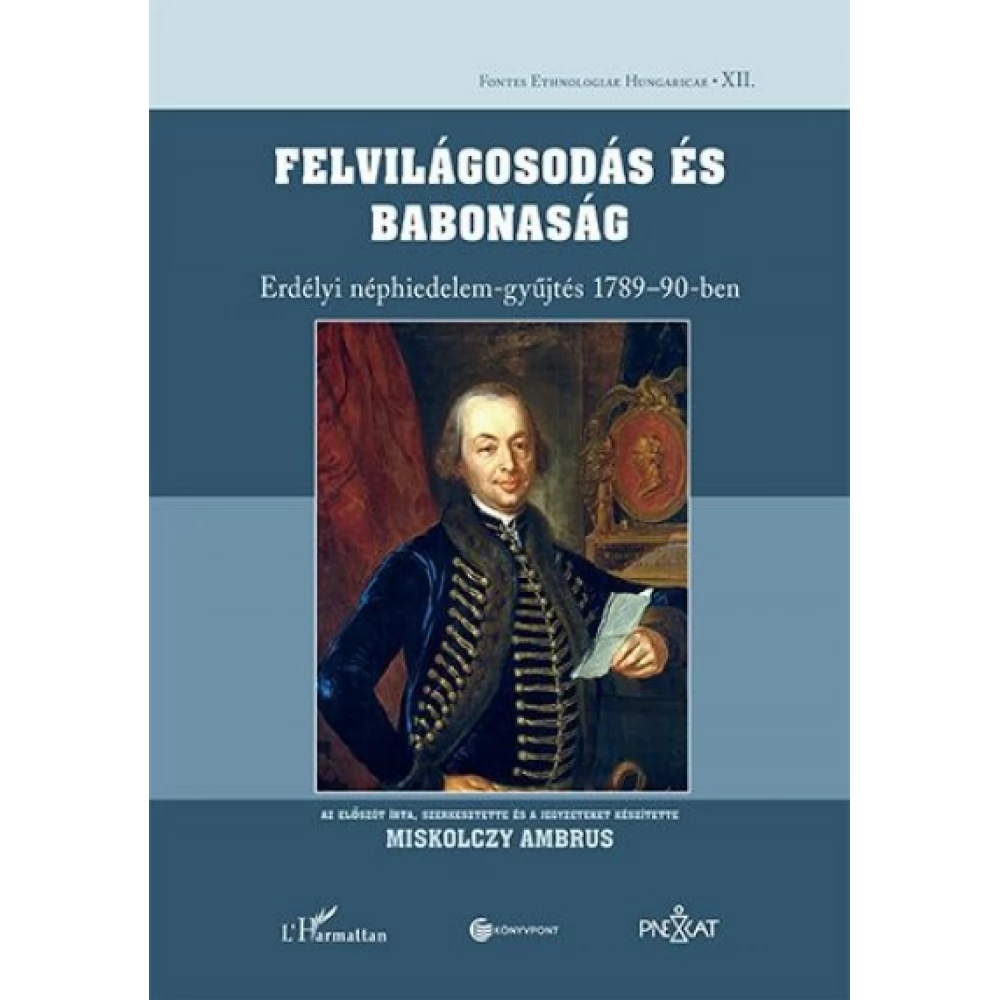
Miskolczy Ambrus - Felvilágosodás and babonaság - Erdélyi néphidelem-gyűjtés 1789-90-ben (2016)
2 821 Ft
Product description
In 1789, Mihály Brukenthal, the commissioner of the Fogaras district, sent a circular letter to about twenty priests and asked for answers to what beliefs, superstitious customs, and rites existed among the people. Three Saxon Evangelicals, three Hungarian Reformed, one Unitarian Hungarian and one Greek Catholic Romanian pastor reported on their experiences. The volume is one of the most exciting documents of the popular mentality at the end of the 18th century. It not only presents the beliefs of Transylvania's population of different languages and different denominations, but also sheds light on intellectual thinking, indicates how deeply the pastors were able to penetrate the popular imagination, and also shows how, after their studies abroad, they sometimes found themselves in a hostile environment in the Fogaras region. The preface primarily presents Brukenthal's activities: how he tried to understand the motives of certain phenomena (such as the Horea uprising) with much greater sensitivity than his contemporaries; with the Great Sibiu Masonic lodge in the background, which was the spiritual breeding ground for Brukentahl's initiative. The second half of the volume contains the questionnaire itself: Michael von Brukenthal's circular question, as well as the answers of Bálin Baló, Samuel Barbenius, Jacob Bayer, Michael Binder, János Bodor, Ioan Halmaghi, Sámuel Köpetzi Bodos, and Johann Gottfried Schenker, who answered the questions, and the pastors of their parish and provide a detailed description in German, Hungarian or Latin of the beliefs known in the community of their parish and the magical practices practiced there. With all of this, the author provides researchers of cultural history, religious history, or folk religion and beliefs, as well as the educated reader interested in the mentality of the Enlightenment, with incomparably interesting knowledge and reading material.
Ambrus Miskolczy (b. 1947) Széchenyi Prize-winning historian, university professor, head of the Romanian Department of ELTE. His main research areas: the history and problems of Transylvanian Hungarian-Romance-Saxon coexistence, the ideological history of myth creation. He has published a large number of studies and more than twenty books on this topic, in Hungarian, English, Romanian and other languages. Some of his most recent significant works: Romanians in historical Hungary (2005, in English: 2008); Epic and history. Cigányiász, or the representation of the Gypsy image and self-image in Hungarian and Romanian literature (2008, in English: 2012); Towards a pure source... Approaches to the profana world of Béla Bartók and the Cantata (2011); Josephinism in Fairyland. The sources of the historical demography of Transylvania date back to the 18th century. in the second half of the century (2013); Cioran's long adolescence or what about the fascist past? (2014); The Iron Guard 19271937 (2015); The Planet Jew in Vienna. Gustave dEichthal, Metternich and the Hungarian Question in 1836-1837 (2016).
PRICE NOTIFICATION
NOTEBOOK SEARCH

OPINIONS
0.0
