
Dear Visitor! We are carrying out maintenance this weekend, so our website may be slow or briefly unavailable at times. Thank you for your patience!
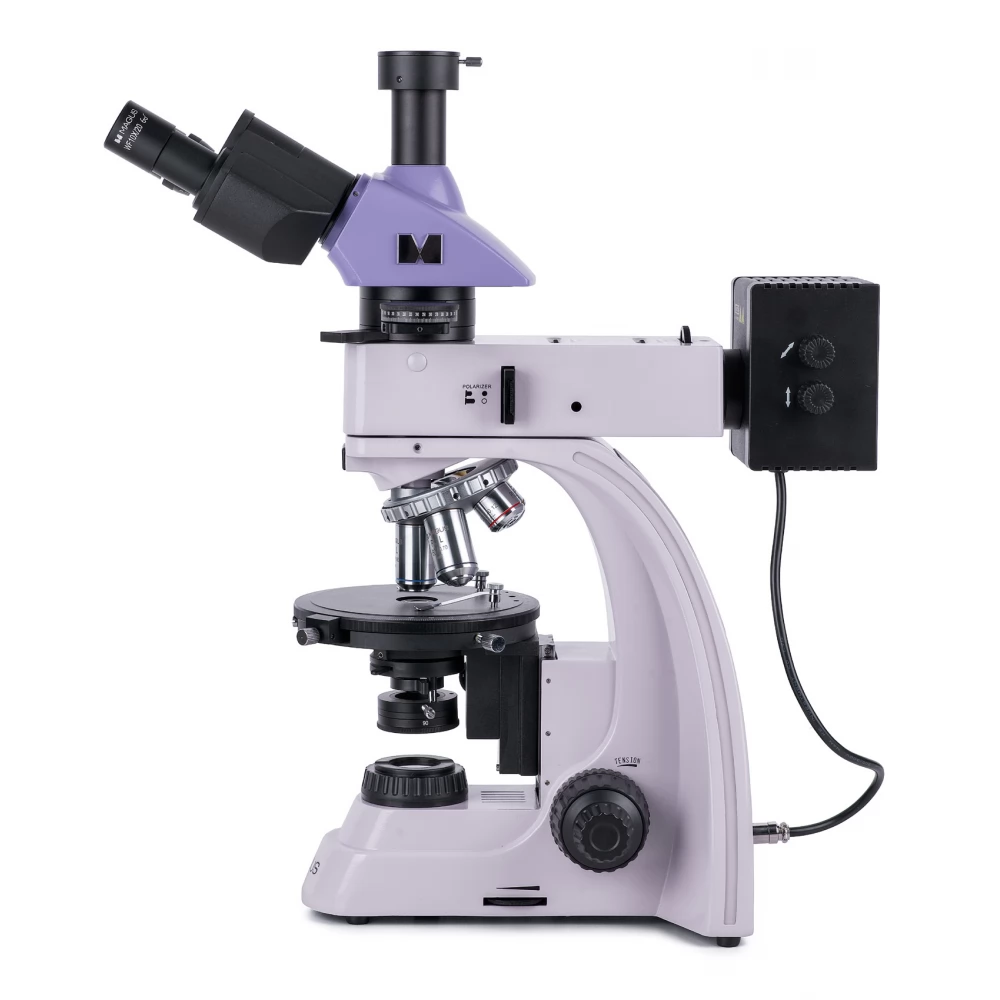
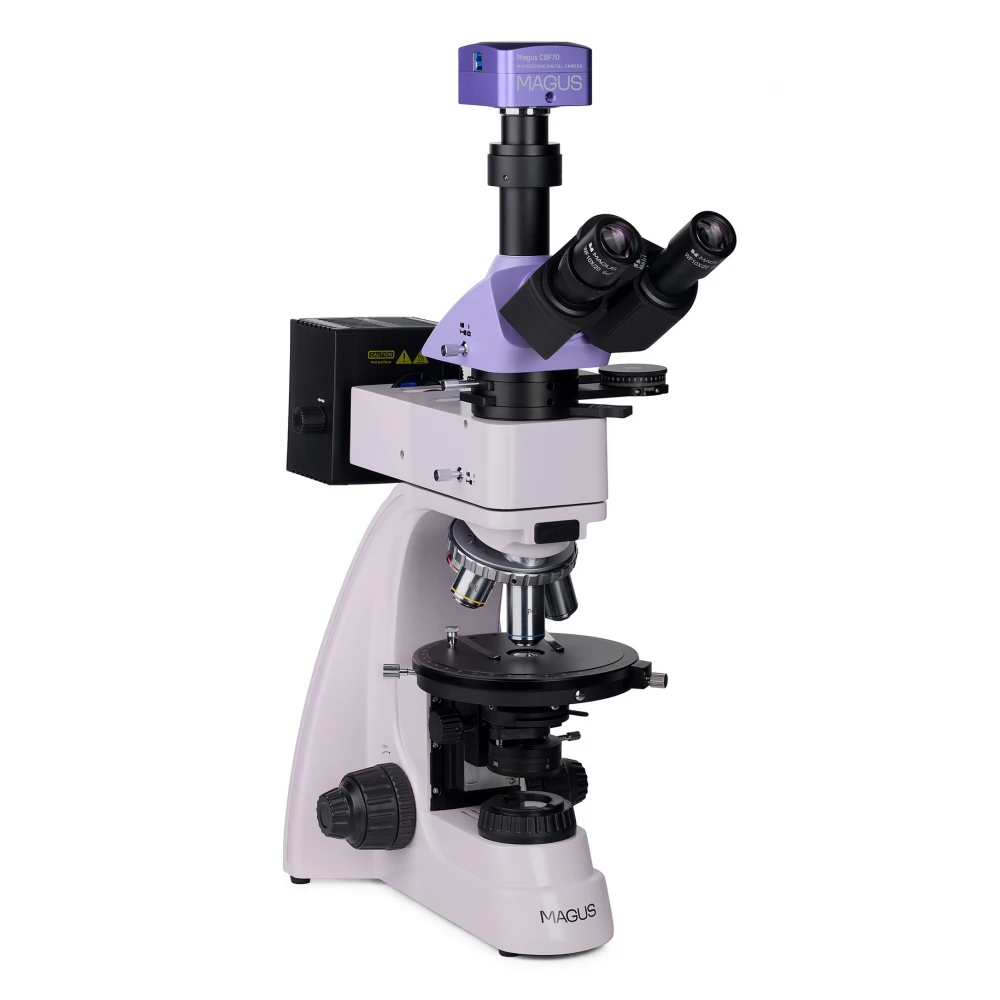
MAGUS Pol D850 polarizáló digital microscope
1 999 990 Ft
Product description
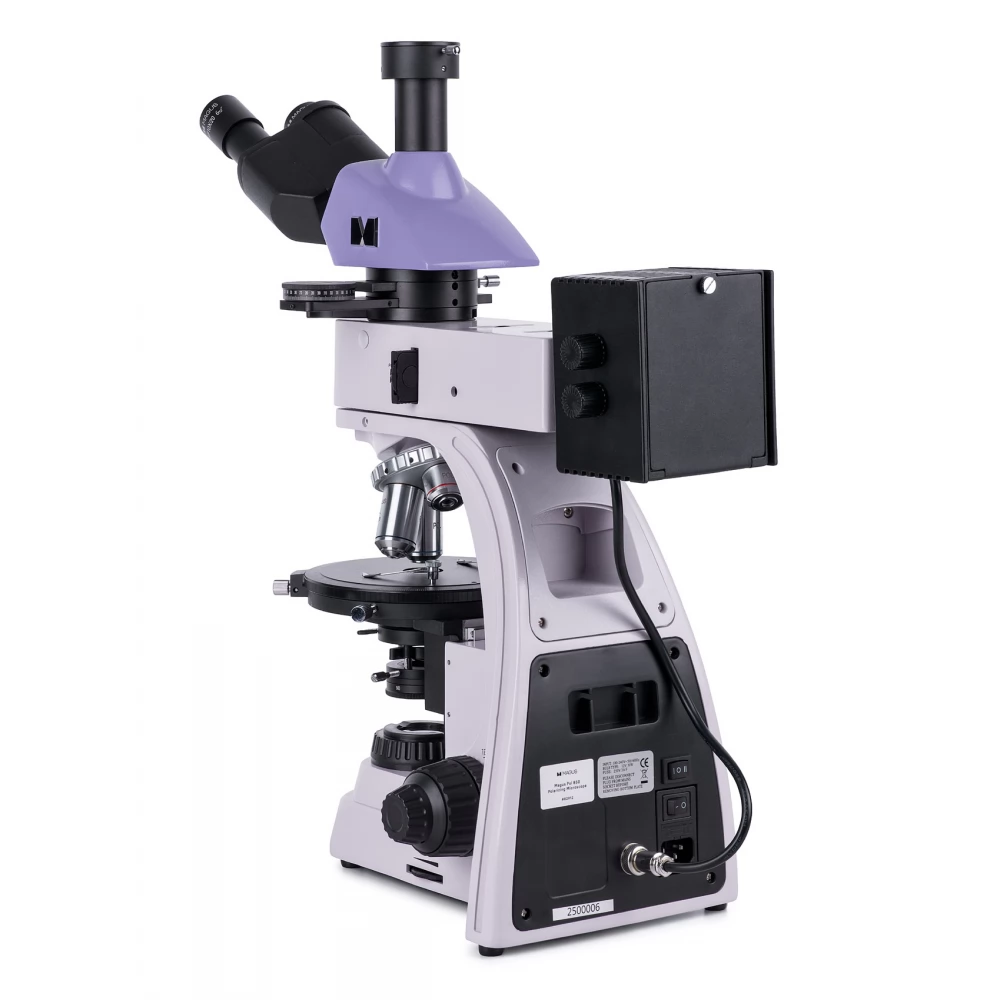
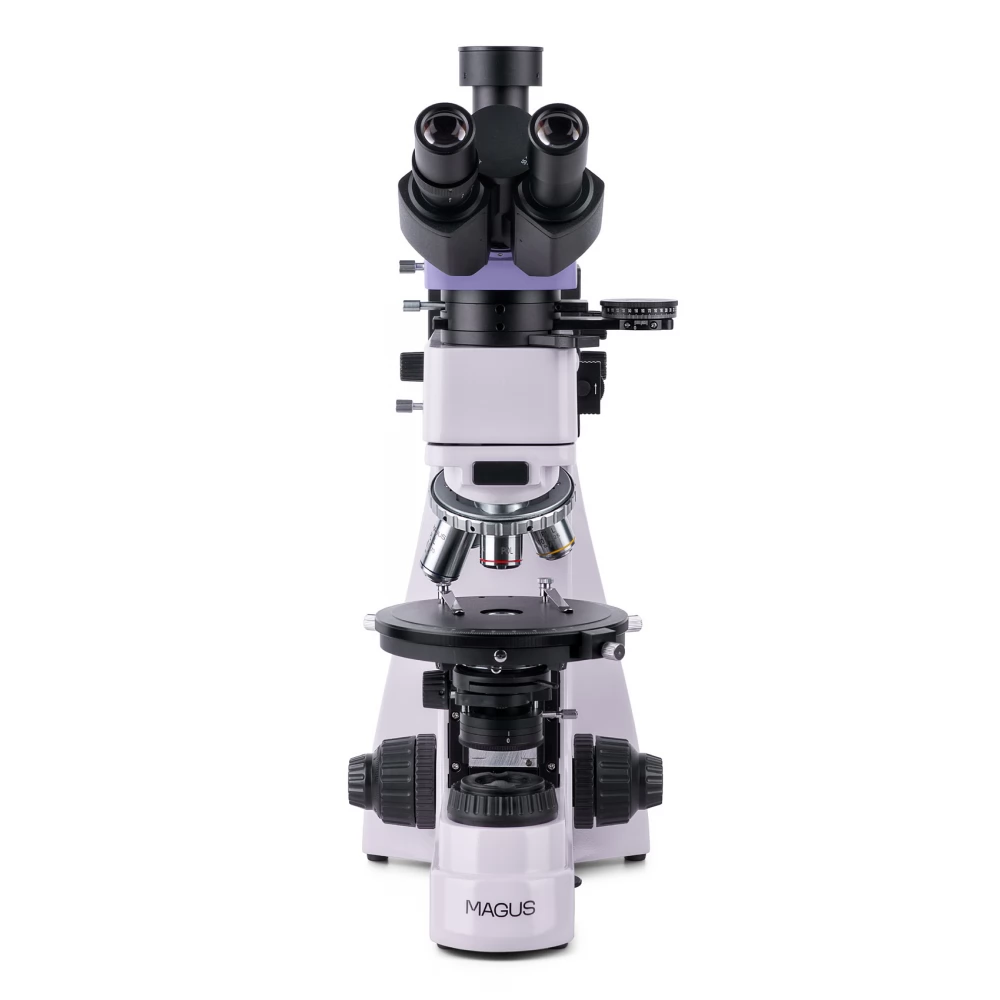
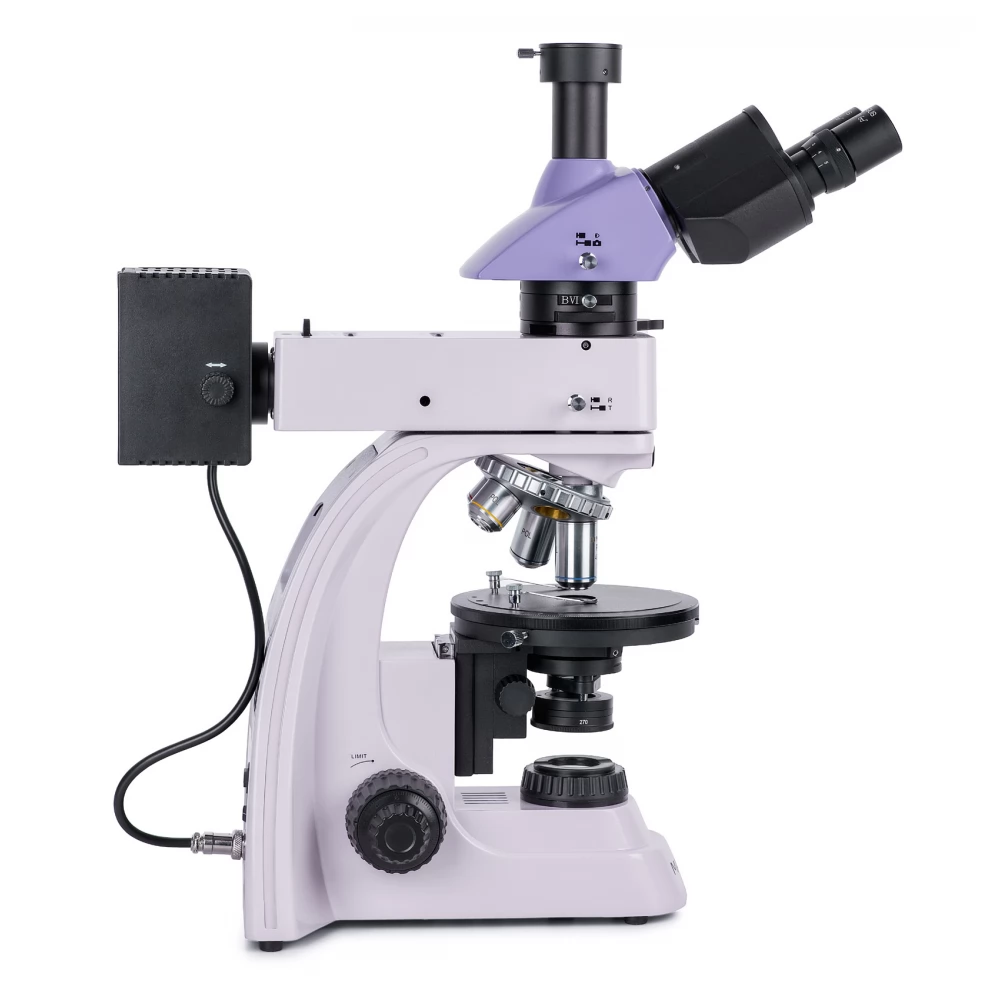
The MAGUS Pol 850 polarizing microscope was designed so that it can be used both in transmitted and reflected light. Available test methods: polarization and bright field. Anisotropic biological, geological and polymer objects can be examined with the microscope, as well as polished, opaque sections up to a maximum thickness of 15 mm, with one piece of polished side. The microscope can be perfectly used in a variety of professional tasks, for example in the fields of medicine, forensics, mineralogy, crystallography or petrography.
Digital camera
The MAGUS CBF70 professional scientific camera is designed for use with microscopes and 4x, 10x, 20x and 40x objectives. The device allows you to take photos and videos, organize presentations, display images on an external screen, and perform angular and linear measurements of the examined objects (for this function to work properly, the software must be calibrated). The camera is recommended for working with the clear field of view method.
The MAGUS CBF70 camera has five image resolution and frame rate modes, so you can easily find the one that best suits your needs: 5280x3954 pixels (17 frames/s), 3952x3952 pixels (17 frames/s), 2640x1976 pixels (56 frames/s), 1760x1316 pixels (67 fps) and 584x438 pixels (192 fps).
High resolution modes are ideal for photography, as they allow you to capture clear, vivid and highly detailed images. Modes with an increased frame rate help to record smooth and informative videos without jumps and delays, to record the smallest movements of the object, and to make the features of people and landmarks involved in fast-moving processes more recognizable.
For the best image quality without distortion, it is recommended to use a 1x magnification adapter.
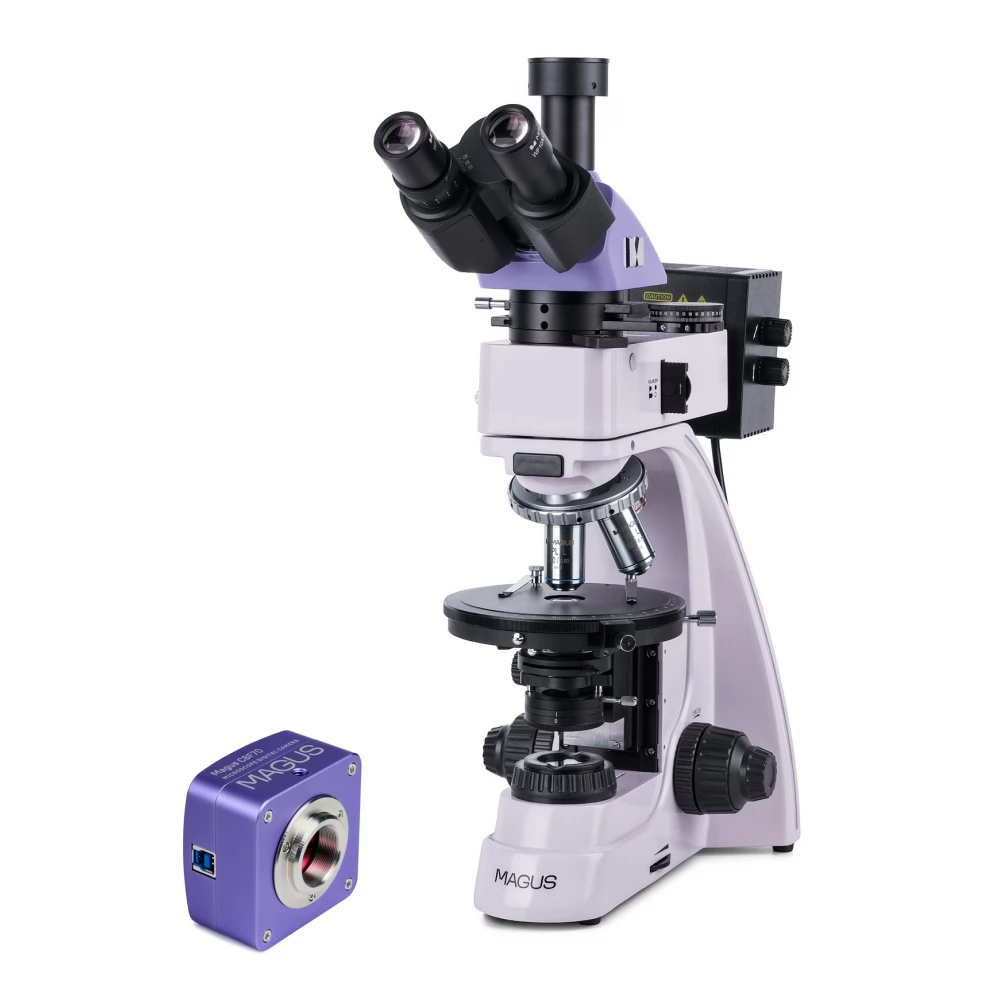
The camera has a 4/3" color backlit SONY Exmor CMOS sensor. The image will be clear even in low light conditions. Thanks to the larger physical size of the sensor, the displayed colors are deeper and the image is clearer.
Optical elements
The optics of the microscope are corrected to infinity, free of internal tension. The image formed by the lenses is authentic, free of disturbing reflections, sharp contrast and detailed. The lenses are housed in a turret with grooves centered on the optical axis. It has a total of five such grooves. An additional lens can be mounted on it to extend the magnification range of the microscope. The lenses are designed for working with samples without a cover plate.
A digital camera can be mounted on the tube of the three-lens head part. The light beam is split 100:0 or 0:100, so all the light flows either to the camera or to the eyepiece tube. There is a diopter adjustment ring on the left eyepiece tube: due to the different vision between the two eyes, this ring can be rotated, so it can give the clearest possible image of the given sample.
Illumination
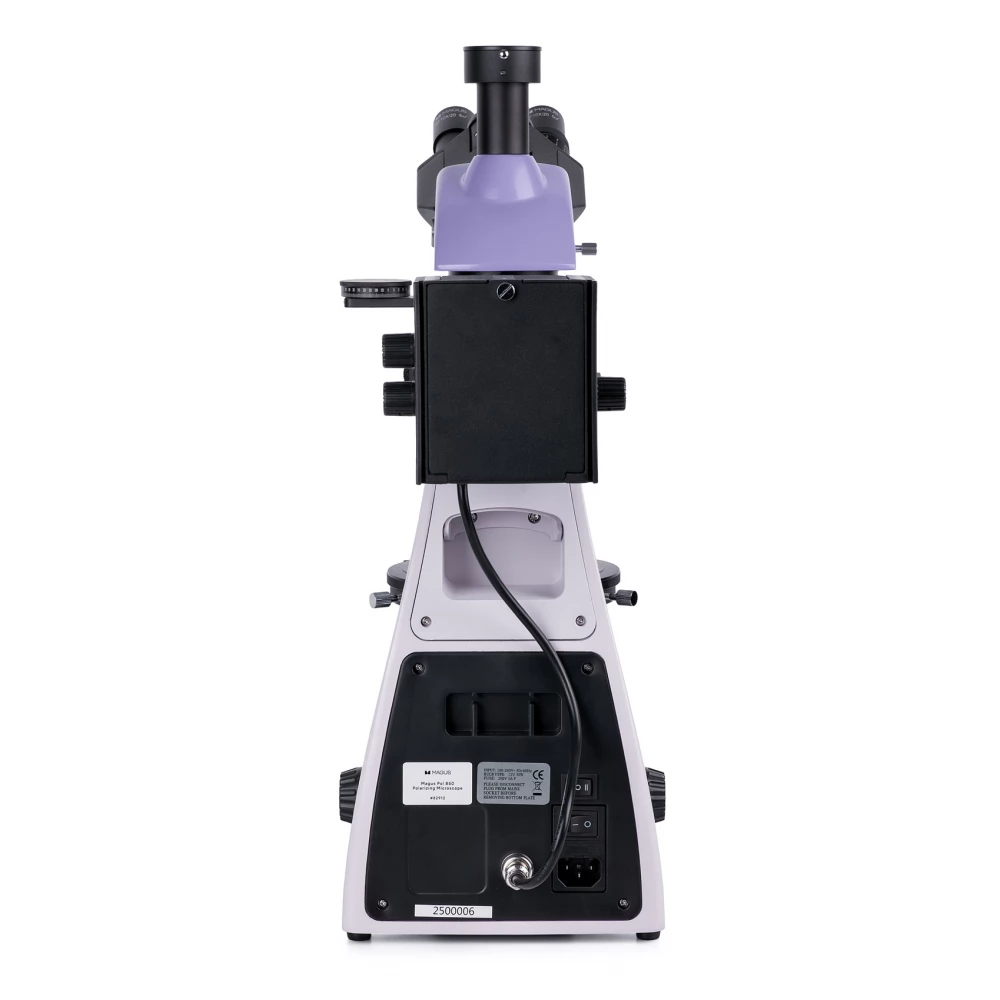
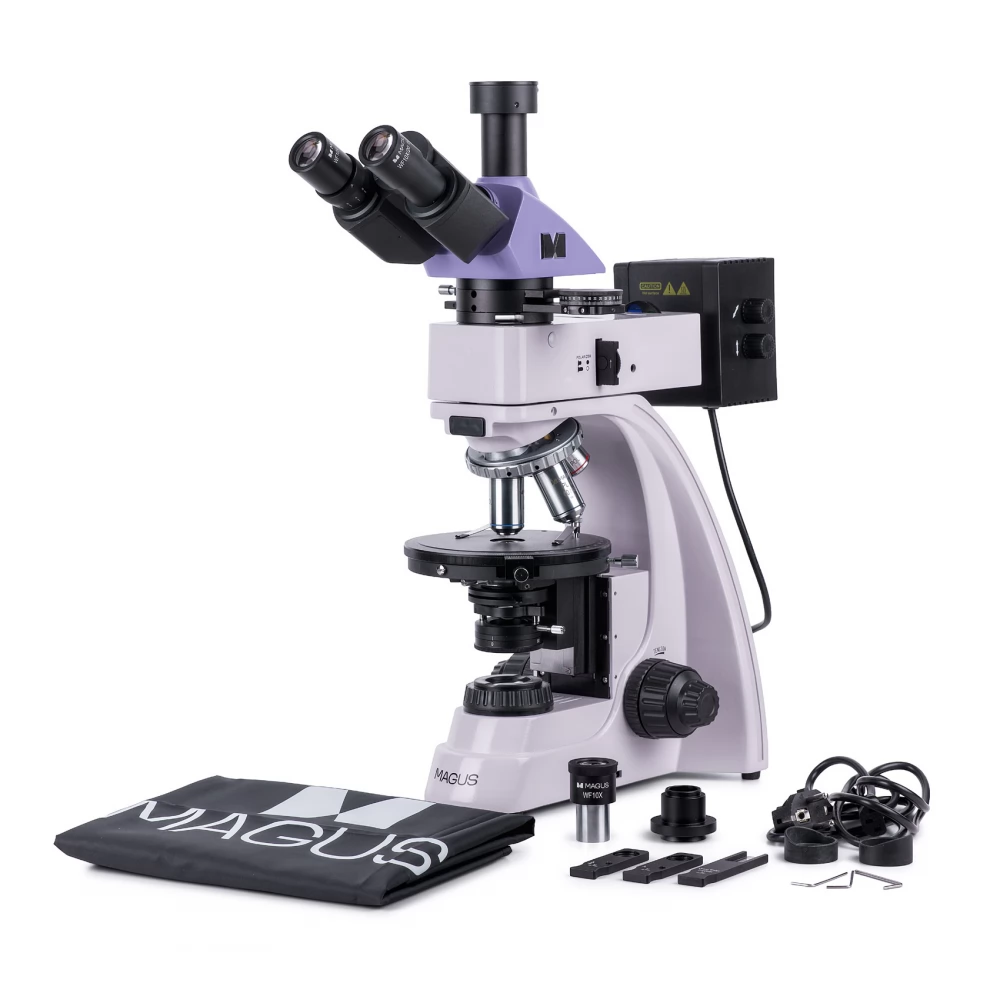
30 W halogen bulbs are used for both transmitted and reflected light. Their brightness is sufficient for you to get a clearly visible image of each object, and due to their light rays belonging to the "warm" light spectrum, you can work with the equipment comfortably even in the long term. Köhler illumination provides higher resolution, removes artifacts and edge darkening from the field of view. With the light filters, you can precisely adjust the color reproduction when working in reflected light.
Polarization is available for both transmitted and reflected light. An analyzer is located in the optical path to start observing in polarized light. Then the relative position of the analyzer and the polarizer is changed by their rotation, which also changes the polarization angle. Compensators increase the contrast of the objects, which are inserted into the special grooves of the central assembly. The same accessory includes a Bertrand lens that can be used for conoscopic examinations.
Stage and focusing mechanism
The microscope has a rotatable stage: rotating the stage changes the way the sample reflects light in polarized light. There is a scale on the stage, on which the rotation angle can be determined, with an accuracy of 0.1°. To achieve the brightest and sharpest image, the stage can be centered in relation to the optical axis of the microscope.
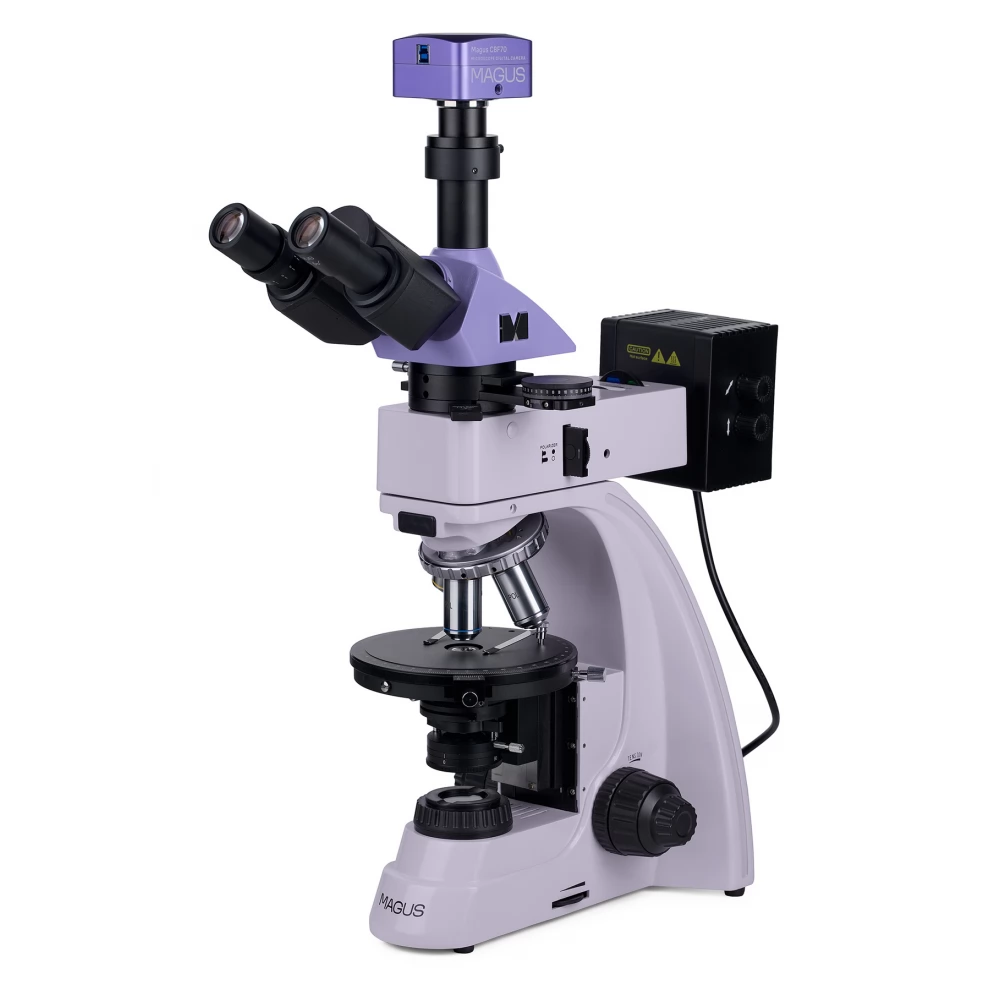
The coarse and fine focus adjustment knobs are located at the bottom of the stand, allowing the user to place their hands in a comfortable position on the table. The coarse tension can also be adjusted, and there is also a coarse focus adjustment latch on the device. Fine focusing allows you to move the pattern smoothly.
Accessories
To get the most out of your microscope, use accessories from the MAGUS product line: eyepieces, objectives, calibration slides, digital camera, etc.
- Transmitted and reflected for working in polarized and natural light
-
PRICE NOTIFICATION
NOTEBOOK SEARCH

OPINIONS
0.0
