
Dear Visitor! We are carrying out maintenance this weekend, so our website may be slow or briefly unavailable at times. Thank you for your patience!
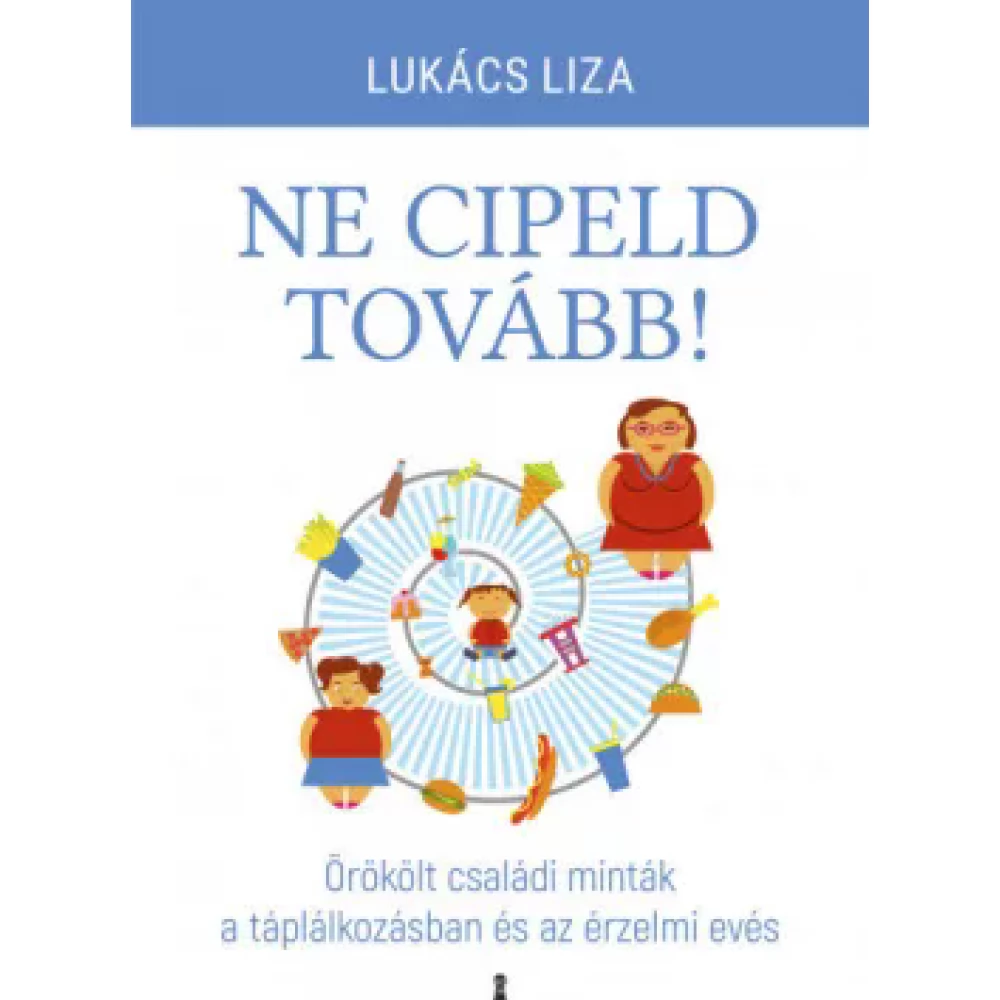
Lukács Liza - Ne cipeld tovább! - Örökölt family minták a táplálkozásban and az érzelmi evés
Product description
According to statistical data, 62% of Hungarians are overweight or obese. Many of them want to lose weight because they suffer from problems related to excess weight, but their attempts - perhaps after a short period of success - are usually drowned in repeated failures. In such cases, they feel weak-willed, and their environment often accuses them of this. However, the real question is not how strong their willpower is, but why they regularly eat more than their bodies need. The answer can lead to a solution.
Those in whom food and eating are intertwined with certain basic spiritual needs - for example, a sense of security, comfort, expression of love, belonging - often eat not because of physical hunger, but because of so-called emotional hunger.
The psychology of eating is not a "trick in the hat" that can be used as an extra after the twentieth unsuccessful diet, but an unavoidable part of eliminating weight problems.
If we want to lose weight, we must first venture close to our problem and understand it. It is a puzzle with many components, a secret map to ourselves. Often, a long line of generations preserves and passes on consciously or unconsciously the individual elements that are able to connect with each other and trigger or maintain the problem. If we explore this map, our unique story, we will no longer look for the solution in individual diets, lifestyle programs, powders and pills, because we will understand our personal needs and deficiencies, which make us eat even when we are on the food or our body does not need this amount. And if we understand, then we can look for a real solution to the real problem. Without this, permanent weight loss remains a wishful dream or is achieved at the price of barely bearable self-pity.
In her experiential book, written with extreme sensitivity and empathy, Dr. Lukács Liza speaks not only as a professional, but also as a former sufferer, providing a glimpse into the history of her own eating problems and her subsequent recovery. It guides the reader on a transgenerational journey of self-awareness, taking into account how the characteristics of Hungarian gastronomy and the deprivation experienced throughout our history are related to the weight problems that are multiplying today.
His work is recommended reading not only for those who want to permanently get rid of their excess weight and for whom it is important not to pass on faulty eating patterns to their children, but also for everyone who is curious about what what and how they eat says about them.
NOTEBOOK SEARCH

OPINIONS
0.0
