
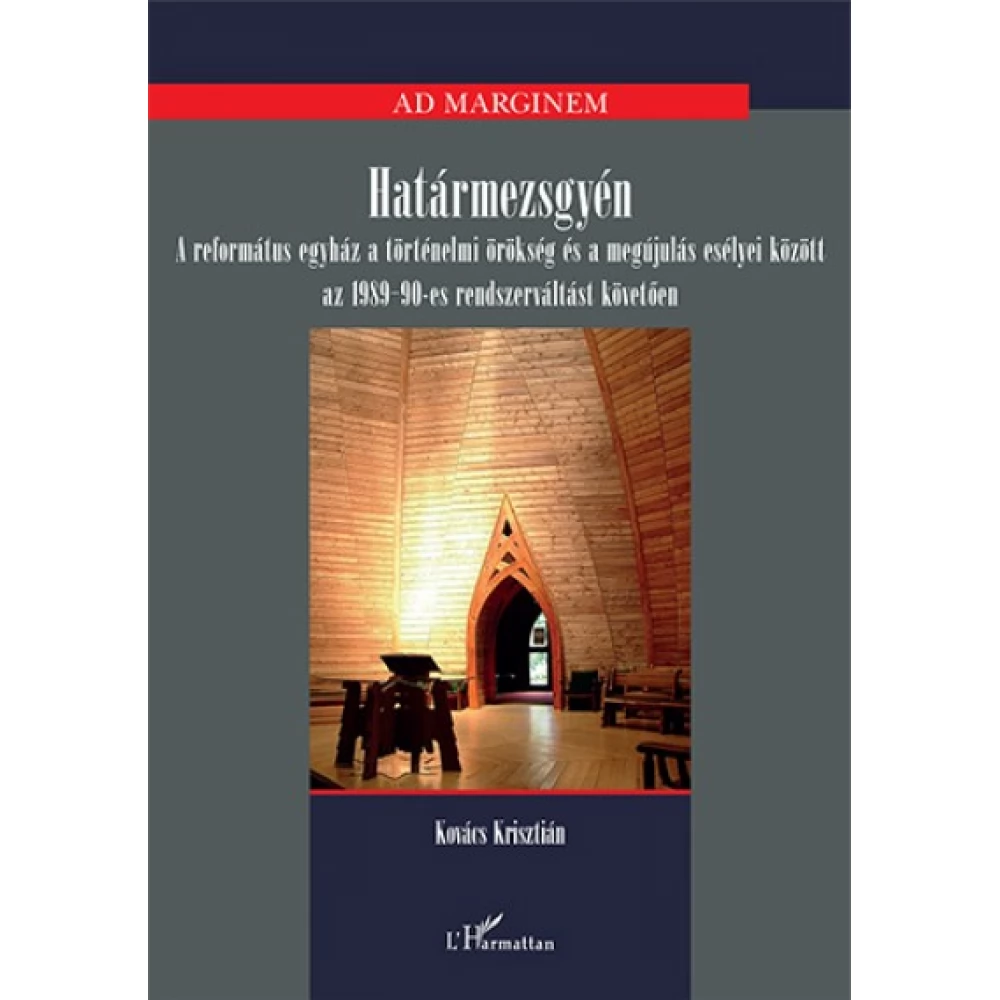
Kovács Krisztián - Határmezsgyén - A református egyház a historical örökség and a megújulás esélyei között az 1989-90-es rendszerváltást követően
2 821 Ft
Product description
If I remember correctly, in the summer of 1989 or 90, during an organized tour, I visited the highest point of the Kőszeg Mountains, the Írott kő, for the first time in my life. Being from Kőszegi, I have already heard a lot about the mountain, the lookout point at the top and the views from there: both to the east and to the west, from family stories. However, the lookout was still only a rumor at that time, since despite the fact that the barbed wire marking the border had already been lifted, it was still not possible to go up to the lookout because it was on the Austrian side. We were on the borderline. Ahead of us was the opening to the west and the hope of getting through, in this case, the ascent and the hope of beautiful views, but at the same time the burdened historical heritage still set a limit to free action: we had to stay below and outside.
When I finished my doctoral dissertation, which is the basis of this work, I remembered this personal story and how much our generation was defined by the need to cross the borderline - both in space and time. Since then, of course, everyone can go up to the observation deck, both from the Hungarian and Austrian sides, and since then some of the residents of Kőszeg who stayed at home have also earned their living in the other country, - but the question is, have we overcome our peculiar Central-Eastern European border in all respects? How many memories, recollections and lessons do we take with us, or do we just throw them into the river of oblivion? Writing about a change of era, especially from such close quarters, is very challenging, sometimes even dangerous. Especially in a church context, where the boundary between truth and unconditional forgiveness can shrink to a hair's breadth. But it still seems to be worth the risk, because learning about the heritage of the past can help us to discover the possibilities of the future, to dare to change with one or another historical experience, knowing the sources of danger, learning from ancestors who profess faith and insist on the truth, and with the courage of reformers and Protestants. This work aims to provide aspects for this change and rethinking, above all by voicing the theological themes of the regime change and the sociological description of the transforming national church, so that overcoming the borderline can truly be a renewal.
KRISZTIÁN KÓVÁCS (1977), Reformed minister, theologian; lecturer at the Debrecen Reformed University of Religious Studies
PRICE NOTIFICATION
NOTEBOOK SEARCH

OPINIONS
0.0
