
Dear Visitor! We are carrying out maintenance this weekend, so our website may be slow or briefly unavailable at times. Thank you for your patience!
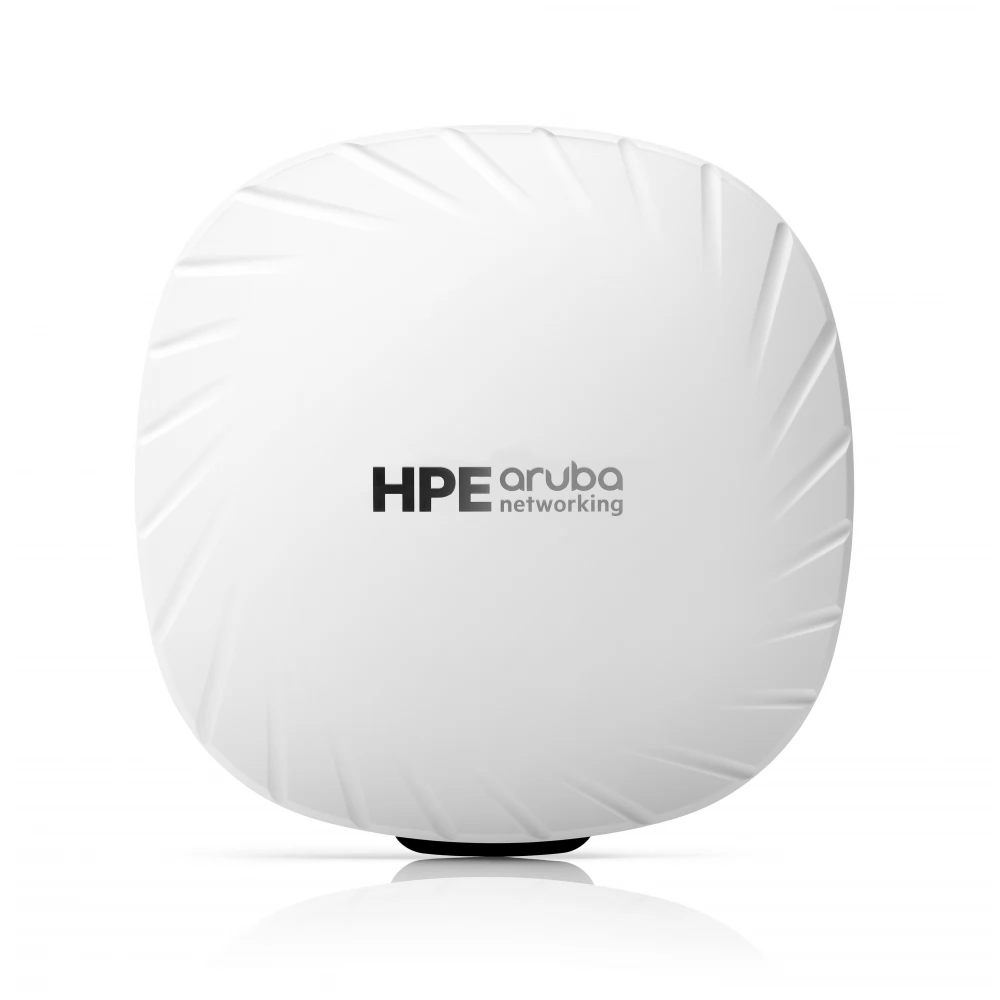
HP Aruba Networking AP‑503‑RW Dual Radio 2x2 802.11ax Wi‑Fi 6 Campus Access Point 5pcs
641 389 Ft

Product description
The device supports dual-frequency communication, which allows us to work on both 2.4 GHz and 5 GHz networks. This is the advantage of this technology. The 2.4 GHz and 5 GHz frequency ranges have different properties. With the right settings, we can take advantage of these features to achieve the best possible performance.
The advantage of the 2.4 GHz frequency is that it provides a greater range. This means that we are also able to communicate on the network within a wider area. On the other hand, with the help of the 5 GHz frequency, we can achieve a faster data transfer speed. It is therefore an ideal choice in situations where a large amount of data needs to be transferred quickly.
Data transmission does not have only frequency-dependent advantages. It should also be emphasized that the device is capable of extremely high data transfer speeds of up to 1490 Mbit/s. Thanks to this, high-resolution videos - such as HD or 4K quality - can be streamed smoothly. The same applies to large games and documents.
The device also supports the IEEE 802.11ax (Wi-Fi 6) standard. This is currently the latest wireless technology, which ensures stable performance even with a large number of devices connected at the same time. This standard offers devices excellent connectivity and network performance.
The device is extremely secure, as it supports WPA3, WPA and WPA2 encryption protocols. WPA3 is the latest and most secure encryption standard, so network protection is guaranteed. This protection is further strengthened by the WPA and WPA2 protocols, which form an additional security layer.
The device also supports Power over Ethernet (PoE), which means that the device can receive power through the Ethernet cable. This is useful if we don't have direct access to electricity or if we don't want to use multiple cables in the room.
The device also has an internal antenna, which contributes to its compact and simple design. Antennas are used to broadcast and receive wireless signals and significantly affect signal range and network performance. The design of the device is therefore not only aesthetically pleasing, but also increases the efficiency of the network.
PRICE NOTIFICATION
NOTEBOOK SEARCH

OPINIONS
0.0
