
Dear Visitor! We are carrying out maintenance this weekend, so our website may be slow or briefly unavailable at times. Thank you for your patience!
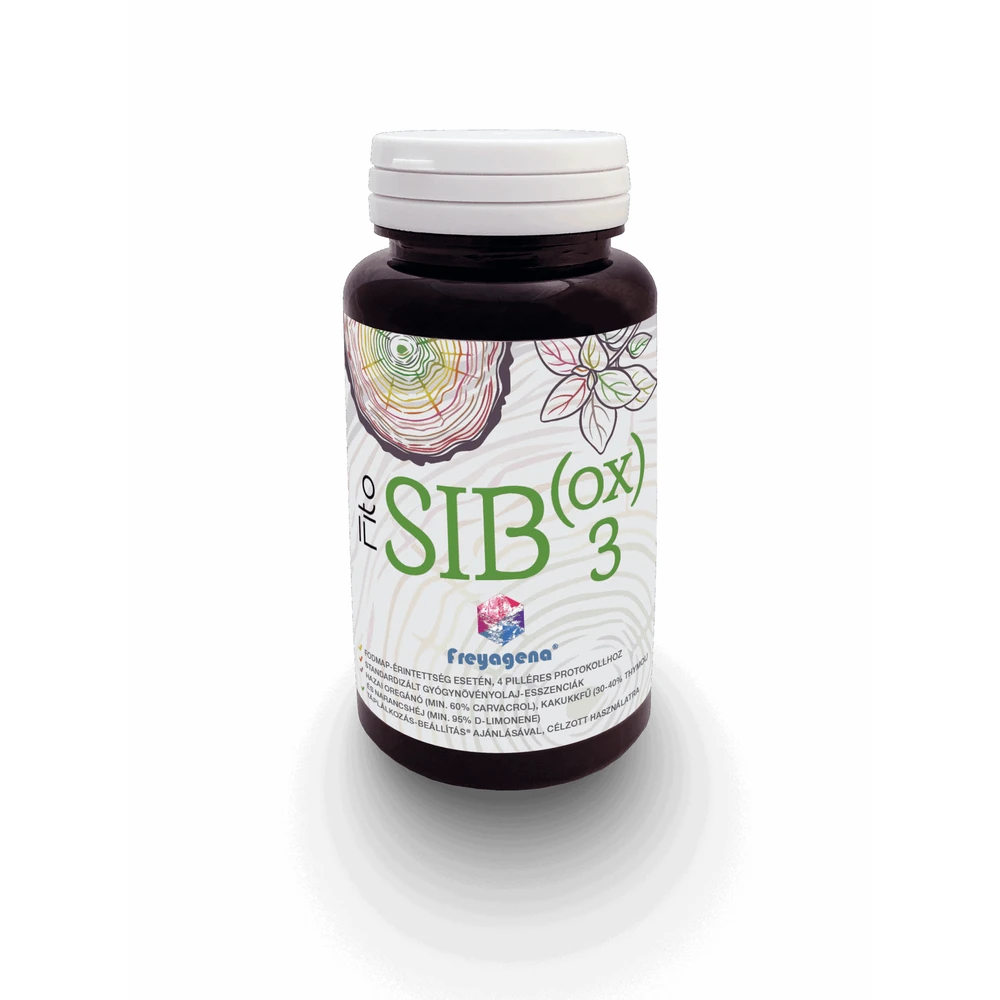
FREYAGENA Fito sib(ox) capsule 30pcs
5 390 Ft
Product description
In case of FODMAP involvement, for a 4-pillar protocol.
Fito SIB(ox)3 contains extracts of oregano, thyme and orange peel oils, which together, with their synergistic effect, support the intestinal flora when certain harmful bacteria have multiplied.
Active ingredients in 1 capsule:
- Oregano oil extract 80 mg
- Thyme oil extract 80 mg
- Orange peel oil extract 60 mg
- In case of Fodmap involvement, for 4-pillar protocol
- Domestic oregano (min. 60% carvacrol), thyme (30-40% thymol) and orange peel (min. 95% d-limonene)
- Standardized herbal oil essences
- With the recommendation of Nutrition-setting®, for targeted use
Application:
2×1 capsule per day before the main meal approx. half an hour.
In connection with certain digestive complaints, the temporary, targeted use of combined herbal preparations can be a great alternative.
We find cases in the literature where, in more than 50% of patients, drug treatment was not effective in the case of bacterial intestinal dysbiosis, but carefully chosen herbal treatment was.
In this specific study, two complex plant-based preparations were combined: the researchers finally diplomatically stated that the effectiveness of the complex plant therapy was the same as the conventional antibiotic treatment (F).
There was still a significant difference in the results (104 patients): regarding the normalization of the hydrogen exhalation test, the response rate of patients with intestinal complaints was 46% for herbal therapies and 34% for rifaximin. In the rifaximin-treated group (n = 67), 1 case of anaphylaxis, 2 cases of urticaria, 2 cases of diarrhea and 1 case of Clostridium difficile infection were described as side effects. In the herbal group (n = 37), there was only one patient with diarrhea, which cannot be considered significant. That is, the effectiveness was slightly better and the side effects were fewer in the herbal group.
The interesting thing about this specific research is that the people involved could decide for themselves which group they would be placed in (herbs or conventional antibiotics). Apparently, many more people chose medication for their digestive complaints, and there is nothing wrong with that.
With an expert eye, it is also worth browsing through the list of sources of this specific clinical study, we can learn a lot from it in an integrative approach about the issues of functional digestive organ dysfunctions (F).
Some non-exhaustive examples of herbs analyzed or used in this study (essential oils and/or herbal extracts): essential oils of thyme, oregano, sage, lemongrass, tea tree or peppermint, as well as extracts of ginger, licorice, milk thistle, etc.
PRICE NOTIFICATION
NOTEBOOK SEARCH

OPINIONS
0.0
