
Dear Visitor! We are carrying out maintenance this weekend, so our website may be slow or briefly unavailable at times. Thank you for your patience!
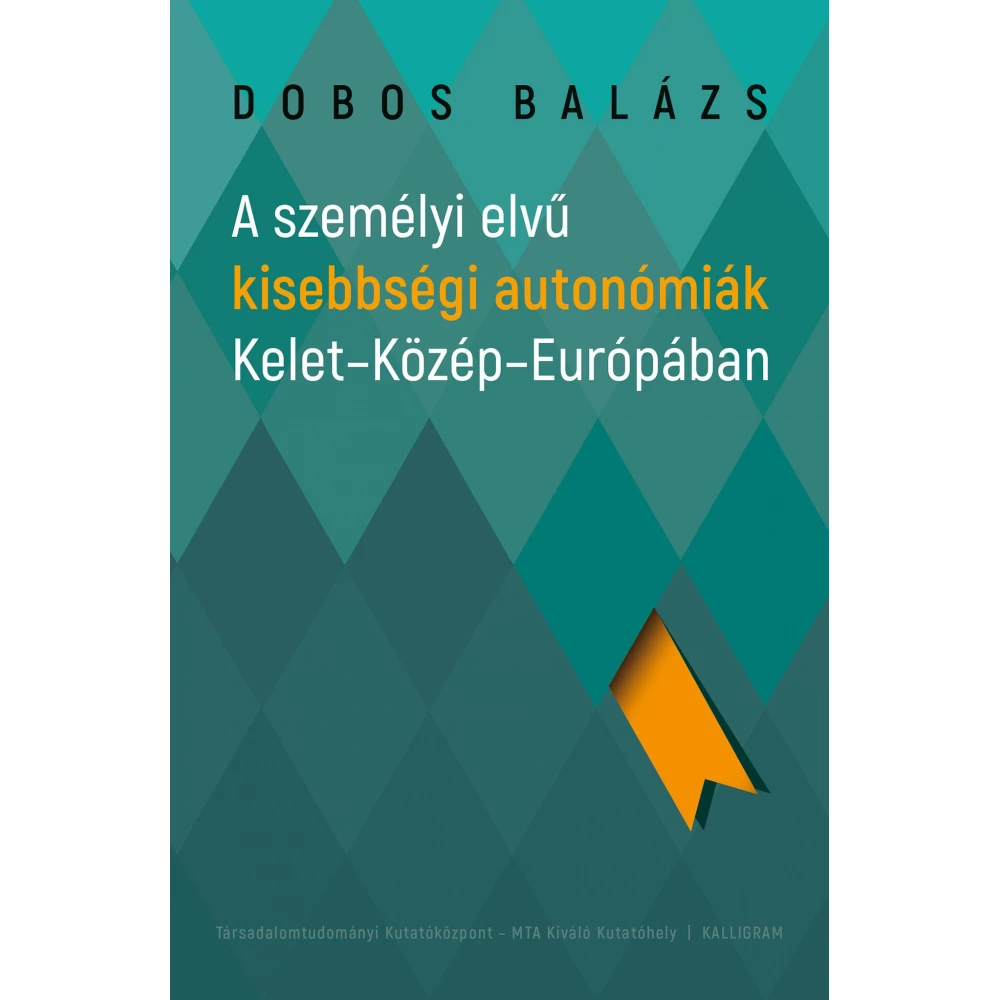
Dobos Balázs - A personal elvű kisebbségi autonómiák Kelet-Közép-Európában
2 745 Ft
Product description
The concept of autonomy and its practical feasibility - despite the fact that no uniform definition has been created to this day - has kept both theoreticians and active politicians in a frenzy since the 19th century, when the nation-state model was discovered. One of its basic forms is minority autonomy based on the personal principle. It is no coincidence that this is exactly what spread in East Central Europe, burdened with numerous bad historical experiences and rejecting all forms of territorial differentiation. What does this really mean? Minority self-government, various versions of which were implemented in the period after the regime change. Using the examples of Hungary, Estonia, Croatia, Serbia and Slovenia, readers can learn how this type of self-government affects the lives of minorities, and how and according to what principles it is established in each country. We review this path from legislation, through the voting booth to operation, not bypassing sensitive issues, such as the phenomenon known as ethnobusiness in Hungarian colloquial language.
Balázs Dobos (Budapest, 1980). He obtained his diploma in history and political science at Eötvös Loránd University, and his PhD in political science at Budapest's Corvinus University in 2010. Since 2007, he has been a scientific assistant, and since 2019 he has been a senior associate at the Minority Research Institute of the Social Science Research Center. In addition to the BCE, he held courses on minority politics at the ELTE Faculty of Social Sciences, Faculty of Pedagogy and Psychology, as well as at Károly Eszterházy University. His previous volume: The right of the minority (Budapest, Argumentum, 2011).
PRICE NOTIFICATION
NOTEBOOK SEARCH

OPINIONS
0.0
