
Dear Visitor! We are carrying out maintenance this weekend, so our website may be slow or briefly unavailable at times. Thank you for your patience!
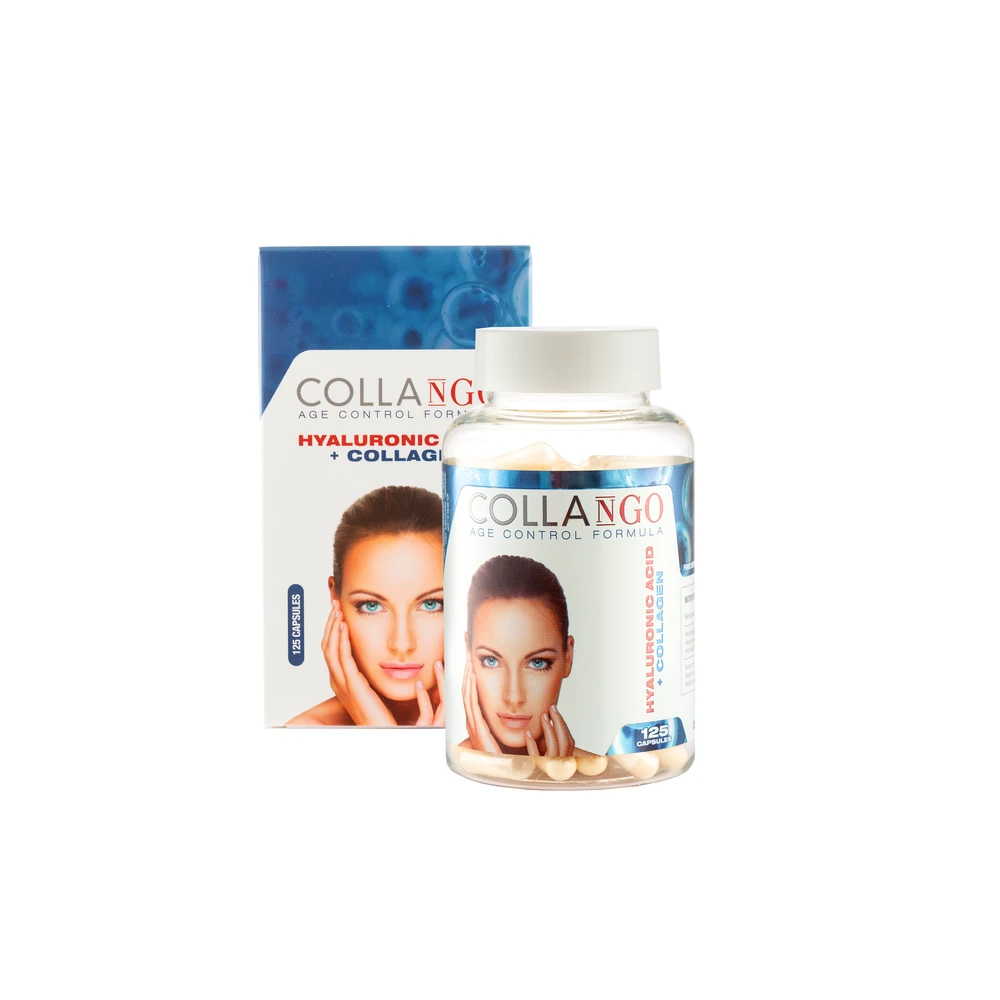
Collango hyaluron sav+collagen capsule 125 pcs
5 591 Ft
Product description
Collango Hyaluronic Acid +Collagen
The newest member of the Collango Collagen product line is nothing more than a capsule preparation.
Collango Collagen Hyaluronic Acid + Collagen consists of two ingredients, which are hyaluronic acid and hydrolyzed type I bovine collagen. We combined their beneficial effects.
Packaging: net 68.75g PET resealable bottle, 125 capsules/package, 25 servings.
The focus is now not on collagen, but on another component of the product, hyaluronic acid. We didn't mince it this time either, since we didn't compromise on quality and quantity of the active ingredient either.
The name obliges, you are used to the fact that Collango means one thing:
• with the quality raw material
• with simple dosing
• available with research data for the specific raw material, not for collagen in general
Features of Collango Collagen Hyaluronic Acid + Collagen:
• 200mg hyaluronic acid and 2,000mg type I bovine collagen/serving
• 1 dose: 5 capsules
• 125 capsules/package, 25 servings
Advantages of Collango Collagen Hyaluronic Acid + Collagen:
• High content of active ingredients
• Economical packaging
• Easy-to-swallow capsule size
• It has no unpleasant smell or taste
What can you help us with?
What is hyaluronic acid?
Hyaluronic acid is a molecule that occurs naturally in the human body. A high molecular weight polysaccharide that results in a viscous (less liquid) liquid. It is present in all connective tissues and organs in the human body, e.g. skin, synovial fluid, blood vessels, brain, cartilage, heart valves and the umbilical cord. So you can see that it is a "taste to blood" body component, so it's no wonder how many problems can be caused by the amount of hyaluronic acid that decreases with age.
What are the benefits of hyaluronic acid?
Aging of the skin is also associated with the loss of its moisture content. The key molecule that plays a role in skin moisture is hyaluronic acid, which has a unique ability to bind and retain water molecules, thus ensuring the skin's hydration status. This is an important factor from several points of view. On the one hand, it increases the aesthetic appearance of the skin, as it reduces the risk of wrinkles. On the other hand, dehydrated skin - when there is not enough water in the upper layer of the skin - looks dry and cracked. This condition can be dangerous, because dehydrated skin is no longer able to maintain an adequate intact "skin barrier", which makes the skin more vulnerable to damage caused by environmental factors. Thus, the resistance of this damaged "skin barrier" to bacteria decreases, which can lead to infections and the development of various skin diseases, such as: acne, atopic dermatitis, rosacea, skin aging.
Synovial fluid is a viscous, densely flowing substance that is located in the space between the joints. The fluid cushions the ends of the bones and reduces friction between the bones, allowing them to move freely. One of the main components of this synovial fluid is hyaluronic acid, the amount of which decreases over time, contributing to the pain and stiffness of the joints. Today, patients with severe knee arthritis use an injectable form of hyaluronic acid to reduce symptoms, but more and more hopeful studies are showing the benefits of oral hyaluronic acid as well. When used for several months, the concentration of hyaluronic acid in the joint fluid increases, contributing to the reduction and elimination of excruciating pain.
More than half of the body's hyaluronic acid is in the skin. When the skin is inflamed or damaged, the amount of hyaluronic acid increases due to the regeneration of skin tissues, which promotes the speed of wound healing. Hyaluronic acid, which is present during wound healing, is also believed to aid in the synthesis of various types of collagen. The reason for this is that collagen is also present during skin regeneration. If your skin is in trouble, both hyaluronic acid and collagen found naturally in the body are key factors in eliminating the problem. However, both substances decrease with age, so it is important to take care of their replacement.
Supplementation with hyaluronic acid can really exert its beneficial effect where it already occurs naturally. This is also true for the eye. Hyaluronic acid is found in the vitreous body of the eye, which is the gel-like substance that makes up most of the mass of the eyeball. The same moisture-binding and anti-inflammatory properties that make it so effective for skin care can also be used in artificial tears. Its viscosity helps them stay on the surface of the eye for a longer period of time, thereby providing more lasting moisture to the eye. Its positive effect is not only effective when applied externally, but also when administered orally.
Safety information for hyaluronic acid supplementation
Hyaluronic acid is considered safe when applied topically or orally.
PRICE NOTIFICATION
NOTEBOOK SEARCH

OPINIONS
0.0
