
Dear Visitor! We are carrying out maintenance this weekend, so our website may be slow or briefly unavailable at times. Thank you for your patience!
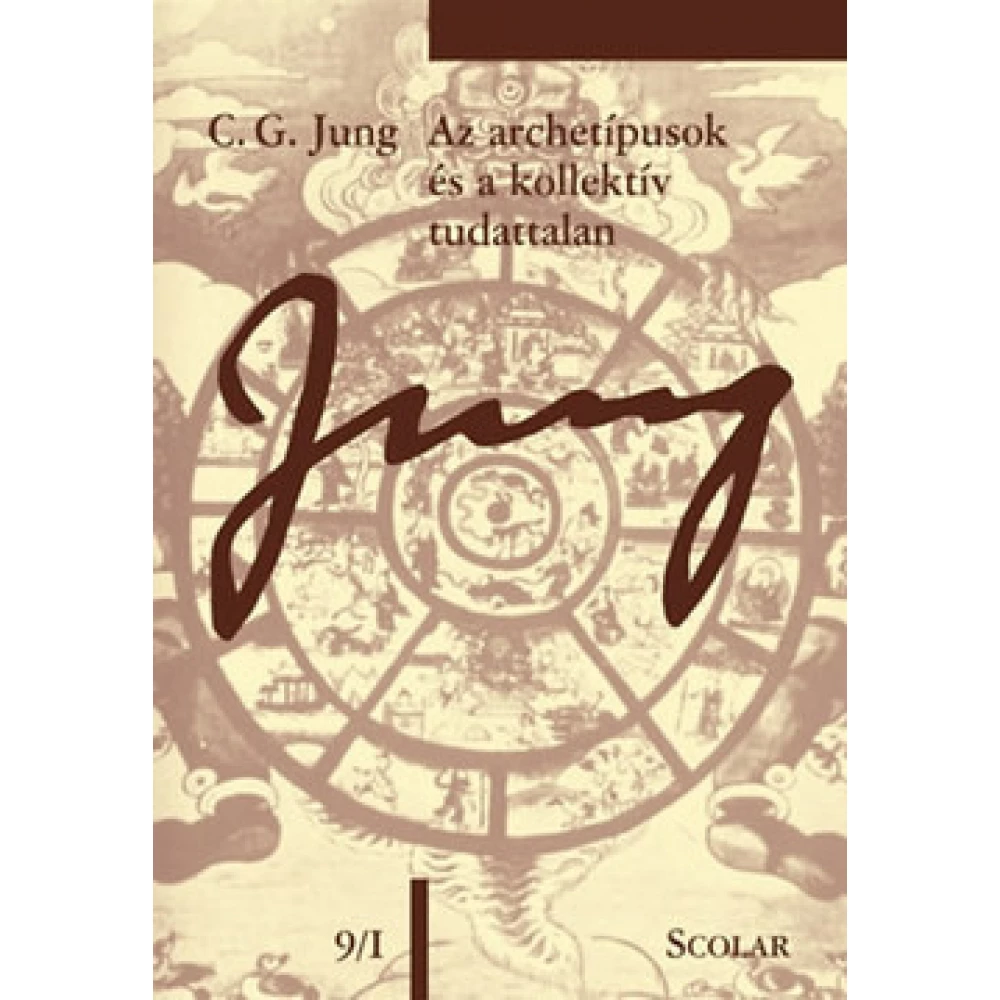
C.G. Jung - Az archetípusok and a kollektív tudattalan (2011)
Product description
Archetypes and the collective unconscious are the central concepts of C. G. Jung's analytical understanding. Their origins can be traced back to the author's earliest publication, the medical dissertation Zur Psychologie und Pathologie sogenannter occulter Phänomene (1902), in which he reports on the fantasies of a young hysterical medium and investigates them following similar sources. He refers to the mentioned two concepts in many of his later writings; slowly, the first definitions took on a more definite outline, which, however, he always reformulated, until finally a stable core of the theory was formed (he refined his "insights" in the original sense of the word).
This volume consists of works that were created between 1933 and 1955, and which outline and elaborate the two concepts that serve as the title. The first three studies ("On the archetypes of the collective unconscious", "The concept of the collective unconscious", "On the archetype, with special regard to the concept of the anima") can be considered the theoretical foundation. These are followed by publications that deal with one archetype, namely "mother", "rebirth", "child god" and "divine girl", then the "spirit" motif based on folk tales, and the so-called "trickster" (copy). Finally, there is an examination of the relationship between archetypes and the individuation process, which the author presents first on a theoretical level in the article "Consciousness, unconsciousness and individuation", and then on a practical level through a series of images of a single individuation process, which comes from his analytical work. The two last studies of the volume deal with the central symbolism of mandalas.
The influence and importance of Carl Gustav Jung (1875-1961) cannot be limited to the field of psychology. The XX. he is one of the last polymaths of the 20th century, who had a fertilizing effect on both the allied sciences and the arts through his incredible preparation and knowledge, his approach that preserves values but advocates openness and development, and promotes it with his work. His views were debated then and are still debated now, but even his opponents do not doubt that he broke new and viable paths in the forest of psychotherapy. Jung does not treat psychology as an isolated science, but examines it in interaction with other sciences (alchemy, mythology, etc.).
For the first time, the oeuvre series, which essentially contains all of Jung's important works in their original form, is being published in Hungary. Scolar Kiadó publishes two of these volumes each year, which both independently and in conjunction with each other promise to be exciting reading.
NOTEBOOK SEARCH

OPINIONS
0.0
