
Dear Visitor! We are carrying out maintenance this weekend, so our website may be slow or briefly unavailable at times. Thank you for your patience!
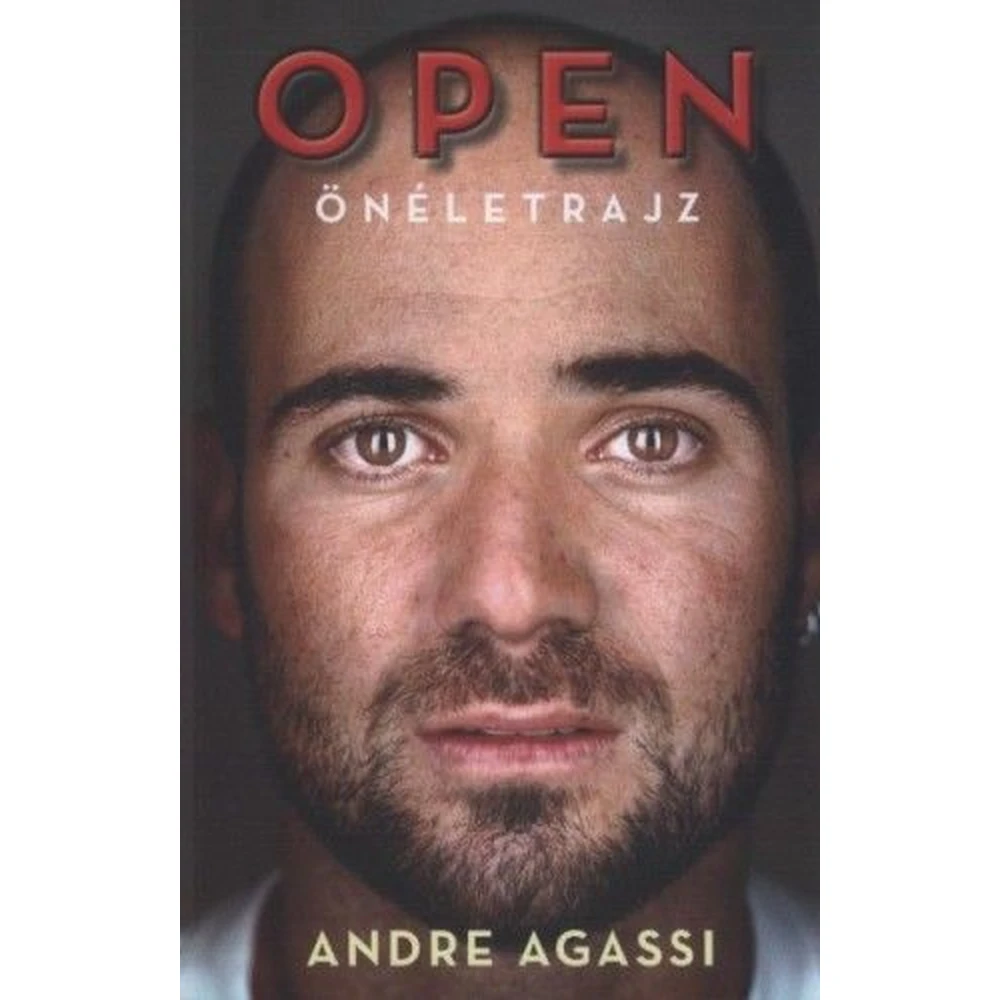
Andre Agassi - Open - Önéletrajz (puhatáblás)
3 529 Ft
Product description
He is one of the most beloved athletes in sports history and one of the most talented people to ever step onto a tennis court. But few people know that Andre Agassi hated tennis since his early childhood. Encouraged from the cradle to hit the racket, later forced to hit hundreds of balls a day in elementary school, Agassi did not handle the constant pressure badly, although he was talented, this inner conflict left its mark on his whole life. In his beautiful, unforgettable autobiography, Agassi tells his life story framed by constant conflict, a life story that balances between self-destruction and maximalism.
We feel Agassi's fear as a seven-year-old practicing all day in Las Vegas while his abusive father watched obsessively. We see him as a thirteen-year-old exile at the tennis academy in Florida, where he feels like he's in a penal camp. A lonely, frightened ninth-grader who dropped out of school, who rebels in such a way that he will soon become the idol of the 1980s. He dyes his hair, pierces his ears, dresses like a punk. By the time he turns pro at sixteen, his new look promises to change tennis forever, as does his lightning-fast comeback.
Yet, despite his original talent, his life has been a struggle since childhood. We feel his embarrassment when he loses to the best in the world, and even more embarrassment when he starts winning. After losing three Grand Slam finals, he finally wins the 1992 Wimbledon. In one fell swoop, he finds himself in the crossfire of fans and the target of the media.
Agassi brings out the decisive matches and all his human relationships with his almost photographic memory. The inner world of the game of tennis and the outer world of fame have never been portrayed so accurately. In addition to vivid portraits of several generations of his rivals—Jimmy Connors, Pete Sampras, Roger Federer—Agassi gives ample accounts of his short-lived relationship with Barbra Streisand and his failed marriage to Brooke Shields. He talks about his depression that undermined his self-confidence, and about the mistake that almost ruined everything. Finally, he recalls his spectacular resurgence, which culminated in a heroic comeback at the 1999 French Open to become the oldest male player to ever top the world rankings.
In his clean, tight prose, Agassi evokes his faithful brother, his wise coach, his kind trainer, all those who helped him regain his balance and finally find love by Stefanie Graf's side. His calm strength inspired him to survive the crippling pain caused by his spinal problem and become a dangerous opponent in the twenty-first and final year of his career. When he entered his last competition in 2006, he was celebrated for his astonishing metamorphosis, from a non-conformist to a responsible thinker, from a dropout to an advocate of the importance of learning. And he's not done yet. At the US Open, he stands bravely for the last time, then delivers one of the most moving farewell speeches that could be heard in a sports arena.
Because of its breakneck pace and raw honesty, Open will be read and praised for years to come. It's a holiday for die-hard fans, but it'll also delight readers who know nothing about tennis. Like Agassi's game, he set new records for elegance, style, speed and power in his book. Andre Agassi's professional career lasted from 1986 to 2006. He was often at the top of the world rankings, the seventh place in the all-time ranking won eight Grand Slam singles championships, he was the only male competitor to win the Golden Slam, the four major tournaments plus the Olympic gold medal. He is also one of the most successful American competitors in the Davis Cup. As the founder of his philanthropic foundation, the Andre Agassi Charitable Foundation, he has raised more than $85 million for the Andre Agassi College Preparatory Academy, a twelve-grade charter school he created for underprivileged children in his hometown of Las Vegas. He lives in Las Vegas with his wife, Stefanie Graf, and their two children.
PRICE NOTIFICATION
NOTEBOOK SEARCH

OPINIONS
0.0
