
Dear Visitor! We are carrying out maintenance this weekend, so our website may be slow or briefly unavailable at times. Thank you for your patience!
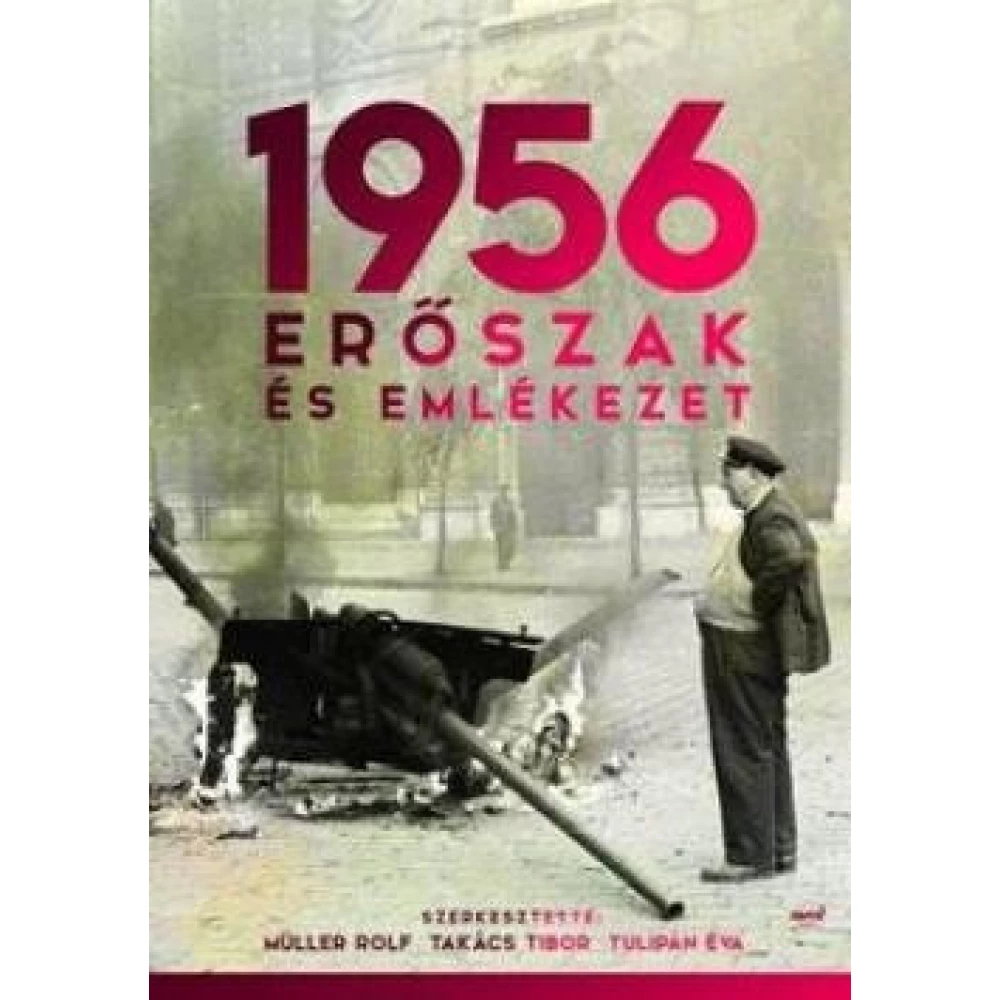
1956: Erőszak and emlékezet
2 738 Ft
Product description
Experiencing violence was an integral part of everyday life in the 20th century. In historical research, the investigation of the different types of the phenomenon, direct and open, as well as hidden and structural violence, is receiving more and more attention. This topic is dissected by the recently established workshop of the Hungarian academics, the Working Group on the History of Violence, which has set as its goal the "violence-oriented" research of Hungarian history after 1945, its coordination and the publication of the research results.
On October 6, 2016, the working group organized its conference on the 1956 revolution and freedom struggle in collaboration with the Jaffa Publishing House and the Institute of History of Pázmány Péter Catholic University. At the event, researchers from several Hungarian contemporary history workshops held a scientific exchange of ideas.
This study volume contains the material of the presentations given at the conference. Following GÁBOR GYÁNI's theoretical introduction, the writings explore the forms of violence that appeared during the 1956 revolution and war of independence, and after its suppression. ÉVA TULIPÁN examines the role of atrocities in the "counter-revolutionary" narrative of Kádár, while TIBOR TAKÁCS deals with the narratives of the October 26 Nyíregyháza demonstration. ROLF MÜLLER analyzes the visual world of war-torn Budapest, while GÉZA VÖRÖS's study of the Újpest revolutionaries also serves as an addition to the liberation of József Mindszenty. STEFANO BOTTONI looks beyond the border with his study of power struggles in Székelyföld, while BANK BANK's statement on the reopened internment camps after the revolution, as well as ZSOLT KRAHULCSÁN's article, which presents the investigators of the Imre Nagy case, can help the reader to understand the operation of domestic retaliation.
PRICE NOTIFICATION
NOTEBOOK SEARCH

OPINIONS
0.0
